
How Many Baby Bottles Do You Really Need? (Newborn to 12 Months)

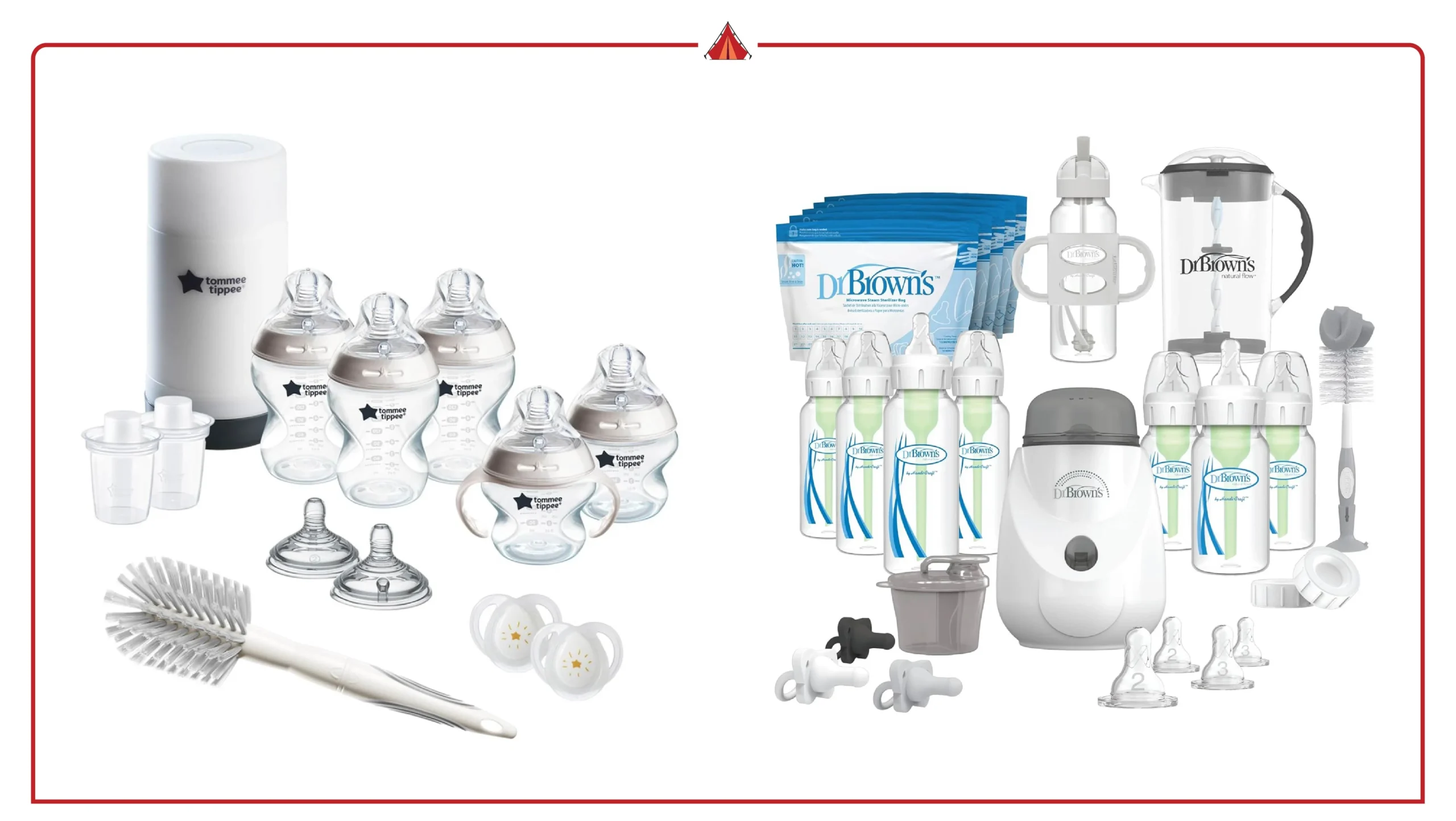
One of the first questions new parents run into when preparing for a baby is deceptively simple: How many bottles do I actually need? Walk down any baby aisle or scroll through Amazon and you’ll find shelves full of glass bottles, plastic bottles, anti-colic designs, starter kits, nipples in every flow size, and accessories you didn’t even know existed. It’s easy to feel overwhelmed and either buy too few or stock up on far more than you’ll ever use.
The truth is that the “right” number of bottles isn’t the same for every family. It depends on how you plan to feed your baby—breastfeeding, pumping, formula feeding, or a combination of the three. Your daily routine also matters: if your little one will be in daycare, you’ll need more bottles ready to go than a parent who stays at home and washes bottles throughout the day.
Getting this balance right saves you money, keeps your kitchen uncluttered, and makes feeding time a lot less stressful. In this guide, we’ll break down exactly how many bottles you’ll need from the newborn stage through the first year, what sizes work best at different ages, and the accessories that make life easier. Along the way, we’ll point out some of the most trusted baby bottle sets and accessories available online so you can build the perfect setup without second-guessing your choices.
Quick Answer: The Ideal Number of Bottles at a Glance
If you’re just looking for a quick guideline before diving into the details, here it is:
- Breastfed babies usually need 4–6 bottles since most feeds are still at the breast, with bottles used for pumped milk or when someone else is feeding.
- Formula-fed babies need the largest supply, about 8–10 bottles, because every meal requires a bottle.
- Combination-fed babies fall in the middle, around 6–8 bottles, depending on how often you’re supplementing.
Here’s a breakdown by age group to make planning even easier:
| Baby’s Age | Breastfed Baby | Formula-Fed Baby | Combination Feeding | Notes |
|---|---|---|---|---|
| Newborn (0–3 months) | 4–6 bottles | 8–10 bottles | 6–8 bottles | Smaller 4 oz bottles work best at this stage |
| Infant (3–6 months) | 6–8 bottles | 8–10 bottles | 6–8 bottles | Time to start introducing 8 oz bottles |
| Older Baby (6–12 months) | 4–6 bottles | 6–8 bottles | 5–7 bottles | Solid foods reduce bottle feeds gradually |
Keep in mind these are averages. Some families prefer to have extras on hand to avoid washing throughout the day, while others are comfortable with fewer bottles and more frequent cleaning. The rest of this guide will help you decide what’s right for your baby and your routine.
Read Next: Baby Bottle Cleaning Checklist: Must-Have Brushes, Racks & Sterilizers
Factors That Determine How Many Baby Bottles You Need
Every baby is different, and so is every household. That’s why there isn’t a single magic number of bottles that works for everyone. Instead, the right number comes down to a few key factors:
Feeding Method
- Breastfed babies: If you’re nursing most of the time, you’ll only need a few bottles for pumped milk or for times when someone else feeds your baby. A set of 4–6 bottles is usually enough.
- Formula-fed babies: Since every feeding requires a bottle, you’ll need more on rotation—usually 8–10. This ensures you have enough clean bottles ready for night feeds and busy mornings.
- Combination feeding: If you’re doing both, aim for 6–8 bottles to avoid constant washing.
Frequency of Feeding by Age
Newborns feed more often—sometimes 8 to 12 times a day. As your baby gets older, feedings become less frequent, and the number of bottles you need decreases. That’s why newborn parents often feel like they’re drowning in bottle washing, while parents of older babies find they can get by with fewer.
Washing and Sterilizing Habits
How often do you plan to clean bottles? Some parents are happy to wash and sterilize after each use, while others prefer to let bottles pile up and do a full cleaning once or twice a day. The less often you wash, the more bottles you’ll want on hand. A countertop sterilizer or a drying rack can also make a big difference in how many you need.
Daily Routine and Childcare
If your baby will be in daycare, you’ll need enough bottles to send along for a full day of feeds—plus extras in case of spills or delays in washing. Stay-at-home parents may be able to get by with fewer since bottles can be cleaned between feeds.
By thinking through these factors, you’ll be able to narrow down the right number of bottles for your situation instead of guessing or overbuying.
How Many Bottles for Newborns (0–3 Months)
The newborn stage is where most parents get tripped up. Feeding sessions are frequent—sometimes every two to three hours—and the bottles you choose at this stage will feel very different from the ones you’ll use later in the first year.
If You’re Exclusively Breastfeeding
If your baby is mainly at the breast, you don’t need a large stash of bottles. Four to six bottles is usually enough for storing pumped milk and for times when a partner, grandparent, or babysitter is helping with feeds. Many breastfeeding parents also prefer bottles with slow-flow nipples and a wide base to mimic the natural latch and reduce nipple confusion.
- Good picks: Comotomo Baby Bottles or Tommee Tippee Closer to Nature bottles, both designed to feel closer to breastfeeding.
If You’re Formula Feeding
Formula-fed newborns go through bottles much faster. You’ll want at least 8–10 bottles so you don’t feel like you’re constantly scrubbing in the middle of the night. At this age, smaller 4 oz bottles are ideal, since newborns usually take 2–4 ounces per feed.
- Good picks: Dr. Brown’s Natural Flow Anti-Colic Bottles, which are popular for reducing gas and spit-up, or Philips Avent Natural Bottles with their easy-to-clean design.
If You’re Combination Feeding
Combination-fed babies fall right in between. Six to eight bottles gives you the flexibility to switch between pumped milk and formula without scrambling for clean bottles. This setup is especially helpful if you’re returning to work and want a mix of pumped and formula-fed bottles on hand.
Pro Tip: Start with a smaller variety pack or starter kit instead of buying a dozen of the same bottle. Babies can be surprisingly picky, and it’s common to test a couple of brands before finding the one your little one prefers.
Read Next: How to Sterilize Baby Bottles: Step-by-Step Guide + Essential Tools
How Many Bottles for Infants (3–6 Months)
By the time your baby is three months old, feedings are starting to settle into more predictable patterns. You’re still feeding often—usually every 3–4 hours—but the amounts per feed increase. This is also when many parents begin switching from smaller 4 oz bottles to larger 8 oz bottles.
For Breastfed Babies
Breastfed infants at this stage may take a few larger bottles of pumped milk each day, especially if a parent is working outside the home. Having 6–8 bottles on hand makes life easier if you’re sending milk to daycare or want to avoid washing during the workday.
- Recommended sets: Spectra or Medela bottles (compatible with breast pumps), or wide-neck options like Nanobébé Breastmilk Bottles that are designed to warm quickly and preserve nutrients.
For Formula-Fed Babies
Formula-fed babies will typically need the most bottles in rotation—8–10 bottles is still the sweet spot. Most babies at this age are drinking 5–6 oz at a time, so transitioning to larger bottles prevents constant refills.
- Parent favorites: Dr. Brown’s Options+ Wide-Neck Bottles (to minimize colic symptoms) or Philips Avent Anti-Colic Bottles for easy assembly and cleaning.
For Combination Feeding
If you’re mixing both breastmilk and formula, 6–8 bottles is usually enough. A flexible supply lets you prep bottles of formula and store pumped milk without running short.
Tip for this stage: It’s worth investing in a drying rack or a countertop sterilizer if you haven’t already. Once your baby is drinking larger bottles more often, accessories like these save you time and keep bottles organized.
How Many Bottles for Older Babies (6–12 Months)
Once your baby starts solids, bottles become a little less central to daily life. Most babies at this stage take fewer feeds—about 3 to 5 bottles per day depending on how quickly they take to eating purees and soft foods.
For Breastfed Babies
If you’re still breastfeeding, bottles are often used only during daycare hours or when someone else is feeding. Four to six bottles is usually plenty. Some parents even get by with fewer if they’re home most of the time.
For Formula-Fed Babies
Formula-fed babies will continue to rely on bottles until they transition to whole milk at age one. Expect to need 6–8 bottles in steady rotation, though the number of daily feeds will taper off. At this stage, 8 oz bottles are the standard, since babies are drinking more per feeding but less often.
- Good picks: MAM Easy Start Anti-Colic Bottles (self-sterilizing design, great for travel) or NUK Simply Natural Bottles (with multiple nipple holes to mimic breastfeeding).
For Combination Feeding
If you’re still mixing breastmilk and formula, 5–7 bottles will usually cover your needs without constant washing.
Transitioning Beyond Bottles
Many parents introduce a sippy cup or straw cup around this age to help with the shift away from bottles. This doesn’t mean bottles disappear overnight, but having fewer in rotation makes the transition smoother. A couple of starter cups alongside your bottles is a smart move to ease the change when the time comes.
Tip for this stage: Babies become more mobile and curious, so leak-proof bottles and spill-resistant cups can save you a lot of clean-up.
Read Next: Glass vs Plastic Baby Bottles: Pros, Cons & What Parents Should Choose
Bottle Sizes: 4 oz vs 8 oz (When to Upgrade)
Baby bottles generally come in two main sizes: 4 oz (or smaller) and 8 oz (standard size for older infants). Choosing the right size at the right time can save you both money and frustration.
4 oz Bottles: Perfect for the Newborn Stage
- Best suited for newborns up to about 3 months.
- Ideal for small feeds of 2–4 oz at a time.
- Easier for little hands to grip later on.
- Downsides: Babies outgrow them quickly, so you won’t use them as long.
Recommended use: Keep 4–6 bottles in this size if you’re expecting a newborn. They’re also great for breastfed babies who only take occasional bottles.
8 oz Bottles: The Long-Term Workhorses
- Designed for larger feeds of 5–8 oz, which is the norm from about 3–4 months onward.
- Most parents use these until their baby transitions to cups around 12 months.
- Offer more flexibility—you can always fill less if needed.
Recommended use: Have at least 6–8 bottles in this size ready once your baby starts drinking more.
Quick Comparison: 4 oz vs 8 oz
| Feature | 4 oz Bottles | 8 oz Bottles |
|---|---|---|
| Age Range | 0–3 months | 3–12 months |
| Typical Feed Amount | 2–4 oz | 5–8 oz |
| Lifespan | Short (baby outgrows quickly) | Long (used most of the first year) |
| Best For | Newborns, small feeds, breastfed babies | Formula-fed or older infants |
Smart Buying Tip: Many parents choose a starter set that includes both sizes. This way, you have small bottles for the early months and larger ones ready to go as your baby grows. Popular sets like Philips Avent Natural Starter Kit or Dr. Brown’s Options+ Newborn Set offer this mix.
Essential Baby Bottle Accessories You’ll Also Need
Bottles are just the beginning. To keep feeding smooth (and your sanity intact), you’ll want a few key accessories that make cleaning, storing, and preparing bottles faster and safer. Many of these are affordable add-ons that save time day after day.
Bottle Sterilizer
Newborns have delicate immune systems, and sterilizing bottles is recommended during the early months. While boiling water works, an electric or microwave sterilizer is faster and more convenient—especially when you’re washing multiple bottles daily.
- Popular pick: Philips Avent Microwave Steam Sterilizer – quick, compact, and easy to use.
Bottle Warmer
A good warmer heats milk or formula evenly, preventing hot spots that can happen in the microwave. For babies who prefer milk at body temperature, this is a must-have.
- Popular pick: Dr. Brown’s Deluxe Bottle Warmer – known for reliability and consistency.
Drying Rack
Bottles, nipples, and accessories dry best when they’re kept upright with plenty of airflow. A drying rack keeps everything organized and prevents mold from developing in damp spots.
- Popular pick: Boon Grass Countertop Drying Rack – a parent favorite for both function and style.
Bottle Brushes
Standard kitchen sponges don’t reach bottle corners or nipple tips effectively. A set of bottle brushes (with soft bristles or silicone heads) makes cleaning faster and keeps bottles free of buildup.
- Popular pick: OXO Tot Bottle Brush with Stand – durable and designed for narrow necks.
Formula Dispenser or Travel Container
If you’re formula feeding, a dispenser makes prepping bottles on the go much simpler. You can measure out portions in advance and just add water when your baby is ready to feed.
- Popular pick: Munchkin Formula Dispenser – compact and budget-friendly.
Pro Tip: Many starter kits include some of these accessories, which can be more cost-effective than buying them separately. If you’re shopping on Amazon, check whether the set you’re considering bundles in brushes, a sterilizer, or a drying rack.
Read Next: Comotomo vs Tommee Tippee Bottles: Which One Feels Most Like Breastfeeding?
Best Baby Bottle Starter Sets (for New Parents)
If you’re buying bottles for the first time, a starter set can be a smart investment. These kits usually include a mix of bottle sizes, extra nipples, and sometimes cleaning tools or a sterilizer. They give you everything you need to get going without having to piece things together one by one.
Below are some of the most trusted options that consistently get strong reviews from parents.
1. Philips Avent Natural Baby Bottle Newborn Starter Set
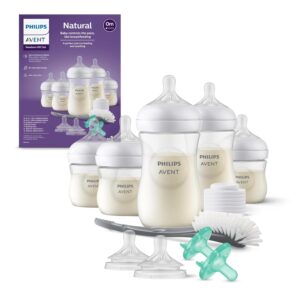
- Includes both 4 oz and 9 oz bottles, slow-flow nipples, and a bottle brush.
- Anti-colic valve helps reduce gas and fussiness.
- Wide-neck design makes cleaning easier.
- Great for parents who want a balance of affordability and quality.
2. Dr. Brown’s Options+ Newborn Bottle Gift Set
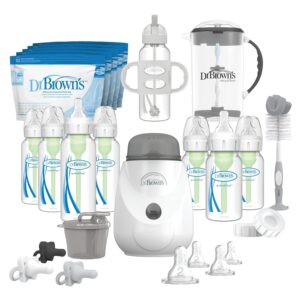
- Comes with a mix of small and large bottles, slow-flow nipples, a sterilizer, and bottle brush.
- Internal vent system is designed to reduce colic, spit-up, and gas.
- Widely recommended for babies with reflux or frequent gas issues.
3. Comotomo Baby Bottle Bundle
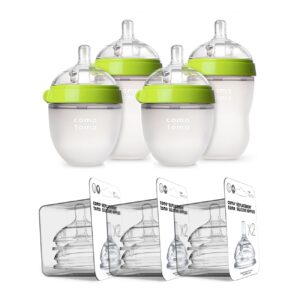
- Soft, silicone bottles designed to mimic breastfeeding.
- Includes two 5 oz and two 8 oz bottles with slow-flow nipples.
- Easy to clean with wide openings and fewer parts.
- Excellent choice for breastfed babies who need an easy transition to bottles.
4. Tommee Tippee Closer to Nature Newborn Starter Set
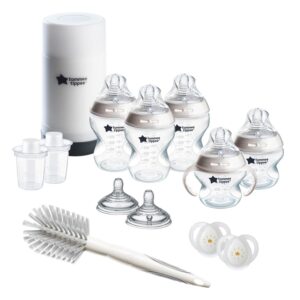
- Includes small and large bottles, nipples, and bottle brush.
- Natural-shaped nipple helps encourage latch.
- Affordable kit that covers the basics for new parents.
Quick Comparison
| Starter Set | Best For | Includes | Notable Feature |
|---|---|---|---|
| Philips Avent Natural | Balanced choice for most parents | 4 & 9 oz bottles, brush | Anti-colic valve, easy to clean |
| Dr. Brown’s Options+ | Babies with colic or reflux | Mix of bottles, sterilizer, brush | Vent system reduces gas and spit-up |
| Comotomo Bundle | Breastfed babies | 5 & 8 oz bottles | Soft silicone, breast-like feel |
| Tommee Tippee Set | Budget-friendly starter option | Small & large bottles, brush | Affordable, natural nipple shape |
If you’re unsure which brand your baby will prefer, consider starting with one of these sets rather than stocking up on dozens of bottles from a single brand. That way, you’ll have flexibility—and fewer regrets—if your little one turns out to be picky.
Read Next: Dr. Brown’s vs Philips Avent Bottles: Which Is Better for Colic & Feeding?
Common Mistakes Parents Make When Buying Bottles
It’s tempting to go all in and buy every bottle you think you might need, but many parents find out later that they wasted money or bought the wrong products. Here are some of the most common pitfalls to avoid:
Buying Too Many of One Type
Every baby has preferences. Some latch easily onto wide-neck bottles, while others only take narrow-neck styles. Stocking up on a dozen of the same bottle before you know what your baby likes can leave you with an expensive pile of rejects. Start small with a variety pack or a starter set until you know which works best.
Ignoring Nipple Flow Sizes
Newborns usually need a slow-flow nipple to prevent gulping and gas. As babies grow, you’ll need to move up to medium or fast flow. Buying only one size means you’ll be back shopping sooner than you think—or stuck with frustrated feeding sessions. Look for sets that include multiple nipple flows or check that replacements are easy to find.
Forgetting About Cleaning
Some bottles have multiple parts, vents, or inserts that help with colic but also mean more time at the sink. Parents who prefer quick cleanup should prioritize bottles with fewer pieces or invest in a good bottle brush and sterilizer to make the job easier.
Not Considering Lifestyle Needs
If your baby will be at daycare, you’ll need enough bottles to send each day without scrambling. If you travel often, lightweight or self-sterilizing bottles might be more practical than heavy glass options. Think about where and how you’ll be using bottles most before choosing.
Skipping Accessories
Parents often focus only on bottles but forget essentials like drying racks, warmers, and formula dispensers. These accessories don’t just save time—they can make feeding far less stressful. Many are inexpensive and worth adding to your setup early on.
Smart move: Build your collection gradually. A couple of starter sets, some extra nipples, and a few key accessories are usually all you need to cover the first year without overbuying.
FAQs: Quick Answers for Parents
Parents have a lot of specific questions when it comes to bottles, and many of them overlap. Here are some of the most common ones answered simply:
How many bottles do I need if I’m exclusively breastfeeding?
If you’re breastfeeding full-time, 4–6 bottles is usually enough. You’ll use them mainly for pumped milk when you’re away or when someone else is feeding.
How many bottles do I need if I pump at work?
Most working parents find 6–8 bottles works best—enough to send with your baby to daycare and still have a few left clean at home. If your pump is compatible, you can often pump directly into the same bottles to cut down on washing.
Do I need both 4 oz and 8 oz bottles?
Yes. 4 oz bottles are perfect for newborns in the first few months, but babies quickly move up to larger feeds. Having 8 oz bottles ready means you won’t need to repurchase later. Many parents keep a small mix of both sizes.
How many bottles are enough for daycare?
Plan for 4–6 bottles per day at daycare, depending on your baby’s age and feeding schedule. It’s a good idea to pack an extra one or two just in case.
Can you reuse bottles for the next baby?
Yes, bottles can usually be reused as long as they’re in good condition. Just replace the nipples, since they wear out and can lose elasticity over time. Always inspect for cracks or discoloration before reusing.
How long do baby bottles last?
Most bottles last about 6 months to a year, depending on the material and how often they’re used. Nipples should be replaced more frequently—every 2–3 months, or sooner if you notice damage.
Tip: Keeping a rotation of bottles and replacing nipples regularly not only keeps feeding safe but also helps prevent leaks and discomfort for your baby.
Final Recommendation & Buying Guide Wrap-Up
When it comes to baby bottles, the “right number” isn’t one-size-fits-all. It depends on your feeding style, whether you’re breastfeeding, pumping, or formula feeding, and how often your baby is cared for outside the home.
Here’s the short version to guide your buying decision:
- Exclusively breastfeeding? Start with 4–6 bottles for pumped milk.
- Pumping at work or part-time feeding? You’ll be better covered with 6–8 bottles.
- Formula feeding full-time? Plan for at least 8–12 bottles to keep up with washing and daily use.
Smart shopping tip: Start with a variety pack or bottle starter set. This way, you can test what your baby prefers before investing in a full collection. Once you know what works, stock up on the right size bottles and matching nipples.
And don’t forget the accessories—brushes, sterilizers, drying racks, and warmers are small investments that make everyday feeding smoother.
By building your bottle collection gradually, you’ll avoid overspending, reduce frustration, and keep your baby’s feeding routine consistent.