Is the Philips Air Fryer Worth the Price? An Honest 2026 Review of Every Model

This post contains affiliate links. We may earn a commission if you purchase through our links, at no extra cost to you.
Philips invented the air fryer. That’s not marketing — in 2010, Philips engineers developed and patented Rapid Air Technology, launching the first consumer air fryer at a trade show in Berlin. Every Ninja, Cosori, and Instant Vortex on the market today exists because Philips proved the category was real.
So why does that origin story cost you more money at checkout?
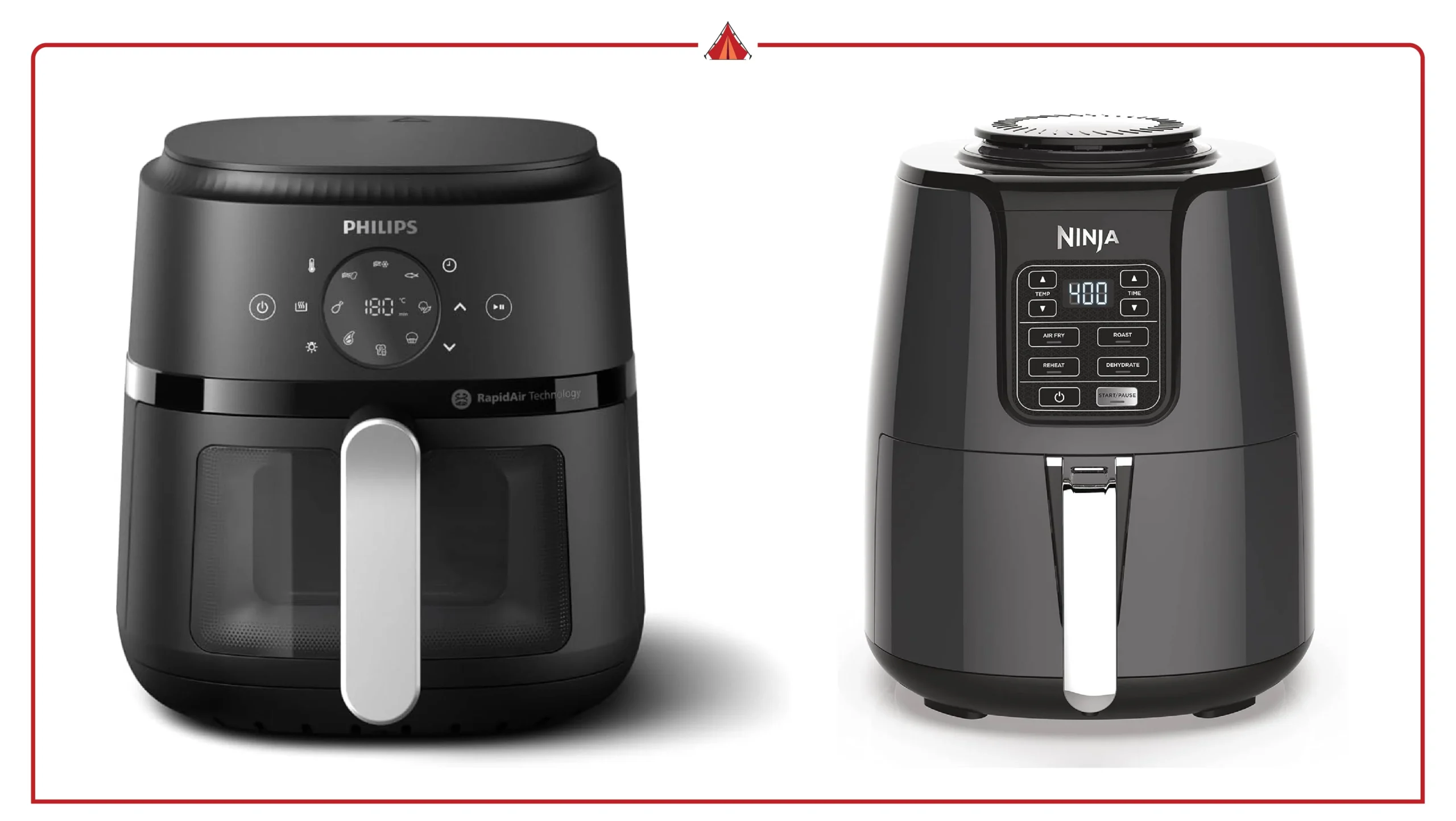
In 2026, a capable Ninja or Cosori air fryer can be had for well under $100. Philips entry-level models start higher, and their flagship XXL and dual basket units push significantly beyond that. For a buyer standing at that gap, the question isn’t “should I buy an air fryer?” — it’s “is a Philips actually worth what they’re asking?”
That’s exactly what this review answers.
We’ve broken down every current Philips air fryer model — from the compact Essential to the 9.5qt dual basket — covering what each one does well, where each one falls short, and who each one is actually built for. By the end, you’ll know which Philips model earns its price, which ones you can skip, and whether Philips as a brand still justifies the premium in a market that has genuinely caught up in some areas.
Is the Philips Air Fryer Worth It? (Quick Answer)
If you want the short version before diving into the full breakdown: yes, Philips air fryers are worth it — for the right buyer. The longer answer depends almost entirely on which model you’re considering and what you’re cooking.
Here are the three Philips models we’d recommend without hesitation:
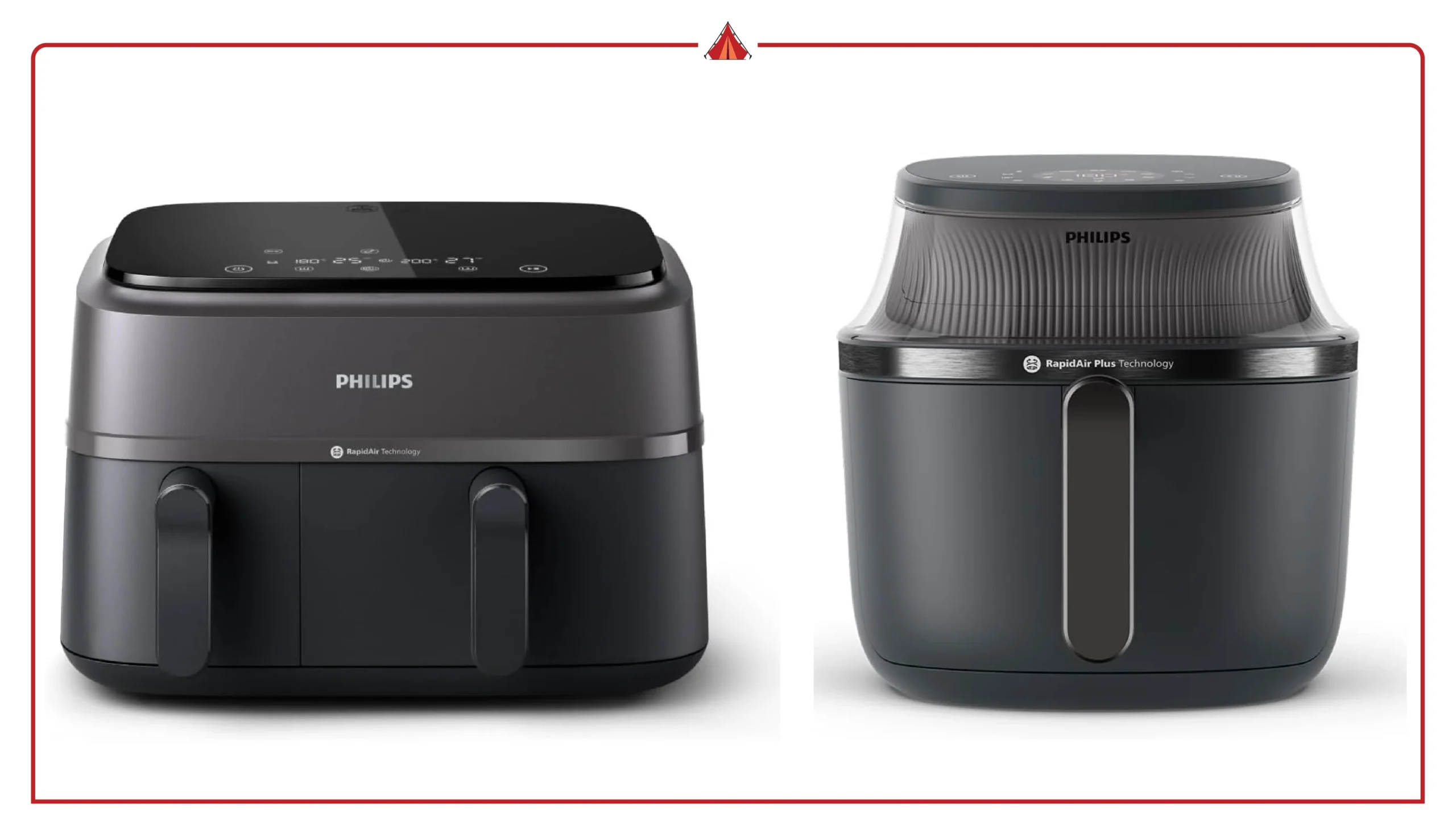
Best Overall: Philips Air Fryer 3000 Series with Cooking Window (NA330/00) The most well-rounded Philips available right now. It combines a cooking window, RapidAir Plus Technology, 16-in-1 cooking functions, and Fat Removal Technology in a single package. If you cook for 2–4 people and want one air fryer that handles everything, this is it.
Best for Large Families: Philips Premium Airfryer XXL (HD9650/96) Seven quarts of capacity, a proven Fat Removal Technology system, and enough room for a whole chicken or a full rack of wings. The interface is older than the newer 3000 Series models, but the cooking performance is hard to argue with for households of five or six.
Best Value Within the Philips Lineup: Philips 3000 Series Essential Compact (HD9252/91) If you’re cooking for one or two people and the premium models feel like overkill, this is where the Philips quality story holds up at a more accessible entry point. Rapid Air Technology, 13 cooking functions, and a compact footprint — no preheat required.
Philips Air Fryer Comparison Table
| Product | Series | Capacity | Best For | Standout Feature |
|---|---|---|---|---|
| Philips 3000 Series Essential Compact (HD9252/91) | 3000 | 4.1L / 1.8lb | Singles & couples | Compact form, 13-in-1 functions, no preheat |
| Philips Essential Airfryer XL (HD9270/91) | Essential | 6.2L / 2.65lb | Small families wanting simplicity | XL capacity, dishwasher-safe parts, clean interface |
| Philips Essential Connected XL (HD9280/91) | Essential | 6.2L / 2.65lb | Tech-forward home cooks | Wi-Fi + Alexa via HomeID app |
| Philips 3000 Series with Cooking Window (NA330/00) | 3000 | 6.5qt | Feature-seeking families (2–4 people) | Cooking window + RapidAir Plus + 16-in-1 functions |
| Philips Premium Airfryer XXL (HD9650/96) | Premium | 7qt / 3lb | Large families up to 6 | Fat Removal Technology + whole-meal capacity |
| Philips Dual Basket 3000 Series (NA350/00) | 3000 | 9.5qt | Households cooking full meals at once | Dual baskets with auto-sync finish |
| Philips Air Fryer 2000 Series (NA231/00) | 2000 | 6.6qt | Budget-conscious buyers who want a window | Cooking window at a lower Series price point |
Philips 3000 Series Essential Compact (HD9252/91) Review

Who it’s best for: Singles, couples, or anyone with a small kitchen who wants genuine Philips build quality and cooking performance without paying for capacity they’ll never use.
The air fryer market is crowded with compact options, and most of them make the same trade-off: shrink the size, shrink the performance. The HD9252/91 is where Philips pushes back on that assumption. At 4.1L, it isn’t trying to feed a family — but for one or two people, it handles a surprising range of meals without the bulk or counter footprint of its XL siblings.
What separates it from a $40 no-name compact is what’s happening inside the basket. Philips’s Rapid Air Technology uses a starfish-pattern basket design to circulate heat from every angle simultaneously rather than just blasting hot air from the top. The result is more even crisping — the kind of difference you actually notice when you’re cooking chicken thighs or reheating pizza versus doing it in a cheaper unit. It also means no preheat is required, which matters more than it sounds when you’re cooking for one and don’t want to wait five minutes before a weeknight meal.
With 13-in-1 cooking functions — fry, bake, grill, roast, reheat, and more — it covers the full range of what most everyday cooks actually need. If your use case is primarily weeknight meals, snacks, and the occasional baked good, this model handles it without compromise. Where it draws a clear line is batch cooking. One and a half pounds of food capacity means you’re cooking in stages if you’re scaling up, and there’s no cooking window or Fat Removal Technology at this tier.
Key Features:
- Rapid Air Technology with starfish basket for even, all-angle heat circulation
- 13-in-1 cooking functions: fry, bake, grill, roast, reheat, and more
- 4.1L / 1.8lb capacity — sized for 1–2 people
- No preheat required — ready to cook immediately
- Dishwasher-safe removable parts for fast cleanup
Pros:
- Genuine Philips cooking technology in a compact, accessible package
- No preheat saves time on everyday meals
- Dishwasher-safe basket and drawer make cleanup straightforward
Cons:
- 1.8lb food capacity is a hard ceiling — not suitable for households of three or more
- No cooking window, no Fat Removal Technology — you’re paying for the core Philips cooking engine, not the full feature set
Philips Essential Airfryer XL (HD9270/91) Review

Who it’s best for: Small families or straightforward home cooks who want XL capacity and reliable Philips performance without smart features, a cooking window, or anything that adds complexity to the experience.
There’s a version of air fryer shopping where you just want the thing to work. No app. No Wi-Fi setup. No feature list to decode. You want to put food in, press a button, and get a good result. The HD9270/91 is Philips’s answer to that buyer — and it’s a more compelling option than it looks on a spec sheet.
At 6.2L and a 2.65lb food capacity, it steps up meaningfully from the compact HD9252 without jumping to the XXL footprint of the HD9650. That size hits a practical sweet spot for households of three to four people cooking regular weeknight meals — a full batch of fries, a tray of chicken thighs, a side and a main in sequence. The starfish-pattern basket carries over from the Essential Compact, meaning Rapid Air Technology is doing the same all-angle circulation work here, just in a larger chamber. Evenness of cook is one of the areas where Philips consistently earns its reputation, and the HD9270 delivers that at scale.
Where this model makes its trade-off explicit is in what it doesn’t include. No cooking window means opening the basket to check progress, which releases heat and can affect cooking consistency for delicate foods. No smart connectivity means no app-guided recipes or remote monitoring. No Fat Removal Technology means you’re not getting Philips’s health-differentiation feature. For a buyer who doesn’t want or need any of those things, none of that is a problem — the HD9270 is priced to reflect its feature set, and the core cooking performance is solid. But buyers who are considering stepping up to the NA330 should weigh whether those additions justify the difference before defaulting to the lower price.
Key Features:
- Rapid Air Technology with starfish-design basket for consistent, even results
- 6.2L / 2.65lb capacity — practical for 3–4 people
- Dishwasher-safe removable basket and drawer
- Simple digital interface — no app or Wi-Fi required
- Compatible with Philips accessory range (grill pan, baking dish, etc.)
Pros:
- XL capacity handles full family meals without cooking in batches
- Dishwasher-safe parts make post-meal cleanup genuinely fast
- Clean, intuitive interface — no learning curve, no setup friction
Cons:
- No cooking window, smart features, or Fat Removal Technology — a meaningful gap compared to the 3000 Series NA330 at a similar price tier
- Buyers stretching slightly further in budget will find the NA330 offers significantly more for the difference
Philips Essential Connected XL Airfryer (HD9280/91) Review
Who it’s best for: Tech-forward home cooks who want Wi-Fi connectivity, Alexa compatibility, and app-guided recipe access in an XL-capacity Philips — without stepping up to the full 3000 Series price point.
Smart home integration in kitchen appliances sits in an interesting place right now. For some buyers it’s a genuine quality-of-life upgrade. For others it’s a feature that sounds compelling in the store and goes unused within a month. The HD9280/91 is where Philips makes its case for the former — and whether it lands depends almost entirely on how you actually cook.
On paper, the HD9280 and HD9270 are near-identical machines. Same 6.2L capacity. Same 2.65lb food limit. Same starfish-basket Rapid Air Technology. The separation comes through the HomeID app, which connects via Wi-Fi and enables Alexa voice control, guided recipe access, and the ability to monitor and adjust your cook remotely. For a cook who regularly works from recipes, that guided functionality — where the app talks directly to the fryer and adjusts settings automatically — removes a real friction point. It’s the difference between translating a recipe’s temperature and time into manual inputs versus having the appliance handle that translation for you. For households with an existing Alexa setup, the voice control layer adds a level of convenience that’s hard to dismiss once you’ve used it.
Where the HD9280 runs into the same ceiling as the HD9270 is in its physical feature set. No cooking window. No Fat Removal Technology. The smart layer is the only meaningful upgrade over the HD9270, and buyers need to decide whether that upgrade justifies the price gap between the two. For cooks who will genuinely use the app regularly, the answer is probably yes. For buyers who rarely follow guided recipes and don’t have an Alexa ecosystem already in place, the HD9270 covers the same cooking ground for less, and the NA330 offers a more tangible hardware upgrade for a similar investment.
Key Features:
- Wi-Fi connected with Alexa voice control via the HomeID app
- Access to hundreds of guided recipes with direct fryer sync through HomeID
- 6.2L / 2.65lb XL capacity — suited for 3–4 people
- Rapid Air Technology with starfish-pattern basket for even heat distribution
- Dishwasher-safe removable parts
Pros:
- App-guided cooking removes the guesswork from recipe-to-fryer translation
- Alexa integration works smoothly for households already in the Amazon ecosystem
- Same reliable Philips cooking performance as the HD9270 with added control flexibility
Cons:
- Smart features are the only hardware differentiator over the HD9270 — buyers who won’t use the app regularly are paying for features they’ll ignore
- No cooking window or Fat Removal Technology at this price point makes the NA330 a more complete hardware upgrade for buyers prioritising physical features over connectivity
Philips Air Fryer 3000 Series with Cooking Window (NA330/00) Review

Who it’s best for: Families of two to four who want the most complete single-basket Philips air fryer available right now — cooking window, Fat Removal Technology, RapidAir Plus, and 16-in-1 functions in one package.
If you were to design a Philips air fryer by checking every box that matters to a serious home cook, you’d end up with something very close to the NA330. It’s the model where Philips’s feature development across the last several years converges into a single, well-executed package — and for most buyers reading this review, it’s the one that’s going to be the hardest to argue against.
Start with the cooking window, because it’s more consequential than it sounds. Every time you open an air fryer basket mid-cook to check progress, you release heat, disrupt airflow, and extend your cook time. For foods that need precise timing — fish, pastry, anything with a narrow window between underdone and overdone — that interruption has real consequences. The NA330’s built-in window eliminates that variable entirely. You monitor without opening, heat stays consistent, and the cook finishes the way it was supposed to. It’s a small engineering addition that produces a meaningfully better result in everyday use. Paired with RapidAir Plus Technology — an enhanced iteration of Philips’s core airflow system — the NA330 crisps more evenly and efficiently than the Essential Series models, with a temperature range that stretches from 100°F all the way to 450°F for genuine dehydrating and high-heat searing capability.
Fat Removal Technology is also present here, which matters both for the health-conscious buyer and for anyone cooking fattier proteins regularly. The system extracts and captures excess fat from food as it cooks, keeping it separated from the food rather than letting it recirculate through the cooking chamber. Whether that translates to a meaningful health outcome depends on what you’re cooking, but for chicken thighs, sausages, and similar cuts, the difference in the finished product is noticeable. Sixteen cooking functions round out the package — including dehydrating and fermentation modes that push the NA330 well beyond what most air fryers in this category can do.
At 6.5qt it stops short of the XXL HD9650’s seven-quart capacity, which means regularly cooking for five or six people may require the occasional second batch. For households of two to four, that ceiling is never a practical issue.
Key Features:
- Built-in cooking window for mid-cook monitoring without opening the basket
- RapidAir Plus Technology with enhanced airflow and 100°F–450°F temperature range
- Fat Removal Technology extracts and captures excess fat during cooking
- 16-in-1 cooking functions including dehydrating and fermentation
- HomeID app compatible with guided recipe access
Pros:
- The most complete single-basket Philips model available — cooking window, Fat Removal, and RapidAir Plus in one unit
- 16-in-1 function range covers everything from high-heat crisping to low-temperature dehydrating
- App connectivity adds guided recipe access without making it a required part of the experience
Cons:
- At 6.5qt, it falls just short of the XXL HD9650 for households regularly cooking for five or more
- Buyers who won’t use the cooking window, app, or extended functions may find the Essential XL covers their needs at a lower cost
Philips Premium Airfryer XXL (HD9650/96) Review

Who it’s best for: Larger households of five to six people, or anyone who regularly cooks whole proteins and large batch meals and wants Philips’s flagship fat-reduction technology doing the work.
There are air fryers that are large, and then there’s the HD9650. Seven quarts of cooking capacity. Three pounds of food at a time. Enough room for a whole chicken, a full rack of wings, or a complete weeknight dinner for a family without a single compromise on batch size. If the question you’re asking before buying an air fryer is “will this actually feed everyone at my table without me cooking in shifts?” — the HD9650 is the Philips model that answers it cleanly.
But capacity alone doesn’t explain why this model sits at the top of the Philips lineup in terms of reputation. The HD9650 is the air fryer that put Philips’s Fat Removal Technology on the map with home cooks, and it remains the best demonstration of what that system actually does in practice. As food cooks, the fat that renders out of proteins — chicken thighs, sausages, lamb chops, bacon — is actively extracted from the cooking chamber and captured separately rather than pooling at the base of the basket and recirculating as vapor through your food. The result isn’t just a marginal health benefit. It produces a cleaner, less greasy finished product with better surface texture, particularly on fattier cuts that would otherwise stew slightly in their own rendered fat in a standard air fryer basket. For health-conscious households or anyone cooking fatty proteins regularly, this is the feature that justifies the Philips premium more concretely than anything else in the lineup.
Performance across the board is where the HD9650 has always been difficult to challenge. No preheat required. Cooking speeds that run up to four times faster than a conventional oven by Philips’s own testing. Even heat distribution that holds up across the full seven-quart chamber, which is genuinely harder to achieve at larger basket sizes than manufacturers typically acknowledge. The trade-off the HD9650 makes is on interface modernity. The digital controls are older in design compared to the touchscreen-forward NA330 and NA350, and there’s no cooking window and no HomeID app integration at this model level. For a buyer who prioritises cooking performance and capacity above all else, those omissions are easy to accept. For a buyer who wants the full current Philips feature set in one unit, the NA330 covers more ground in a slightly smaller chassis.
Key Features:
- Fat Removal Technology extracts and captures excess fat from food during cooking
- 7qt / 3lb capacity — large enough for a whole chicken or full family batch
- Rapid Air Technology for even heat distribution across the full XXL chamber
- No preheat required — up to 4x faster than a conventional oven
- Dishwasher-safe basket and drawer for straightforward cleanup
Pros:
- Seven-quart capacity handles full family meals for five to six people without batching
- Fat Removal Technology delivers a cleaner, less greasy result on fatty proteins that no competitor at this size replicates
- Proven, consistent cooking performance across years of strong user feedback
Cons:
- Older digital interface compared to the NA330 and NA350 — no touchscreen, no cooking window, no app connectivity
- Buyers who want the complete current Philips feature set will find the NA330 more up to date, albeit in a smaller basket
Philips Dual Basket Air Fryer 3000 Series (NA350/00) Review

Who it’s best for: Busy households who want to cook a complete meal — main and sides simultaneously — without managing two appliances or timing two separate cook cycles on a single-basket unit.
The dual basket air fryer is a category that sounds like a convenience feature until you’ve actually used one, at which point it becomes difficult to go back. The NA350 is Philips’s entry into that format, and it approaches the dual-basket problem more thoughtfully than most competitors do — particularly through its auto-sync finish system, which is the detail that separates a genuinely useful dual-basket unit from one that just gives you two drawers to manage separately.
At 9.5qt total capacity — split across a 6qt main drawer and a 3qt side drawer — the NA350 is the largest air fryer in the Philips lineup by a meaningful margin. The practical implication of that split is significant. You load the main drawer with your protein: a whole chicken, a rack of ribs, a generous batch of salmon fillets. The side drawer handles whatever you’re serving alongside it — roasted vegetables, fries, a grain that benefits from dry heat. Both drawers cook simultaneously with independent temperature and time settings, and the auto-sync feature ensures both finish at exactly the same moment. That last detail is more important than it sounds. The entire value proposition of a dual-basket air fryer collapses if you still have to stand over it coordinating finish times manually — auto-sync is what makes the format actually work as a complete meal solution.
Rapid Air Technology carries over from the rest of the 3000 Series lineup, and HomeID app integration means guided recipe access is available for buyers who want it. The NA350 handles 8-in-1 cooking functions — a narrower range than the NA330’s 16-in-1, which reflects the trade-off between dual-basket versatility and single-basket depth. Where the NA350 asks the most of its buyer is in footprint and cleanup. This is a large appliance that requires a genuine counter commitment, and two drawers with independent components means more surface area to wash after every meal. For households who cook together regularly and value the complete meal efficiency the format provides, that trade-off is straightforward. For a household of two who occasionally cook for guests, the NA330 likely covers more ground day-to-day with a more manageable footprint.
Key Features:
- 9.5qt dual-basket system — 6qt main drawer and 3qt side drawer with independent controls
- Auto-sync finish ensures both drawers complete cooking at exactly the same time
- Rapid Air Technology across both baskets for consistent results in each drawer
- 8-in-1 cooking functions with HomeID app integration and guided recipe access
- Dishwasher-safe removable baskets for both drawers
Pros:
- Auto-sync finish turns the dual-basket format into a genuine complete meal solution rather than just two separate cooking zones
- 9.5qt total capacity is the largest in the Philips lineup — handles ambitious meals without compromise
- Independent temperature and time controls per drawer give full flexibility across different foods with different cooking requirements
Cons:
- Largest footprint in the Philips range — requires a significant and permanent counter space commitment
- Two drawers with independent components means more cleanup after every use compared to any single-basket alternative
Philips Air Fryer 2000 Series (NA231/00) Review

Who it’s best for: Budget-conscious buyers who want a cooking window and a generous capacity without paying for the full 3000 Series feature set — a practical entry point for households of three to four who cook simple, everyday meals.
Every premium brand needs a model that answers the question: “What’s the least I can spend and still get a genuinely good version of this?” For Philips in 2026, the NA231 is that answer. It sits below the 3000 Series in the lineup hierarchy, carries a more accessible price point, and makes one feature choice that most buyers at this tier don’t expect — it includes a cooking window. That single decision makes the NA231 a more interesting option than its Series positioning might suggest.
At 6.6qt, the NA231 actually offers slightly more capacity than the NA330’s 6.5qt, which makes it a practical fit for households of three to four without the footprint of the XXL or dual basket models. The cooking window — the same design principle as the NA330 — means you monitor food mid-cook without opening the basket, preserving heat and airflow consistency throughout the cycle. For a buyer whose primary frustration with cheaper air fryers has been uneven results from repeated basket-opening, that feature at a lower price point is a meaningful step up from what the market typically offers in this tier.
Where the 2000 Series makes its concessions is in the cooking technology underneath. RapidAir Plus, Fat Removal Technology, and the extended 16-in-1 function range are all 3000 Series features that don’t carry down to the NA231. The airflow system is capable and produces solid everyday results, but buyers who regularly cook fattier proteins or want the precision of a wider temperature range will feel the gap. The NA231 handles fries, chicken, reheating, and standard baking well. It’s less suited to the more ambitious cooking that the NA330 and HD9650 are built for. HomeID app integration is also absent at this level, which means no guided recipes or remote monitoring — a limitation that will matter to some buyers and be completely irrelevant to others.
The honest framing for the NA231 is this: it’s a well-built, practical air fryer that delivers on the basics with one genuinely premium touch in the cooking window. It won’t satisfy a buyer who wants everything Philips can do, but for a household that cooks straightforward weeknight meals and wants a reliable, easy-to-use appliance with better mid-cook visibility than most competitors offer at this price, it earns its place in the lineup.
Key Features:
- Built-in cooking window for mid-cook monitoring without heat loss from opening the basket
- 6.6qt capacity — slightly larger than the NA330, practical for 3–4 people
- 13-in-1 cooking functions including fry, bake, grill, roast, and reheat
- Touchscreen interface for straightforward control
- Dishwasher-safe removable basket and drawer
Pros:
- Cooking window at a lower price point than the 3000 Series — a genuinely useful feature that most competitors skip at this tier
- 6.6qt capacity handles full family meals without batching for households of three to four
- Clean touchscreen interface keeps the experience simple and accessible for everyday cooks
Cons:
- No Fat Removal Technology, RapidAir Plus, or HomeID app integration — the gap between the NA231 and NA330 is wider in cooking capability than the capacity figures suggest
- Buyers stretching slightly further in budget will find the NA330 offers a substantially more complete package for the difference in spend
Buyer’s Guide: How to Choose the Right Philips Air Fryer
Philips makes seven meaningfully different air fryers in 2026. That’s a wider lineup than most buyers expect from a single brand, and the differences between models aren’t just cosmetic — capacity, cooking technology, smart features, and interface design all shift in ways that matter depending on how you cook and who you’re cooking for. This guide cuts through the lineup so you land on the right model the first time.
Is Philips Actually Worth the Premium Price?
This is the question the article is built around, so it deserves a direct answer before anything else.
Philips costs more than most competitors at equivalent capacity points. A Cosori or Ninja at the same quart size will almost always come in at a lower price. In some areas — particularly interface design, smart feature integration, and value-for-money on entry-level models — those competitors have genuinely closed the gap with Philips over the last few years.
Where Philips still leads, and where the premium is most defensible, comes down to three things. First, build quality and longevity. Philips air fryers are consistently reported to hold up over years of regular use in a way that budget-tier competitors don’t always match. Second, Fat Removal Technology. No competitor at any price point replicates what the HD9650 and NA330 do with rendered fat during cooking — it’s a Philips-exclusive feature that produces a meaningfully different result on fatty proteins. Third, RapidAir Plus. The enhanced airflow system in the 3000 Series produces more consistent crisping across the full basket than standard hot air circulation, and that consistency holds up at larger capacities where cheaper units often show uneven results.
If you cook lean proteins, vegetables, and reheated foods primarily, the Philips premium is harder to justify — a well-reviewed Cosori or Ninja covers that ground reliably for less. If you cook fattier cuts regularly, prioritise long-term durability, or want the most complete cooking feature set available in an air fryer, Philips earns the difference.
Read Next: Ninja vs Cosori Air Fryer: Which One Should You Actually Buy in 2026?
Capacity — Matching the Model to Your Household Size
Capacity is the first filter, and it’s the one most buyers get wrong by either under-buying for their actual cooking habits or over-buying for a household that never fills the basket.
The HD9252’s 4.1L compact footprint is genuinely well-matched to one or two people cooking single-serve meals. Anything beyond that and you’re cooking in batches, which defeats much of the convenience argument for the format. For households of three to four, the XL models — HD9270, HD9280, NA330, and NA231 — all sit in the 6.2–6.6qt range and handle full meals without batching in most everyday cooking scenarios. The HD9650’s seven-quart XXL chamber steps up for households of five to six, or for anyone who regularly cooks whole proteins that need the extra room. The NA350’s 9.5qt dual-basket configuration is in a category of its own — it’s not just more capacity, it’s a fundamentally different cooking format built around complete meal efficiency rather than raw batch size.
A practical rule: buy for how you cook at your most ambitious, not how you cook on the easiest night. An air fryer that’s too small gets frustrating quickly. One that’s slightly larger than your average need costs you counter space but never limits you.
Read Next: Best Large Air Fryers (6 Qt and Above) in 2026: Top Picks for Big Batches and Meal Prep
Fat Removal Technology — What It Is and Who Actually Needs It
Fat Removal Technology is Philips’s most distinctive feature claim, and it’s worth understanding what it does and doesn’t do before deciding whether it’s a reason to choose a particular model.
As food cooks — particularly proteins like chicken thighs, sausages, or lamb — fat renders out of the meat and collects at the base of the cooking chamber. In a standard air fryer, that rendered fat sits beneath the food and can recirculate as vapor during cooking, which affects both the texture of the finished product and the overall grease level of the meal. Philips’s Fat Removal Technology uses a specific basket and drawer design to actively separate and capture that rendered fat away from the food as it cooks, so it never re-enters the cooking environment.
The practical result is a cleaner, less greasy finished product on fatty cuts — particularly noticeable on chicken thighs, wings, sausages, and bacon. The health implication is real but modest: you’re removing some saturated fat from the finished meal, though the total reduction depends entirely on what you’re cooking. For health-conscious households or anyone who cooks fatty proteins several times a week, this is the Philips feature that most concretely justifies paying more. For buyers who primarily cook vegetables, fish, lean chicken breast, or reheated foods, Fat Removal Technology is largely irrelevant to their actual cooking outcomes — and they can safely choose a model without it.
Fat Removal Technology is present on the HD9650 and NA330. It is not available on the HD9270, HD9280, NA231, or HD9252.
Smart Features and App Connectivity — Worth It or a Gimmick?
The HomeID app sits at the centre of Philips’s smart feature offering, and the honest answer on whether it’s worth having depends almost entirely on how you use recipes.
For cooks who regularly follow guided recipes — working through a cookbook, trying new techniques, or cooking cuisines they’re less familiar with — the HomeID app’s direct fryer sync is genuinely useful. It translates recipe settings automatically into the appliance, adjusting temperature and time without manual input. That removes a real friction point that most recipe-following home cooks encounter when moving between a recipe’s instructions and an air fryer’s manual controls.
For experienced home cooks who rarely follow a recipe step-by-step, or households who cook the same rotation of familiar meals most nights, the app adds very little to the practical cooking experience. Alexa integration on the HD9280 is similarly situational — it’s a meaningful convenience for households with an established Amazon smart home setup, and largely irrelevant for everyone else.
App connectivity is available on the HD9280 and NA350. The NA330 also supports HomeID. It is not available on the HD9252, HD9270, HD9650, or NA231.
The Cooking Window — A Small Feature With Outsized Impact
The cooking window is one of those additions that sounds minor until the first time you actually use it, at which point it becomes one of the things you miss most on a unit that doesn’t have it.
The mechanism is simple: a heat-resistant window built into the basket drawer lets you see your food mid-cook without opening the basket. The cooking impact is less simple. Every time you open an air fryer basket to check progress, you release accumulated heat, disrupt the airflow pattern that’s producing your crust, and add time to your cook as the chamber recovers. For foods with a narrow margin between done and overdone — fish fillets, pastry, anything with a precise finish — that interruption has real consequences on the final result.
The cooking window eliminates that variable. You check, you see, you leave it alone, and the cook finishes as it was designed to. Paired with RapidAir Plus on the NA330, the result is more consistent than what any of the non-window Philips models can reliably produce on time-sensitive foods.
The cooking window is available on the NA330 and NA231. It is not present on the HD9252, HD9270, HD9280, or HD9650.
Read Next: Best Dual Basket Air Fryers of 2026: Cook Two Things at Once Without Compromise
Budget Tiers Within the Philips Lineup
Philips doesn’t publish a simple good-better-best ladder, but the lineup organises itself into three practical tiers based on feature depth.
Entry tier — Core Philips cooking technology, essential functions: The HD9252 and HD9270 sit here. You get Rapid Air Technology, solid build quality, and dishwasher-safe parts. You don’t get a cooking window, Fat Removal Technology, or app connectivity. The right choice for buyers who want Philips reliability without the full feature investment.
Mid tier — Added visibility, connectivity, or health features: The HD9280 and NA231 occupy this space. The HD9280 adds smart connectivity to the XL format. The NA231 adds a cooking window at a more accessible price than the 3000 Series. Both represent meaningful steps up from the entry tier without the full 3000 Series price commitment.
Premium tier — The complete Philips feature set: The NA330, HD9650, and NA350 are where Philips’s full capability comes together. Fat Removal Technology, RapidAir Plus, cooking windows, app integration, and maximum capacity are all present across this tier in different combinations. These are the models where the Philips premium is most clearly earned — and most clearly felt in everyday cooking results.
Frequently Asked Questions About Philips Air Fryers
Q: Is the Philips air fryer worth the price compared to Ninja or Cosori?
A: For most buyers, yes — but with an important qualification. Philips justifies its premium most clearly through Fat Removal Technology, RapidAir Plus airflow consistency, and long-term build durability, none of which competitors fully replicate at equivalent capacity points. Where Ninja and Cosori have genuinely closed the gap is in interface design, smart features, and value on entry-level models. If you cook fatty proteins regularly and prioritise longevity, Philips earns the difference. If your cooking is primarily vegetables, lean proteins, and reheated foods, a well-reviewed Ninja or Cosori covers that ground reliably for less.
Q: Which Philips air fryer is best for a family of four?
A: The Philips Air Fryer 3000 Series with Cooking Window (NA330/00) is the strongest all-round choice for a family of four. Its 6.5qt capacity handles full family meals without batching in most everyday cooking scenarios, and it combines Fat Removal Technology, RapidAir Plus, a cooking window, and 16-in-1 functions in one package. Families who regularly cook for five or six, or who frequently prepare whole proteins, should step up to the Premium Airfryer XXL (HD9650/96) for the additional capacity headroom.
Read Next: Best Air Fryer for a Family of 4 in 2026: Large-Capacity Picks That Actually Deliver
Q: What is Fat Removal Technology and does it actually work?
A: Fat Removal Technology is a Philips-exclusive basket and drawer design that actively separates and captures fat rendered from food during cooking, preventing it from recirculating through the cooking chamber. In practice, it produces a cleaner, less greasy finished product on fatty proteins like chicken thighs, sausages, and wings — the difference is most noticeable on cuts with higher fat content. It delivers a modest but real reduction in the fat content of the finished meal, though the extent depends on what you’re cooking. For buyers who primarily cook lean proteins or vegetables, the impact is minimal and the feature is not a compelling reason to choose one model over another.
Q: Do Philips air fryers require preheating?
A: No — preheating is not required on any current Philips air fryer model. Rapid Air Technology reaches cooking temperature quickly enough that food can go straight into the basket from the start, which is one of the practical advantages Philips cites over conventional oven cooking. Some recipes may recommend a brief preheat for specific results on particular foods, but it is never a requirement for standard everyday cooking across the Philips lineup.
Q: Are Philips air fryer baskets dishwasher safe?
A: Yes. Removable baskets and drawers across the current Philips lineup are dishwasher safe, which is one of the brand’s consistently strong points on the cleanup side of the ownership experience. The main unit itself should never be submerged or placed in a dishwasher — only the removable components. For best results and longest basket life, Philips recommends the top rack of the dishwasher for all removable parts.
Q: What is the HomeID app and do I need it?
A: HomeID is Philips’s companion app for connected air fryer models, available on iOS and Android. It provides guided recipe access with direct fryer sync — meaning the app adjusts your appliance’s temperature and time settings automatically based on the recipe you’re following — as well as remote monitoring and, on compatible models, Alexa voice control. Whether you need it depends on how you cook. If you regularly follow guided recipes or have an existing Alexa smart home setup, HomeID adds genuine value to the experience. If you cook from familiarity and rarely follow step-by-step recipes, it adds very little and its absence on models like the HD9650 and NA231 is not a meaningful loss.
Q: How long do Philips air fryers last?
A: Philips air fryers are consistently reported to last five or more years with regular use when properly maintained — longer than most budget-tier competitors. Build quality and component durability are among the most frequently cited reasons buyers return to the brand for a second purchase. Longevity is helped by avoiding abrasive cleaning tools on the basket coating, keeping the unit clear of enclosed spaces that trap heat, and cleaning the removable components after every use to prevent grease buildup on the heating element.
Read Next: Air Fryer vs Deep Fryer: Which One Is Worth Buying for Your Kitchen?
Final Verdict: Which Philips Air Fryer Should You Actually Buy?
Philips makes a strong case for its premium across the lineup — but the right model depends on matching the feature set to how you actually cook, not on buying the most expensive option available. Here’s where each pick lands.
Best Overall: Philips Air Fryer 3000 Series with Cooking Window (NA330/00)
For most households, this is the one. The NA330 brings together every feature that makes Philips worth paying more for — RapidAir Plus Technology, Fat Removal Technology, a cooking window, 16-in-1 functions, and HomeID app support — in a single, well-executed package sized for two to four people. No other single-basket Philips model covers this much ground without asking you to compromise somewhere meaningful. If you’re buying one Philips air fryer and you cook regularly for a household of two to four, start and end your search here.
Best for Large Families: Philips Premium Airfryer XXL (HD9650/96)
Seven quarts. Fat Removal Technology. No preheat. Consistent performance across years of strong user feedback. The HD9650 doesn’t have the modern interface or app connectivity of the newer 3000 Series models, but it does something none of them can — it feeds five to six people in a single cook cycle without asking you to manage batches or compromise on the size of what you’re cooking. For large households, that capacity combined with Fat Removal Technology on fatty proteins makes this the most defensible Philips purchase in the lineup.
Best Value Within the Philips Lineup: Philips 3000 Series Essential Compact (HD9252/91)
If you’re cooking for one or two people and the mid and premium tier models feel like more appliance than you need, the HD9252 is where the Philips quality story holds up at its most accessible entry point. Rapid Air Technology, 13 cooking functions, no preheat, and a compact footprint that doesn’t demand counter space you may not have. It won’t satisfy a buyer who wants the full Philips feature set — but for its intended buyer, it delivers everything that matters without the cost of features that don’t.
Best for Complete Meal Cooking: Philips Dual Basket Air Fryer 3000 Series (NA350/00)
The NA350 earns its place in the lineup by solving a problem no single-basket model can — cooking a main and a side simultaneously, finishing both at exactly the same moment through auto-sync, without managing two appliances or timing two separate cook cycles. It requires a genuine counter space commitment and produces more cleanup than any single-basket alternative. For households who cook together regularly and want a complete meal on the table in one cycle, that trade-off is straightforward. For smaller households or occasional cooks, the NA330 covers more ground day-to-day with a more manageable footprint.
Best for Tech-Forward Cooks: Philips Essential Connected XL (HD9280/91)
If app-guided cooking and Alexa integration are features you’ll genuinely use — and you have an existing Amazon smart home setup to plug into — the HD9280 delivers Philips’s connected cooking experience at a more accessible price than the full 3000 Series. It won’t satisfy buyers who want a cooking window or Fat Removal Technology, but for the right buyer it adds a layer of cooking intelligence that makes the everyday experience meaningfully smoother.
A final word on the core question this article set out to answer.
Is Philips worth it? Yes — for the buyer who will use what they’re paying for. Fat Removal Technology, RapidAir Plus consistency, build durability, and cooking window design are all features that produce genuinely better results in everyday cooking compared to what most competitors offer at equivalent price points. The buyers who get the most from a Philips are the ones who cook regularly, cook proteins, and want an appliance that performs as well in three years as it does on day one.
The buyers who should look elsewhere are the ones whose cooking is primarily simple — vegetables, lean proteins, reheated foods — and for whom a well-reviewed Ninja or Cosori at a lower price point will cover every real-world cooking need without leaving anything on the table.
Buy the right tool for how you actually cook. For most serious home cooks, that tool is a Philips.
Read Next: Best Air Fryers of 2026: Our Top 8 Picks for Every Budget and Kitchen Size