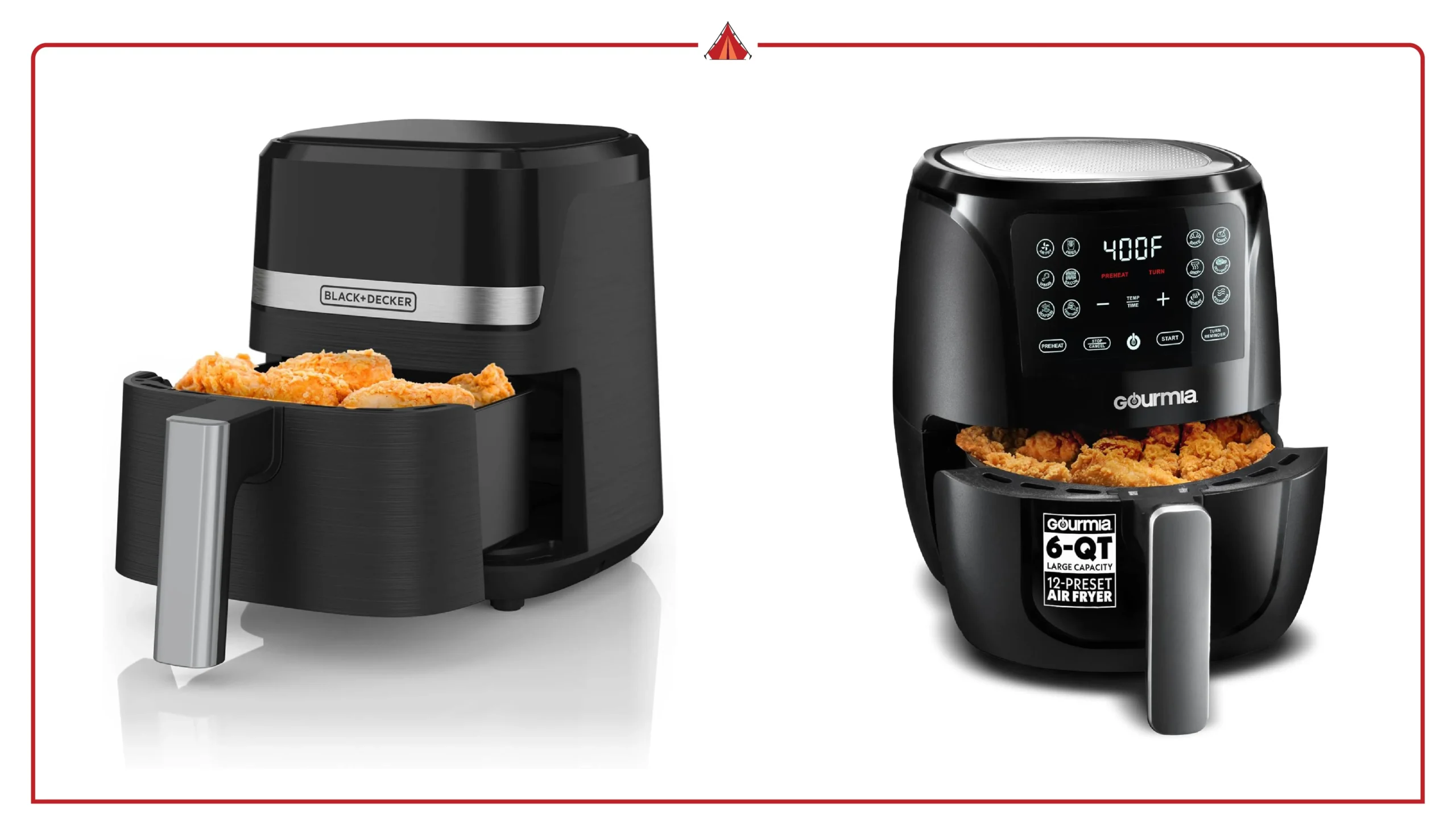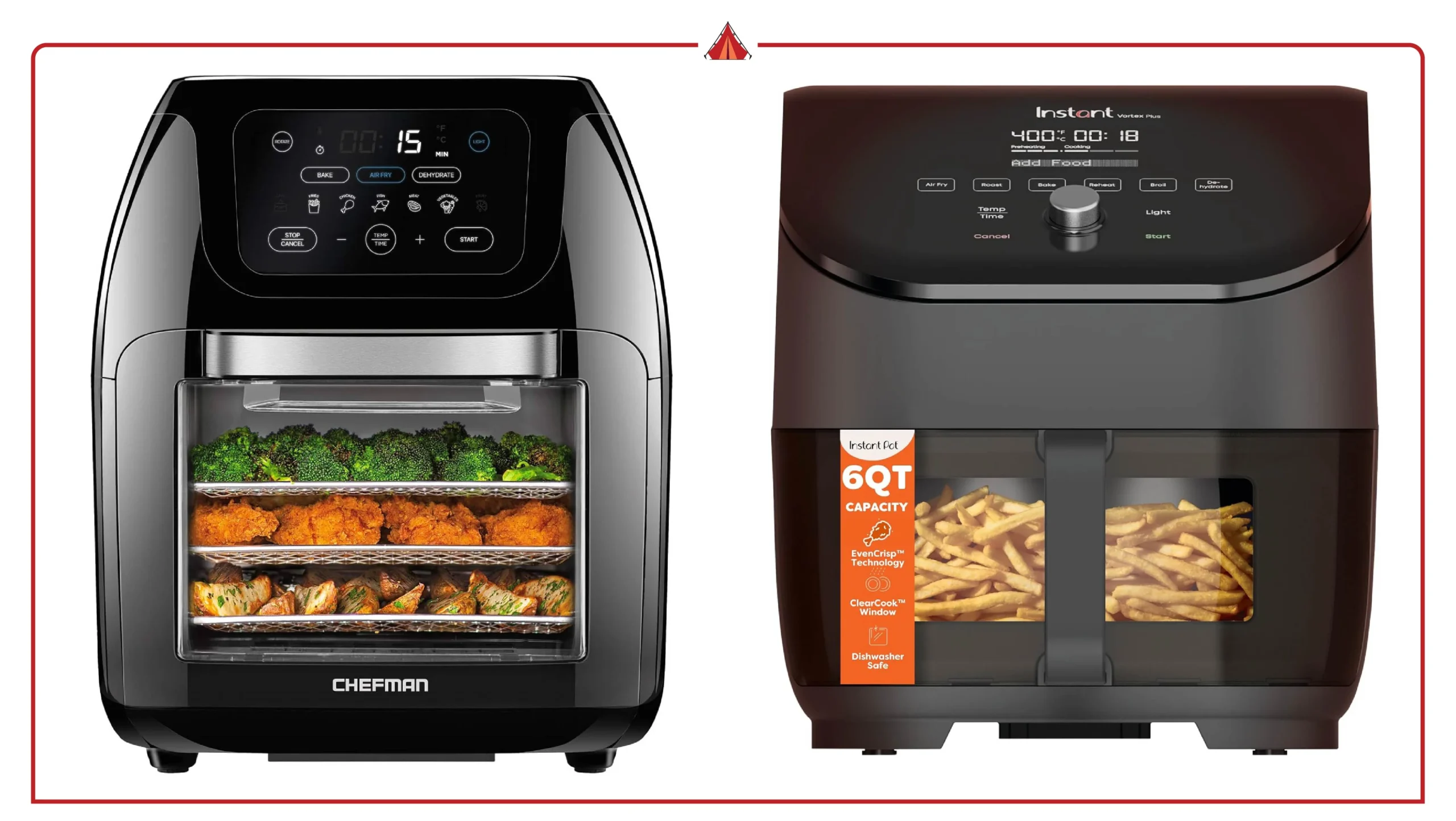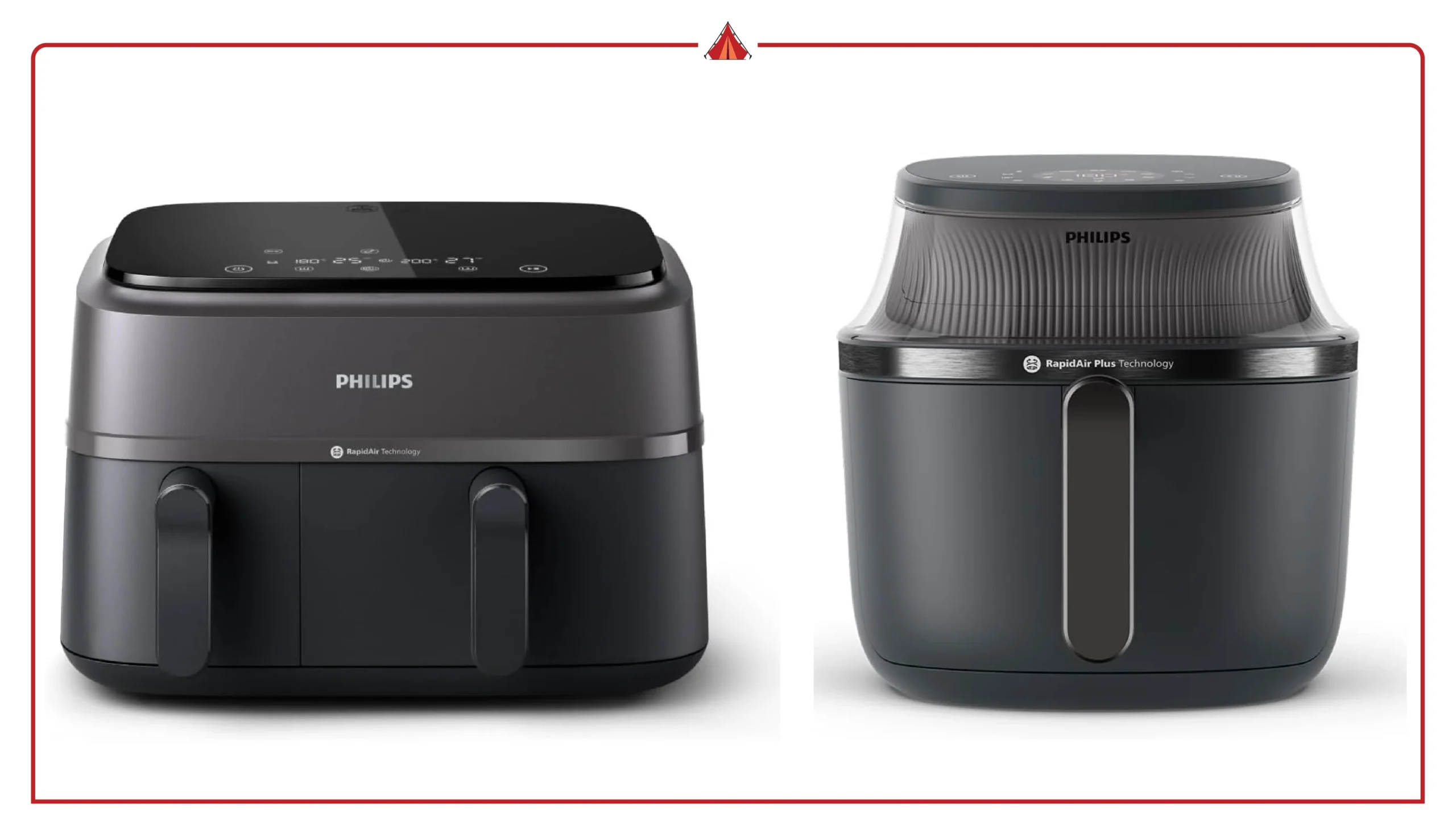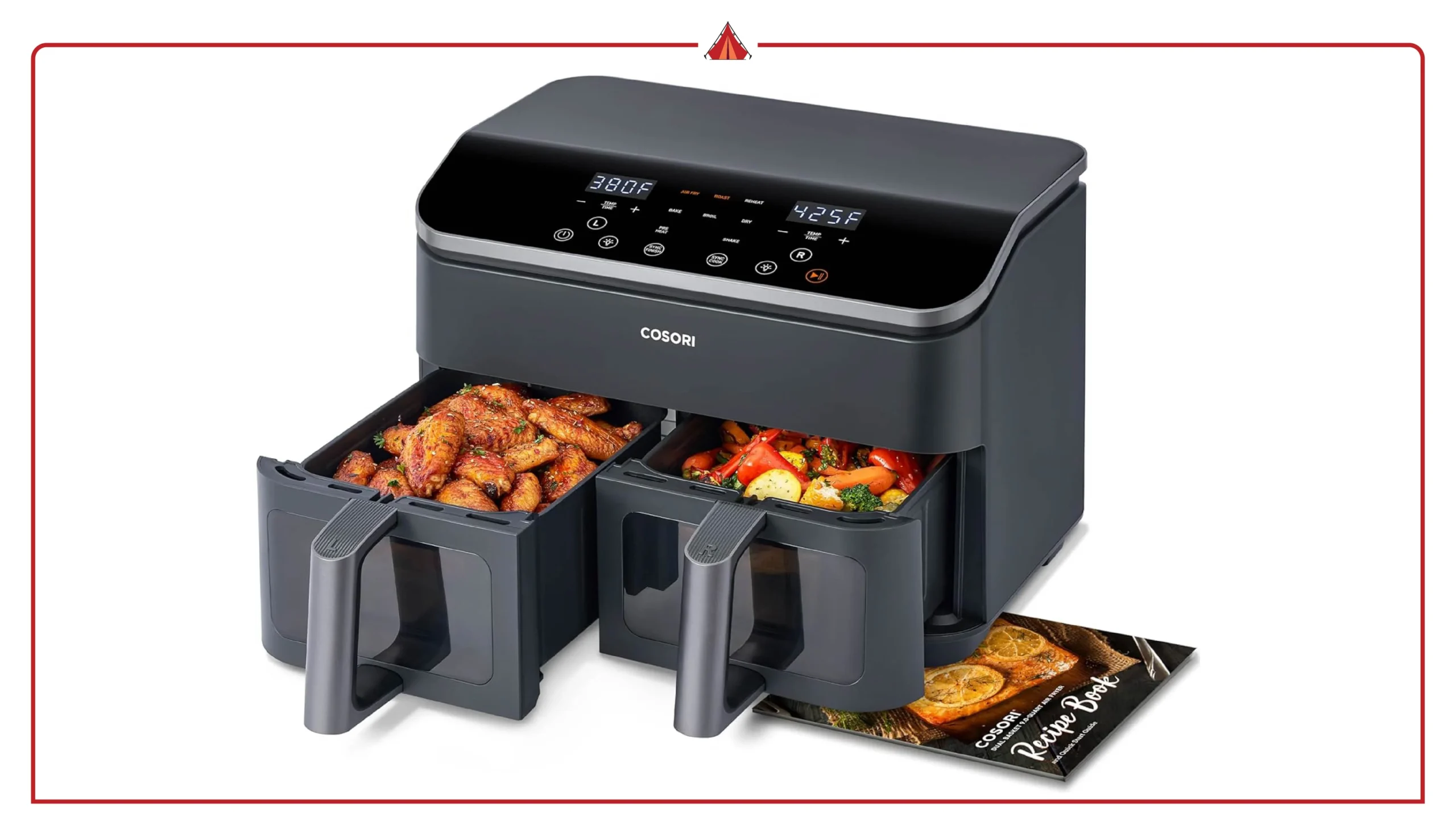
Ninja AF101 Air Fryer Review: Is It Still Worth It in 2026?

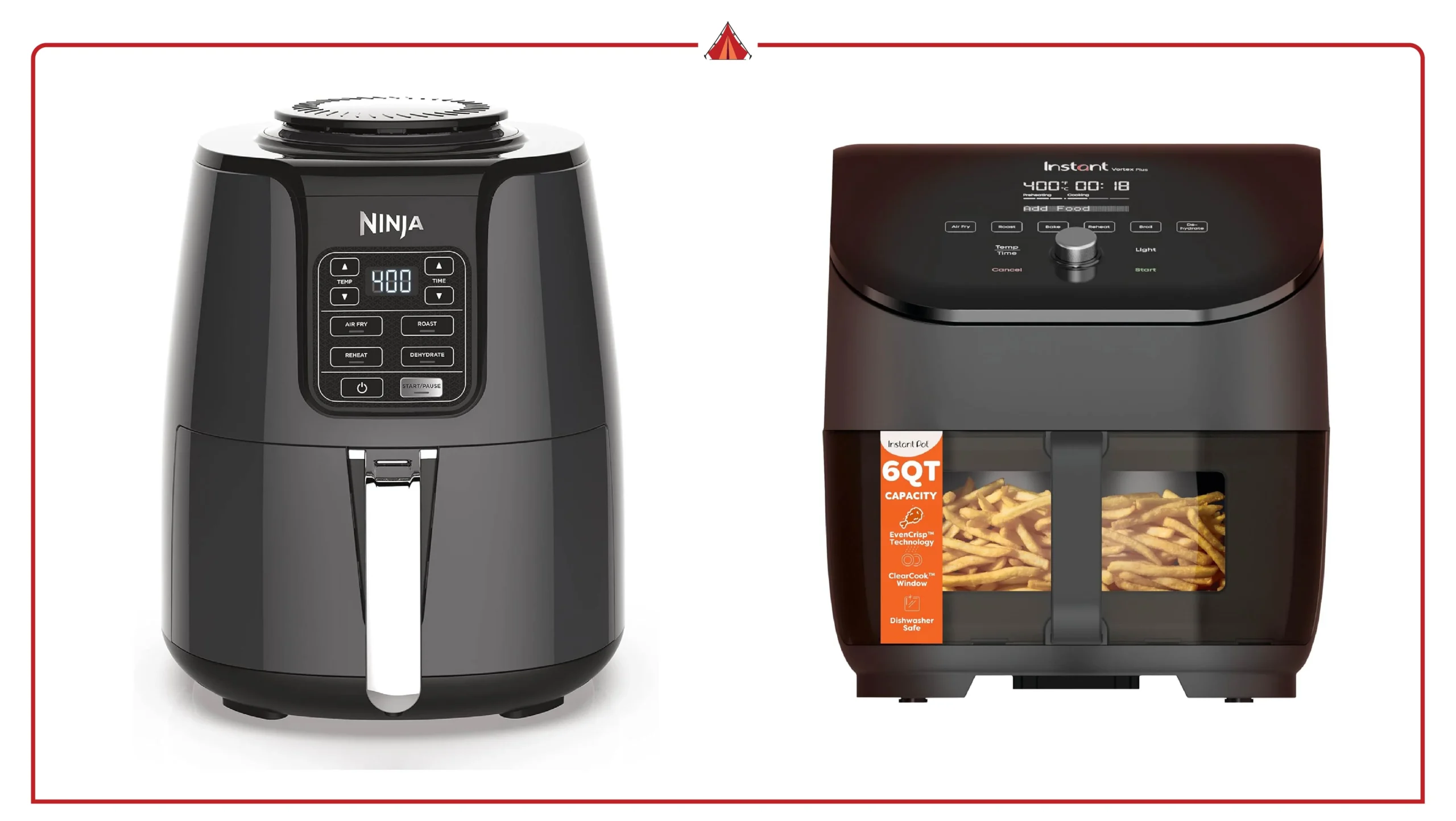
This post contains affiliate links. We may earn a commission if you purchase through our links, at no extra cost to you.
The Ninja AF101 has spent years near the top of Amazon’s best-seller list. For a lot of people, it was their first air fryer — and for many, it’s still the one they’d recommend without hesitation. That kind of staying power means something.
But the air fryer market in 2026 looks very different from when the AF101 launched. Competitors have closed the gap. Capacities have grown. Features that once felt premium — app connectivity, dual baskets, smart sensors — are now available at prices that would have seemed impossible a few years ago.
So the real question isn’t whether the Ninja AF101 is a good air fryer. It is. The question is whether it’s still the right air fryer for you — given what else is available at the same price point and just above it.
This review answers that directly. You’ll get an honest breakdown of real-world performance, a clear picture of where the AF101 falls short, and a straight comparison against the alternatives worth considering. By the end, you’ll know exactly whether to buy the AF101 or look elsewhere — and if elsewhere, which model makes the most sense for your kitchen and cooking habits.
Quick Answer: Is the Ninja AF101 Still Worth Buying in 2026?
For most solo users and couples, yes — the Ninja AF101 is still a strong buy. It delivers consistent results, cleans up easily, and fits comfortably on a small kitchen counter. If you’re cooking for one or two people and want a reliable air fryer without overcomplicating the decision, the AF101 holds up well against newer competition at its price point.
Where it loses ground is capacity. Four quarts works well for two people — it starts to feel limiting the moment you’re feeding three or more. If that’s your situation, a step-up model will serve you better from day one.
Here’s where each top pick fits:
- Best Overall Value → Ninja AF101 — The most proven compact air fryer for solo users and couples who want simplicity, reliability, and easy cleanup
- Best Step-Up Option → Cosori Pro II 5.8 Qt — More cooking space, smart app connectivity, and a square basket design that makes better use of the available capacity
- Best for Families → Ninja Foodi Dual Basket DZ201 — Two independent baskets with synced finish times, purpose-built for households that need to cook two things at once
If you’re still deciding between these three, the buyer’s guide further down will clarify exactly which one fits your cooking habits and kitchen setup.
How the Top Air Fryers Compare
Before diving into the full reviews, here’s a side-by-side look at every model covered in this guide. Use this to quickly identify which options match your capacity needs and use case — then read the individual reviews for the models that stand out.
| Product | Brand | Capacity | Best For | Standout Feature |
|---|---|---|---|---|
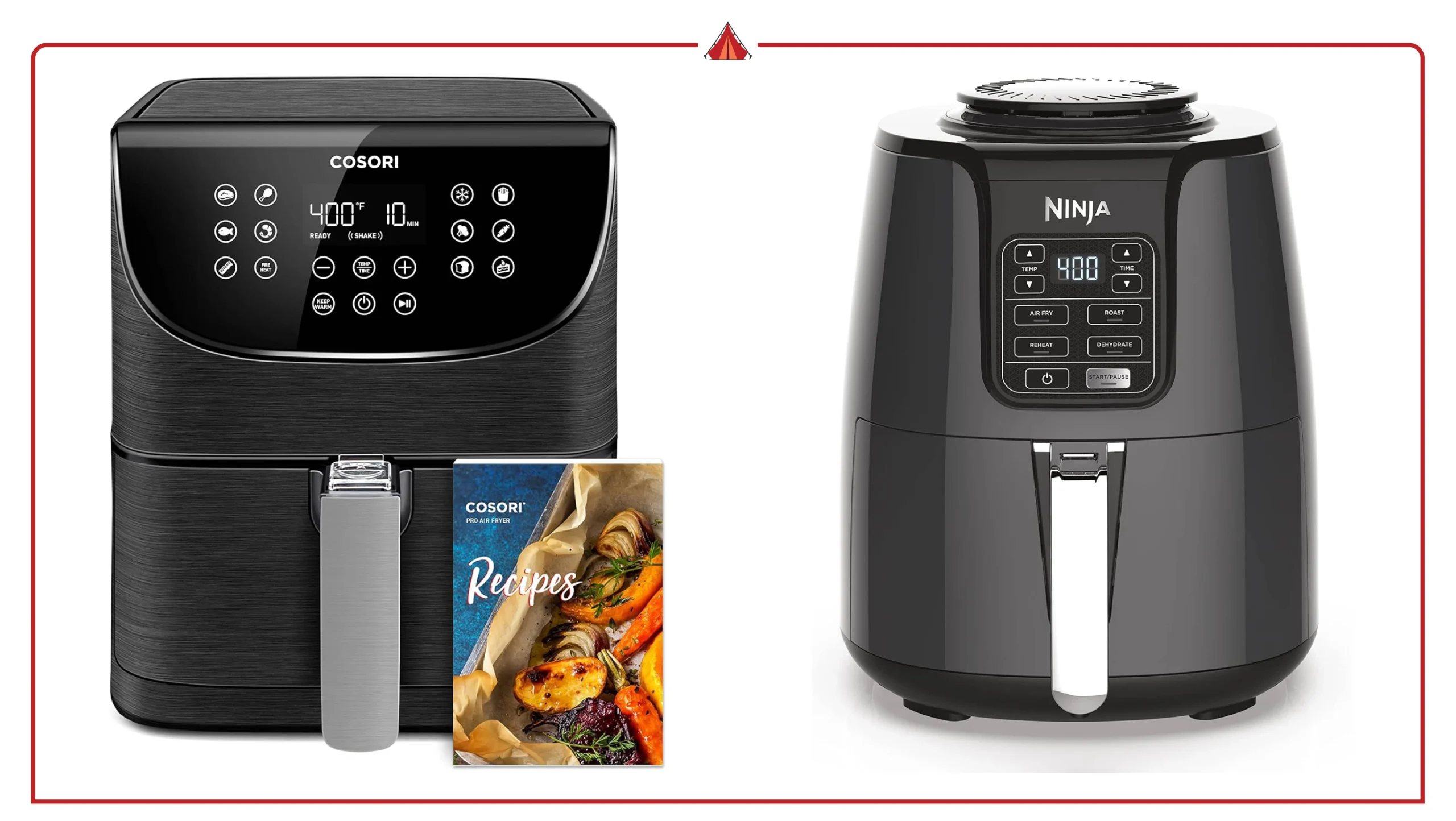
| AF101 Air Fryer | Ninja | 4 Qt | Solo users and couples | Wide temp range with dehydrate function |
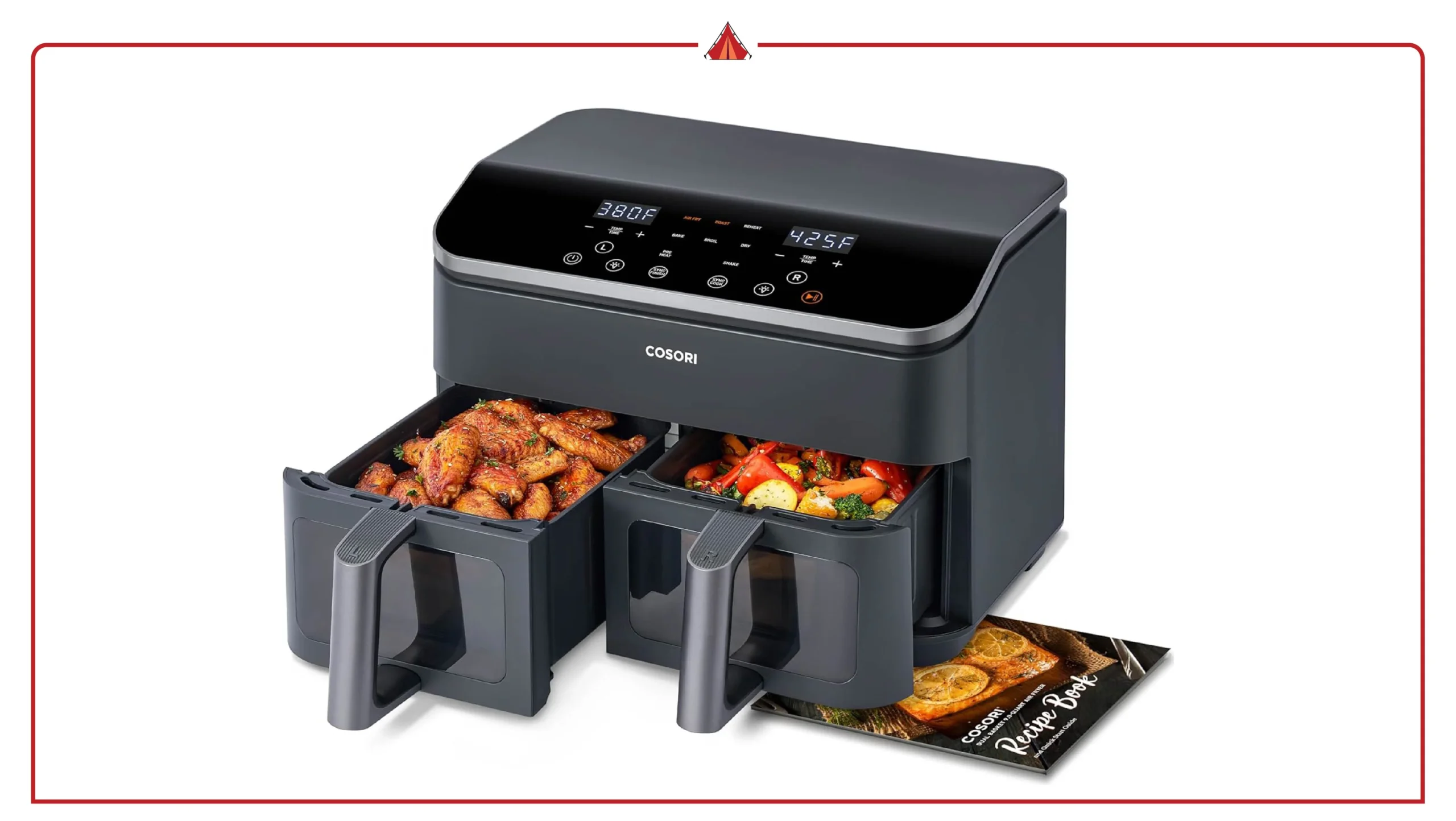
| Pro II Air Fryer Oven Combo | Cosori | 5.8 Qt | Those needing more space and smart features | Square basket maximizes usable cooking area |
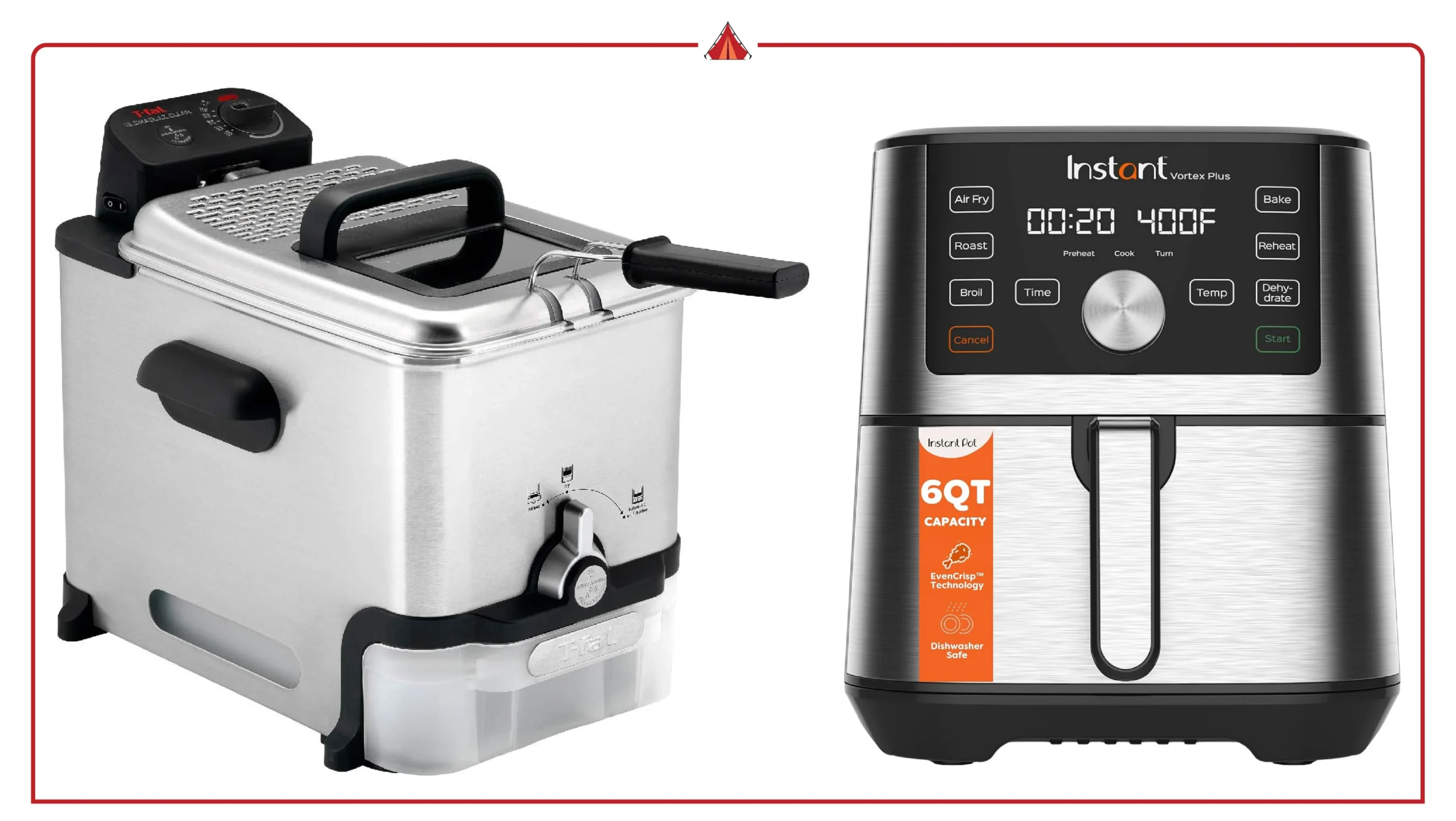
| Vortex Plus Air Fryer | Instant | 6 Qt | Home cooks wanting multi-function versatility | EvenCrisp top-down air circulation |
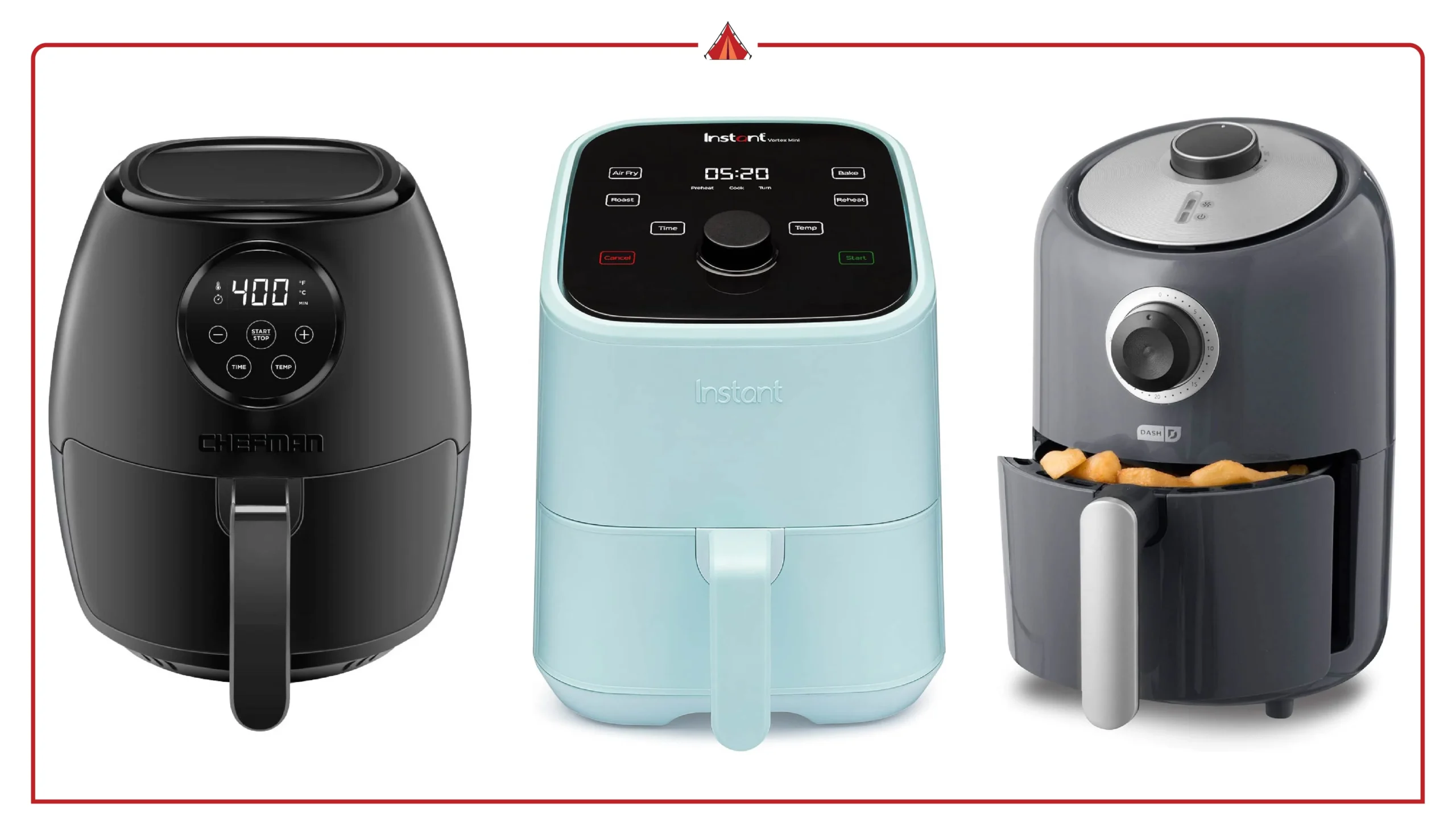
| Compact Air Fryer | DASH | 2.6 Qt | Budget buyers and minimal counter space | Smallest footprint in the category |
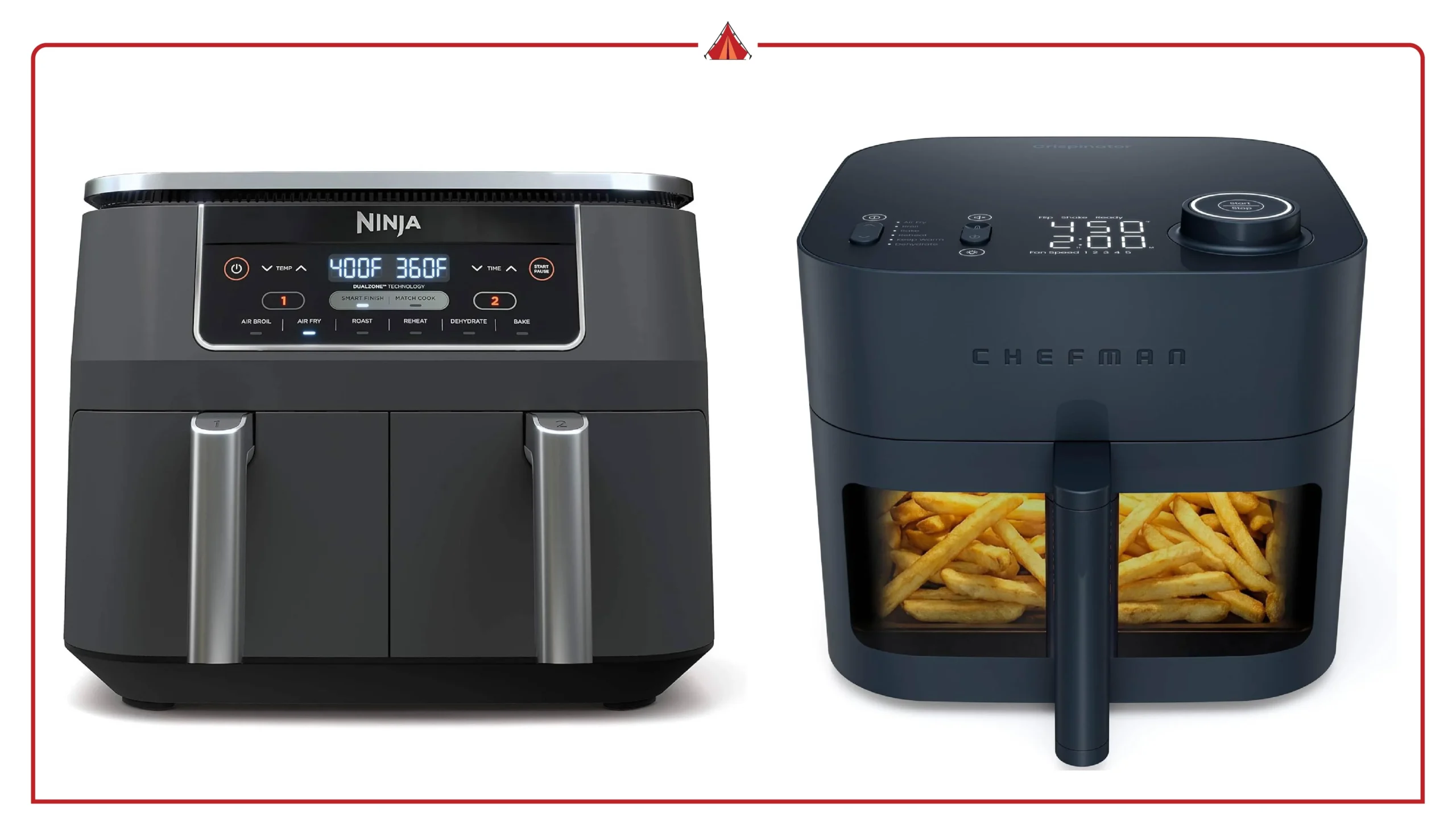
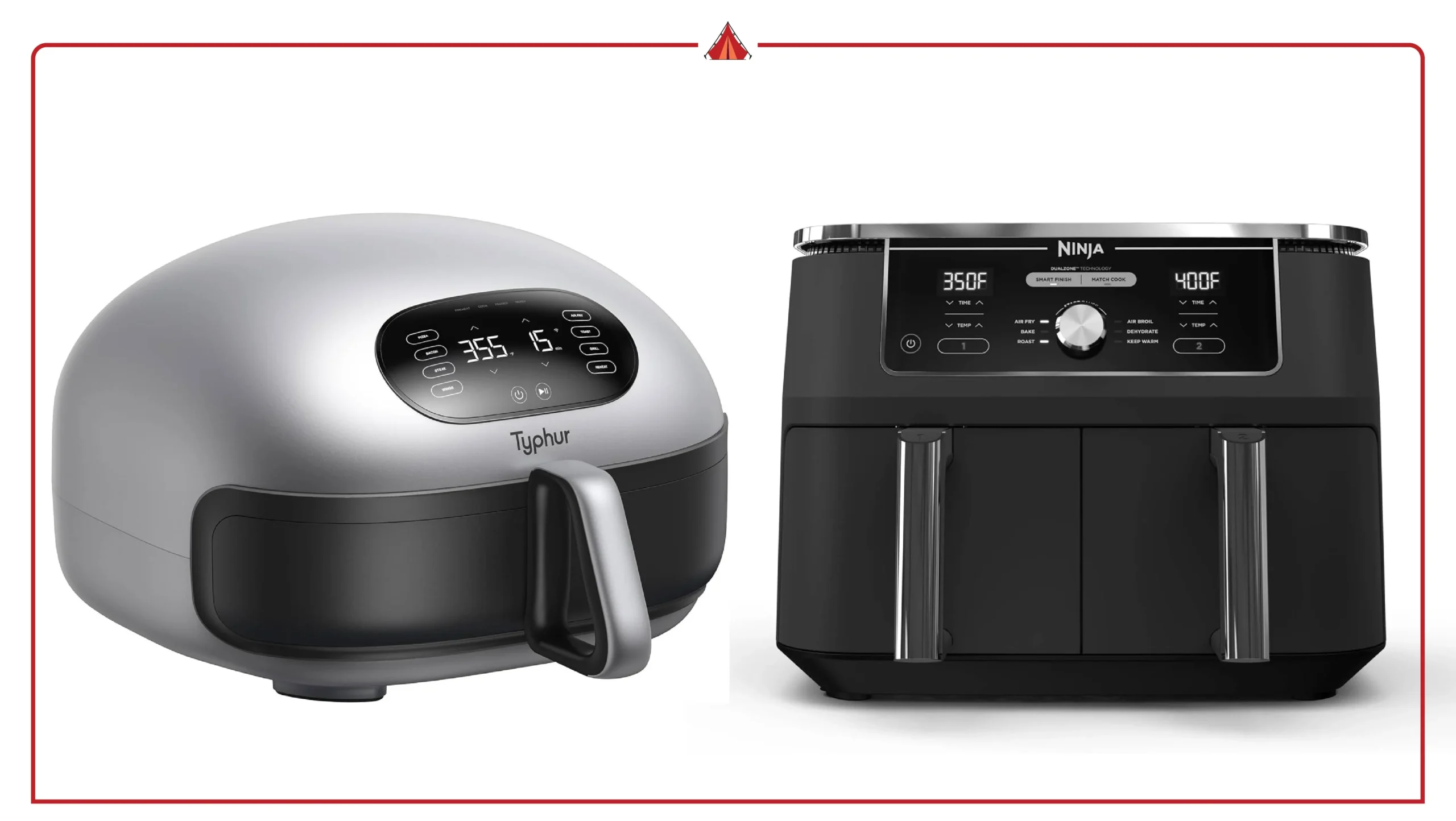
| Foodi 6-in-1 Dual Basket Air Fryer | Ninja | 2 x 4 Qt | Families and meal preppers | DualZone sync cooks two foods simultaneously |
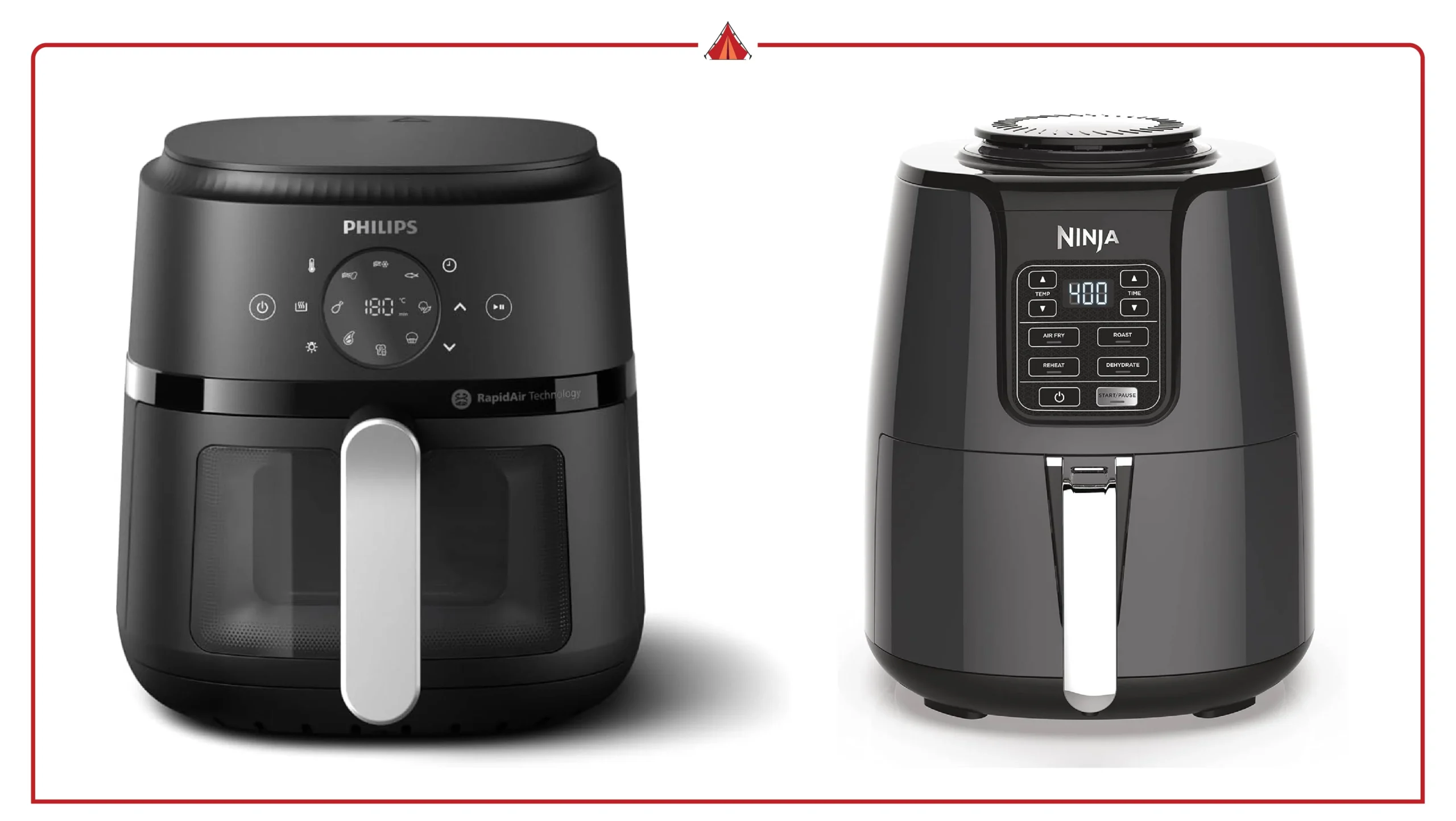
| Premium Airfryer XXL | Philips | 7 Qt | Premium buyers who won’t compromise on performance | Fat Removal Technology for healthier results |
| 8-in-1 Digital Air Fryer | GoWISE USA | 5.8 Qt | Budget buyers wanting large capacity | 8 preset programs at an accessible price point |
Ninja AF101 Air Fryer — Full Review

Who it’s best for: Solo users and couples who want a proven, easy-to-use air fryer with a compact footprint and simple cleanup.
The AF101 earns its reputation through consistency. Set the temperature, set the timer, and it delivers — whether you’re crisping frozen fries, reheating leftover pizza, or working through a batch of chicken wings. There’s no app to configure, no preset library to scroll through, and no learning curve to clear. The dial controls are immediate and intuitive, and the 4-quart ceramic-coated basket produces even browning without the need to constantly monitor or adjust. For the type of cooking most people actually do on a weeknight, the AF101 handles it without friction.
Where it genuinely stands apart from competitors at this size is the temperature floor. Most compact air fryers bottom out at 180°F, which limits them to standard cooking tasks. The AF101 goes down to 105°F, which unlocks a legitimate dehydrate function — useful for making jerky, dried fruit, or vegetable chips without a dedicated dehydrator. It’s a feature that sounds like a spec-sheet bonus but turns out to have real everyday utility for the right buyer. Cleanup is equally straightforward: the basket and crisper plate are both dishwasher-safe, and the ceramic coating releases food residue easily even after hand washing.
Key Features:
- 4-quart ceramic-coated nonstick basket — fits up to 2 lbs of food
- Temperature range of 105°F–400°F with a dedicated dehydrate setting
- Wide temperature dial with a separate 60-minute timer and auto-shutoff
- Dishwasher-safe basket and crisper plate
- Compact footprint designed to fit under standard upper cabinets
Pros:
- Consistent, even cooking results without babysitting the basket
- Dehydrate function at 105°F is a genuine differentiator at this size and price point
- Simple dial controls require zero learning curve
Cons:
- 4-quart capacity forces batch cooking for households of three or more
- No digital display, preset programs, or smart connectivity for buyers who want those features
Cosori Pro II Air Fryer Oven Combo — 5.8 Qt

Who it’s best for: Buyers who’ve outgrown a compact air fryer — or want to start with more capacity — and value smart features alongside reliable everyday performance.
The Cosori Pro II is the most natural step up from the AF101. The jump from 4 quarts to 5.8 quarts is more significant than the numbers suggest, largely because of the basket shape. Where the AF101 uses a round basket, the Cosori Pro II uses a square design that reclaims the corner space a round basket wastes. In practical terms, that means a full batch of chicken thighs, a larger tray of vegetables, or enough fries for three to four people — all in a single cook. For anyone who has found themselves running two batches back-to-back in a smaller air fryer, that difference is felt immediately.
The 12 one-touch presets cover the cooking tasks most people reach for regularly — fries, chicken, steak, seafood, vegetables, and more — and a built-in shake reminder prompts you at the halfway point for foods that benefit from it. The VeSync app integration adds guided recipes and remote monitoring for buyers who want that layer of connectivity, though the fryer performs just as well without ever opening the app. The one honest trade-off is footprint: the Pro II is noticeably larger than the AF101, and in a kitchen where counter space is already tight, that size difference matters before you even turn it on.
Key Features:
- 5.8-quart square basket provides more usable cooking area than round designs at the same stated capacity
- 12 one-touch preset cooking programs with built-in shake reminder
- Compatible with the VeSync app for guided recipes and remote monitoring
- Dishwasher-safe basket, crisper plate, and detachable components
- 1750-watt motor delivers strong, consistent heat circulation
Pros:
- Square basket design makes meaningfully better use of stated capacity than round alternatives
- 12 presets cover the full range of everyday cooking tasks without needing to set time and temperature manually
- App connectivity adds genuine utility for recipe guidance without being required for basic operation
Cons:
- Larger footprint than the AF101 — requires dedicated, permanent counter space in most kitchens
- App setup and occasional connectivity issues add friction for buyers who just want a simple plug-and-cook experience
Instant Vortex Plus 6-Quart Air Fryer
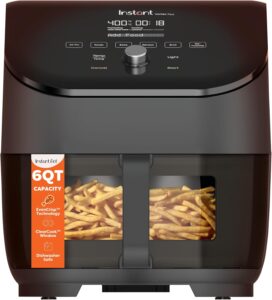
Who it’s best for: Home cooks who want a single appliance that handles air frying, roasting, broiling, baking, reheating, and dehydrating — without paying a premium price for the versatility.
The Instant Vortex Plus makes a case for itself the moment you look past air frying as a single-purpose task. Where the AF101 does one thing very well and the Cosori Pro II adds smart connectivity to a larger basket, the Vortex Plus positions itself as a genuine multi-function kitchen appliance. Six cooking programs — air fry, roast, broil, bake, reheat, and dehydrate — are built in and accessible from a clean touch display, covering the kind of cooking that would otherwise require multiple appliances or a full-size oven. For a small household that wants to minimize countertop clutter without minimizing cooking options, that breadth of function is a real advantage.
The EvenCrisp technology is worth calling out specifically. By circulating hot air from the top down rather than from the sides, the Vortex Plus produces a more consistent browning pattern across the basket — particularly noticeable on larger cuts of meat or full trays of vegetables where edge-to-center variation is common in other models. The clear cooking window is a small but genuinely useful addition, letting you check progress without releasing heat by opening the drawer. The trade-off is the control interface: the touch display is responsive and well-organized once you’re familiar with it, but buyers coming from dial-based air fryers will need a session or two before the workflow feels natural.
Key Features:
- 6-quart capacity handles full family meals and larger batch cooking in a single pass
- EvenCrisp technology circulates air top-down for consistent browning across the entire basket
- Six built-in cooking programs: air fry, roast, broil, bake, reheat, and dehydrate
- Clear cooking window for monitoring food without opening the drawer
- Easy-to-clean nonstick basket and tray — dishwasher safe
Pros:
- Six cooking functions in one appliance reduces the need for multiple countertop devices
- EvenCrisp top-down air circulation produces noticeably more even browning than side-vent competitors
- Clear cooking window is a practical feature that most air fryers at this price point still don’t offer
Cons:
- Touch display interface has a learning curve for buyers accustomed to simple dial controls
- 6-quart footprint is larger than compact models — not a fit for kitchens where counter space is at a premium
DASH Compact Air Fryer — 2.6 Qt
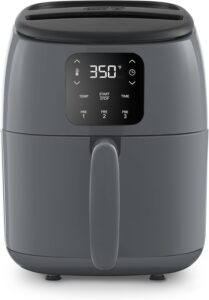
Who it’s best for: Solo users, college students, or anyone working with a genuinely small kitchen who needs the most compact air fryer available at the lowest reasonable entry point.
The DASH Compact exists to solve one problem cleanly: getting a functional air fryer into the smallest possible space at the lowest possible investment. At 2.6 quarts, it is purpose-built for single-serving portions — a chicken breast, a small batch of fries, two servings of roasted vegetables, or a handful of frozen snacks. It won’t handle a family meal and it isn’t trying to. What it does is give a solo user or a first-time air fryer buyer a reliable, no-commitment way to build the air frying habit without dedicating significant counter space or budget to the experiment.
The auto-shutoff and cool-touch exterior address the practical safety concerns that come with a compact appliance that might sit on a dorm desk or a crowded apartment counter. The manual dial controls are about as simple as an air fryer gets — set the temperature, set the timer, walk away. There are no presets to navigate, no app to pair, and no display to interpret. That simplicity is genuinely appealing for the right buyer, but it does come with a real limitation: without a temperature display or digital readout, precision cooking is largely guesswork. Recipes that call for specific temperatures require a separate thermometer to verify, which adds friction that more capable models at a modest price step up eliminate entirely.
Key Features:
- 2.6-quart capacity designed for single-serving portions and small-batch cooking
- Auto-shutoff function and cool-touch housing for safe operation in compact living spaces
- Manual dial controls for temperature and timer — no digital interface required
- Available in multiple colors to complement different kitchen aesthetics
- Lightweight and easy to move or store when not in use
Pros:
- Smallest footprint in the category — fits comfortably on a dorm desk or crowded apartment counter
- Cool-touch exterior and auto-shutoff make it one of the safer options for unsupervised cooking
- Accessible entry price makes it a low-risk first air fryer for buyers new to the category
Cons:
- No temperature display or digital controls make precise cooking difficult without a separate thermometer
- 2.6-quart capacity is genuinely limiting — even solo users cooking larger portions will find themselves working in batches
Ninja Foodi 6-in-1 8-Qt. 2-Basket Air Fryer (DZ201)

Who it’s best for: Families and dedicated meal preppers who need to cook two different foods at the same time — and are ready to move beyond the constraints of a single-basket air fryer entirely.
The DZ201 is what happens when the core limitation of a standard air fryer — one basket, one food, one temperature at a time — gets solved at the product level rather than worked around at the cooking level. Two independent 4-quart baskets mean you can run chicken thighs in one zone and roasted vegetables in the other, each at their own temperature and timer setting, without any crossover in flavor or cooking time. For a household that has been running two consecutive batches in a compact air fryer just to get a complete meal on the table, the DZ201 removes that friction entirely and replaces it with a genuinely parallel cooking workflow.
The DualZone technology is the feature that makes the dual basket concept fully practical rather than just convenient in theory. When two foods with different cook times are running simultaneously, DualZone automatically staggers the start of the faster-cooking basket so that both finish at exactly the same time. That level of coordination — syncing a 25-minute protein with a 12-minute vegetable side without manual intervention — is the kind of thing that changes how confidently you plan a meal around an air fryer. The honest trade-off is size and weight. The DZ201 is a large, heavy appliance that earns a permanent spot on the counter rather than a rotating one. If your kitchen can accommodate it, the cooking payoff is significant. If counter space is already a constraint, the Cosori Pro II or even the AF101 are more realistic fits.
Key Features:
- Two independent 4-quart baskets with separate time and temperature controls for each zone
- DualZone technology syncs both baskets to finish cooking simultaneously regardless of different cook times
- Six cooking programs: air fry, air broil, roast, bake, reheat, and dehydrate
- 8-quart total capacity handles full family meals and large batch meal prep in a single cook session
- Dishwasher-safe baskets and crisper plates for straightforward cleanup
Pros:
- DualZone sync eliminates the back-to-back batch cooking that makes compact air fryers frustrating for families
- 8-quart total capacity is the most practical large-batch solution in the Ninja lineup
- Six cooking programs cover the full range of everyday cooking tasks across both baskets independently
Cons:
- Significantly larger and heavier than single-basket models — requires a permanent, dedicated counter position
- Higher investment than the AF101 makes it harder to justify for buyers cooking for one or two people
Philips Premium Airfryer XXL

Who it’s best for: Premium buyers who cook for a full household regularly and want the most capable, most consistently performing air fryer available — without making any concessions on results to stay within a budget.
The Philips Premium Airfryer XXL operates from a different set of assumptions than every other model in this guide. Where most air fryers compete on capacity-to-price ratio or feature count, the Philips competes on cooking quality as the primary value proposition. The Fat Removal Technology built into the basket design actively channels excess fat away from food as it cooks, collecting it in a separate compartment below rather than letting it pool and recirculate. For buyers who moved to air frying specifically for health reasons, that distinction matters in a way that a preset library or app integration simply doesn’t.
At 7 quarts, the XXL handles whole chickens, large racks of ribs, and full family-sized portions without breaking a sweat. The Smart Sensing technology reads what’s in the basket and automatically adjusts time and temperature to match, reducing the trial-and-error calibration that even experienced air fryer users go through when cooking an unfamiliar cut or portion size. The results are consistently even — the kind of browning and texture that makes other air fryers feel like they’re approximating what this one simply delivers as a baseline. The honest conversation about the Philips XXL always comes back to price. It sits at a significantly higher investment than the AF101 or even the Cosori Pro II, and for buyers who are primarily reheating leftovers and crisping frozen foods, that premium is genuinely hard to justify. For buyers who cook from scratch regularly, cook for four or more people, and care about the quality difference between a good result and a great one — the Philips earns its price point clearly.
Key Features:
- Fat Removal Technology channels and captures excess fat away from food during cooking into a separate compartment
- 7-quart / 3-lb capacity handles whole chickens and large batch cooking in a single pass
- Smart Sensing technology automatically adjusts time and temperature based on what’s in the basket
- Rapid Air technology circulates heat evenly for consistent browning across the entire cooking surface
- Dishwasher-safe components with a quick-clean nonstick basket design
Pros:
- Fat Removal Technology delivers a meaningfully healthier cooking result than standard air fryer basket designs
- Smart Sensing automation removes the guesswork from cooking unfamiliar portions or cuts
- 7-quart capacity handles whole proteins and large family meals without batch cooking
Cons:
- Premium price point is significantly higher than mid-range alternatives — a difficult justification for light or occasional users
- Large footprint and weight make repositioning or cabinet storage impractical for most kitchens
GoWISE USA 5.8-Qt 8-in-1 Digital Air Fryer
Who it’s best for: Budget-conscious buyers who need more capacity than a compact air fryer offers but aren’t willing to pay mid-range prices to get it.
The GoWISE USA 5.8-Qt makes a straightforward case for itself: more capacity and more cooking presets than the AF101, at a price point that stays well below the Cosori Pro II and Instant Vortex Plus. For a buyer whose primary frustration with compact air fryers is running multiple batches to feed two or three people, the GoWISE closes that gap without a significant jump in investment. The eight preset programs — fries, meat, fish, shrimp, pizza, chicken, steak, and cake — cover the cooking tasks most households reach for regularly, and the digital touch display makes selecting and adjusting them straightforward enough for first-time air fryer users to get comfortable quickly. An included recipe book lowers the barrier further for buyers who want a starting point rather than building their own temperature and time library from scratch.
Where the GoWISE asks for honest concessions is build quality. The basket mechanism, exterior finish, and overall material feel are noticeably less refined than Ninja or Cosori models at comparable or only slightly higher price points. It functions reliably for standard everyday cooking tasks, but buyers who handle their appliances roughly or expect the kind of fit and finish that comes with a premium brand will feel the difference. The nonstick coating also shows wear faster than ceramic-coated alternatives with heavy regular use, which is worth factoring into the value calculation for buyers planning to use it daily over several years. For occasional use or a secondary kitchen, the trade-off is easy to accept. As a primary daily-use appliance for a demanding household, the GoWISE is better understood as a budget entry point than a long-term investment.
Key Features:
- 5.8-quart capacity handles meals for two to four people in a single cook without batch splitting
- Eight preset cooking programs covering the most common everyday air fryer tasks
- Digital touch display with time and temperature adjustment for manual override of any preset
- Includes a recipe book to help new users build confidence quickly
- Detachable nonstick basket with a cool-touch handle for safe removal
Pros:
- Largest capacity available at the budget end of the market — closes the batch cooking gap without a mid-range investment
- Eight presets cover the full range of standard cooking tasks without requiring manual time and temperature configuration
- Included recipe book is a practical addition for first-time air fryer buyers
Cons:
- Build quality and material finish are noticeably less refined than Ninja and Cosori models at a modest price step up
- Nonstick coating shows wear faster than ceramic-coated alternatives under heavy daily use
Buyer’s Guide: What to Consider Before Buying a Compact Air Fryer
The air fryer market has matured to the point where almost every model at every price point produces acceptable results on standard cooking tasks. The decision is rarely about which one cooks — it’s about which one fits your household size, your kitchen setup, and the way you actually cook day to day. These are the factors that separate the right choice from a purchase you’ll quietly regret six months in.
Capacity — How Much Do You Actually Need?
Capacity is the single most consequential spec to get right before buying, and it’s also the one most commonly underestimated. A 4-quart air fryer like the AF101 comfortably handles one to two portions — a couple of chicken breasts, a single-layer batch of fries, or a full serving of roasted vegetables. The moment you’re regularly cooking for three or more people, that 4-quart ceiling starts producing a familiar frustration: two batches to make one complete meal, with the first batch sitting and cooling while the second finishes.
The jump to 5.8 quarts — the size of the Cosori Pro II and GoWISE USA — resolves that problem for most households. Square basket designs at this size make the capacity gain even more practical, reclaiming the corner space that round baskets leave unused. For families of four or dedicated meal preppers, 6 quarts and above is the realistic starting point, with the Ninja Foodi DZ201’s dual basket configuration offering the most flexible large-batch solution in the category.
A useful rule of thumb: buy one size up from what you think you need. Most buyers who return or replace their air fryer within the first year do so because they bought too small, not too large.
Read Next: Best Small Air Fryers for One or Two People: Compact Picks That Don’t Sacrifice Performance
Temperature Range and Specialty Functions
Most air fryers operate between 180°F and 400°F, which covers the full range of standard cooking tasks — crisping, roasting, reheating, and browning. Where models start to differentiate is at the lower end of the temperature range. The Ninja AF101’s 105°F floor is a genuine functional differentiator: at that temperature, the dehydrate function works as designed, producing jerky, dried fruit, and vegetable chips at a quality level that most compact dehydrators match but few air fryers reach.
If dehydrating is a cooking task you’d actually use, the AF101’s temperature range is a meaningful reason to choose it over alternatives that technically offer a dehydrate preset but can’t drop low enough to execute it properly. If you’re unlikely to use that function, it’s a spec that deserves less weight in your decision than capacity or build quality.
Multi-function models like the Instant Vortex Plus expand the cooking repertoire further — adding broil, bake, and roast modes that effectively replace oven use for smaller portions. For buyers trying to reduce how often they heat a full-size oven for a single serving or a small meal, that versatility has genuine daily utility.
Ease of Cleaning
Cleaning is the part of air fryer ownership that reviews tend to underweight and owners tend to feel most strongly about after the first month of regular use. Dishwasher-safe components are the baseline expectation at this point — every model in this guide meets that standard. The more meaningful distinction is coating type.
Ceramic-coated baskets, like the one in the Ninja AF101, release food residue more cleanly than standard nonstick coatings, hold up better to repeated dishwasher cycles, and show less visible wear over time. Standard nonstick coatings — present in the GoWISE USA and several budget models — function well initially but begin to show scratching and surface degradation with heavy use, particularly if metal utensils or abrasive cleaning tools are used on them.
For buyers who plan to use their air fryer daily over several years, ceramic coating is worth factoring into the value comparison even when the upfront price difference is modest. For occasional users or buyers treating the purchase as a low-commitment entry point, standard nonstick performs adequately for the use pattern.
Footprint and Storage
The practical reality of air fryer ownership is that most units end up living on the counter permanently rather than being stored between uses. They’re heavy enough that taking them in and out of a cabinet becomes a friction point, and frequent use makes putting them away feel more disruptive than leaving them out. That means the footprint you’re buying is the footprint you’re committing to on your counter — permanently.
Compact models like the AF101 and DASH are specifically designed to fit under standard upper cabinets, which makes them genuinely storable for buyers who prefer a clear counter. Larger models — the Vortex Plus, DZ201, and Philips XXL — require a dedicated counter position and the space to accommodate it comfortably. Before buying at the larger capacity end of the market, it’s worth measuring your available counter space and confirming the fit, rather than discovering the problem after delivery.
Read Next: Best Air Fryer for a Family of 4 in 2026: Large-Capacity Picks That Actually Deliver
Digital vs Dial Controls
Dial controls — like those on the Ninja AF101 and DASH Compact — offer immediate tactile feedback, require no orientation period, and work reliably without any software layer to introduce friction. For buyers who want to set a temperature and a timer and walk away, dials are faster and more intuitive than any touch interface.
Digital controls and preset programs add value in specific situations: when you’re new to air frying and want guardrails, when you’re cooking a wide variety of foods and don’t want to look up time and temperature settings manually, or when app connectivity for guided recipes is something you’d genuinely use. The Cosori Pro II’s 12 presets and the GoWISE USA’s eight-program library both reduce the mental load of learning a new cooking method, which has real value for buyers in the earlier stages of building their air fryer confidence.
The honest answer is that experienced cooks tend to migrate toward manual control regardless of what the interface offers. If you’re new to air frying, presets provide a useful on-ramp. If you already know what temperatures and times your regular meals need, dials are faster and simpler in daily use.
Frequently Asked Questions
Q: Is the Ninja AF101 good for beginners?
A: Yes — the AF101 is one of the more beginner-friendly air fryers available at its price point. The dial controls require no orientation period, and the cooking results are consistent enough that new users build confidence quickly without fighting a learning curve. There are no presets to navigate or apps to configure, which removes the friction that puts some first-time buyers off digital-interface models. If you’ve never used an air fryer before and want to start simply, the AF101 is a reliable entry point.
Q: What can you cook in the Ninja AF101?
A: The AF101 handles the full range of standard air fryer tasks — frozen foods, fresh proteins, roasted vegetables, reheated leftovers, and baked snacks all produce strong results. The 105°F temperature floor also enables genuine dehydrating, which expands the cooking repertoire beyond what most compact air fryers offer. The practical limitation is portion size: at 4 quarts, the AF101 works best for one to two servings per batch, so larger meals will require cooking in stages.
Q: How does the Ninja AF101 compare to the Ninja AF161?
A: The AF161 is the next step up in Ninja’s compact air fryer lineup, offering a 5.5-quart capacity and a max broil function not available on the AF101. For solo users and couples, the AF101’s 4-quart basket is sufficient for most cooking tasks and the AF161’s additional capacity may not justify the price difference. For buyers who regularly cook larger portions or want the broil function for finishing dishes, the AF161 is worth the step up. The core cooking performance between the two models is comparable — the difference is primarily capacity and function count.
Read Next: Best Air Fryers of 2026: Our Top 8 Picks for Every Budget and Kitchen Size
Q: Is the Ninja AF101 basket dishwasher safe?
A: Yes — both the basket and the crisper plate are dishwasher safe, which makes the AF101 one of the easier air fryers to maintain with regular use. The ceramic-coated nonstick surface also releases food residue cleanly during hand washing, so the dishwasher is a convenience rather than a necessity. Avoid abrasive cleaning tools on the ceramic coating to preserve its nonstick performance over time.
Q: Does the Ninja AF101 have a preheat function?
A: The AF101 does not have a dedicated preheat button or automatic preheat cycle. Most users preheat it manually by running it at the target temperature for two to three minutes before adding food — a simple workaround that adds minimal time to the cooking process. For most everyday cooking tasks, skipping the preheat step produces results that are close enough to make the extra time optional rather than essential.
Q: Is the Ninja AF101 worth it if you’re cooking for more than two people?
A: For households of three or more, the AF101’s 4-quart capacity will produce frustration before long. Cooking a complete meal for three or four people typically requires running two consecutive batches, which extends total cook time and means the first batch is sitting and cooling while the second finishes. If you’re regularly cooking for more than two people, a 5.8-quart model like the Cosori Pro II or a dual basket option like the Ninja Foodi DZ201 is a more practical starting point than the AF101.
Q: How long does the Ninja AF101 last?
A: With regular use and proper care, the AF101 typically performs reliably for three to five years. The ceramic-coated basket holds up well to repeated dishwasher cycles and daily use compared to standard nonstick coatings, which contributes to its durability over time. Avoiding metal utensils inside the basket and not submerging the main unit in water are the two most important care practices for extending its lifespan.
Read Next: Ninja vs Cosori Air Fryer: Which One Should You Actually Buy in 2026?
Final Verdict: Which Air Fryer Should You Actually Buy?
The Ninja AF101 has earned its reputation honestly. It cooks consistently, cleans easily, and asks very little of the person using it. The dial controls work. The ceramic basket holds up. The dehydrate function at 105°F is a genuine differentiator that most competitors at this size still can’t match. For a solo user or a couple who wants a reliable, low-maintenance air fryer that delivers good results without any setup friction, the AF101 remains a strong choice in 2026 — not because nothing better exists, but because nothing better exists at this size for this specific buyer.
The honest caveat is that the AF101 was designed for a narrower use case than many buyers realize before purchasing. If you’re cooking for three or more people, the 4-quart capacity will create friction from the first week. If you want smart features, larger presets, or app connectivity, more capable models exist at price points that are closer to the AF101 than they used to be. And if you’re a serious home cook who wants the best possible result regardless of price, the Philips XXL operates at a level the AF101 doesn’t attempt to reach.
The right choice comes down to who you’re cooking for and how you cook. Here’s where each pick fits cleanly:
Best Overall Value → Ninja AF101 The most proven compact air fryer for solo users and couples. Consistent results, simple controls, ceramic coating, and a dehydrate function that actually works. Buy this if you’re cooking for one or two people and want to make a decision you won’t second-guess.
Best Step-Up Option → Cosori Pro II 5.8 Qt The natural next move for buyers who need more capacity or want smart features without paying a premium price. The square basket design makes the capacity jump more meaningful than the numbers alone suggest, and the 12 presets reduce the learning curve for newer air fryer users.
Best for Families → Ninja Foodi Dual Basket DZ201 The most practical solution for households that need to cook two different foods simultaneously and are done working around the limitations of a single basket. DualZone sync and 8 quarts of total capacity make batch cooking feel like a solved problem rather than an ongoing workaround.
Best Budget Pick → GoWISE USA 5.8 Qt For buyers who need more capacity than the AF101 offers but aren’t ready to invest in a mid-range model. The build quality asks for realistic expectations, but the cooking performance and eight-preset library deliver more value than the price suggests for light to moderate use.
Best Premium Pick → Philips Premium Airfryer XXL For buyers who cook from scratch regularly, feed a full household, and want the best cooking result available without compromise. The Fat Removal Technology and Smart Sensing automation justify the premium for the right buyer — and make every other model feel like a trade-off by comparison.
If you’re still deciding between the AF101 and one of the alternatives above, go back to one question: how many people are you regularly cooking for? That single answer will point you to the right pick more reliably than any spec comparison. The AF101 is the right answer for one to two people. For everyone else, the step up pays for itself quickly.