Best Air Fryer Under $100: Mid-Range Picks That Outperform Their Price (2026)

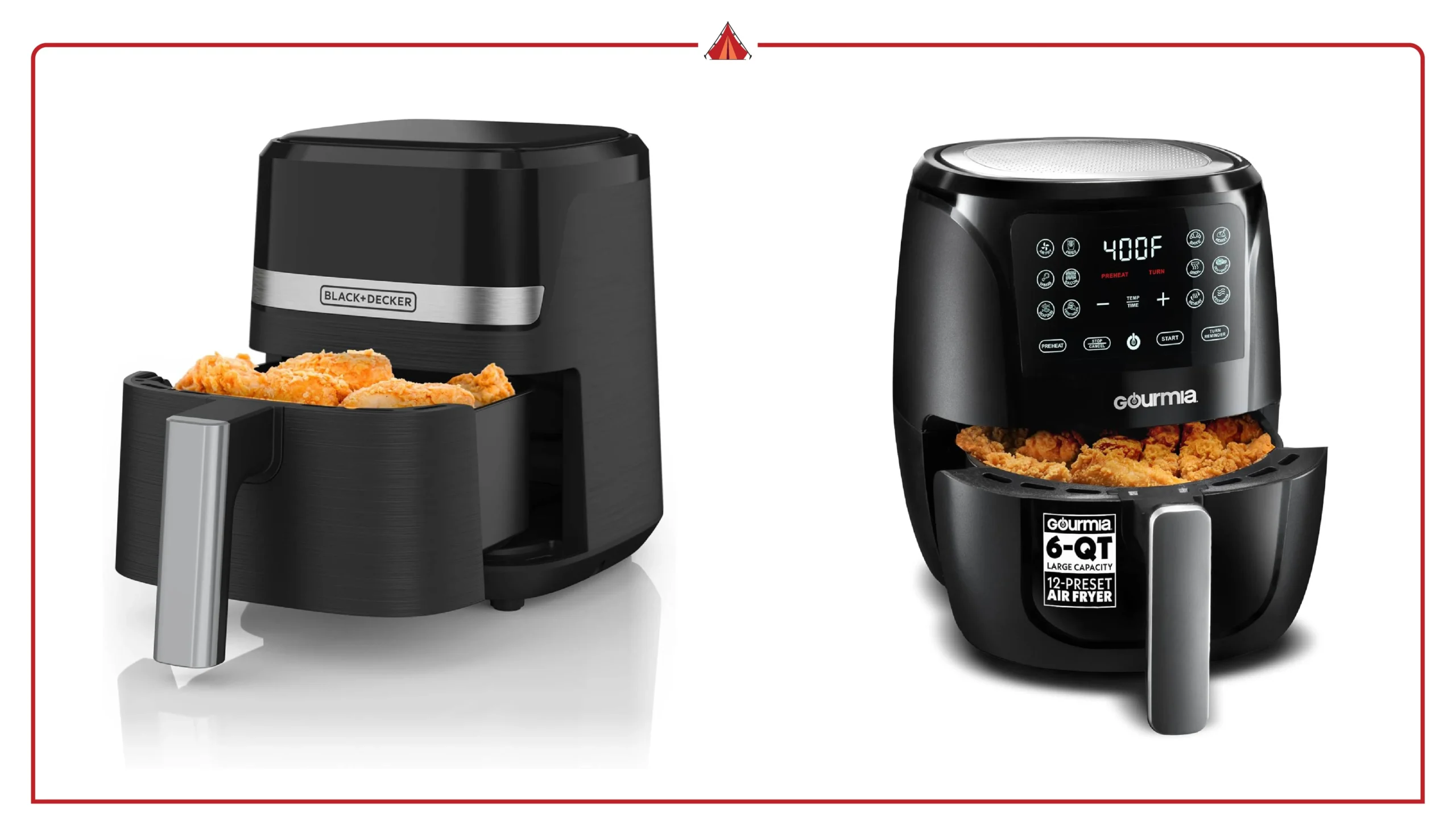
This post contains affiliate links. We may earn a commission if you purchase through our links, at no extra cost to you.
There’s a persistent myth in the air fryer category: that you need to spend $150 or more to get something worth owning. Walk into any kitchen retailer and the merchandising will try to convince you the good stuff starts at the top of the shelf.
It doesn’t.
The under-$100 tier is where the value density in this category peaks. You get the cooking performance that matters — consistent heat circulation, useful capacity, practical presets — without paying for brand premiums, Wi-Fi connectivity you’ll use twice, or brushed stainless finishes that photograph well but don’t cook any better.
The models in this guide were selected to cover every realistic buyer profile: singles in small apartments, couples batch-cooking on Sunday afternoons, families who need to feed four without running the oven, and first-time buyers who just want something that works without a learning curve. Every pick stays under $100. None of them feel like a compromise.
By the end of this guide, you’ll know exactly which air fryer fits your kitchen, your household size, and the way you actually cook — and you’ll be able to buy it without second-guessing yourself at checkout.
Quick Answer: The Best Air Fryers Under $100 Right Now
If you’re short on time, here are the top three picks from this list:
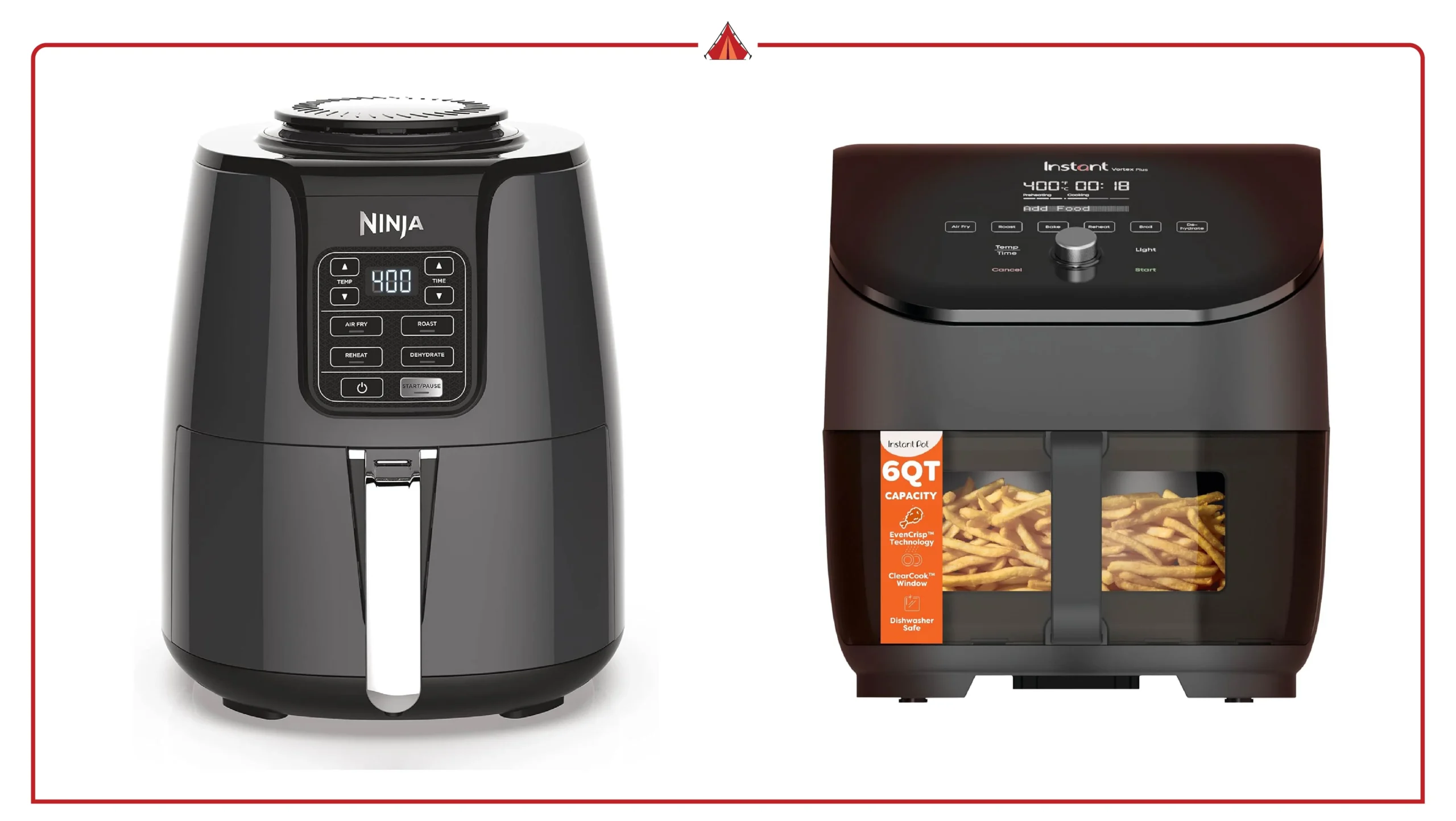
Best Overall: The Ninja AF101 is the most balanced option in this price range — compact, reliable, and easy to use from day one. It handles everyday cooking tasks cleanly and holds up over time. Most buyers under $100 should start here.
Best for Families: The Instant Vortex 4-in-1 Air Fryer (6-Quart) gives you enough capacity to cook a full meal for four without batching. If you’re regularly feeding a household, the extra quarts are worth it and the price still lands well under the ceiling.
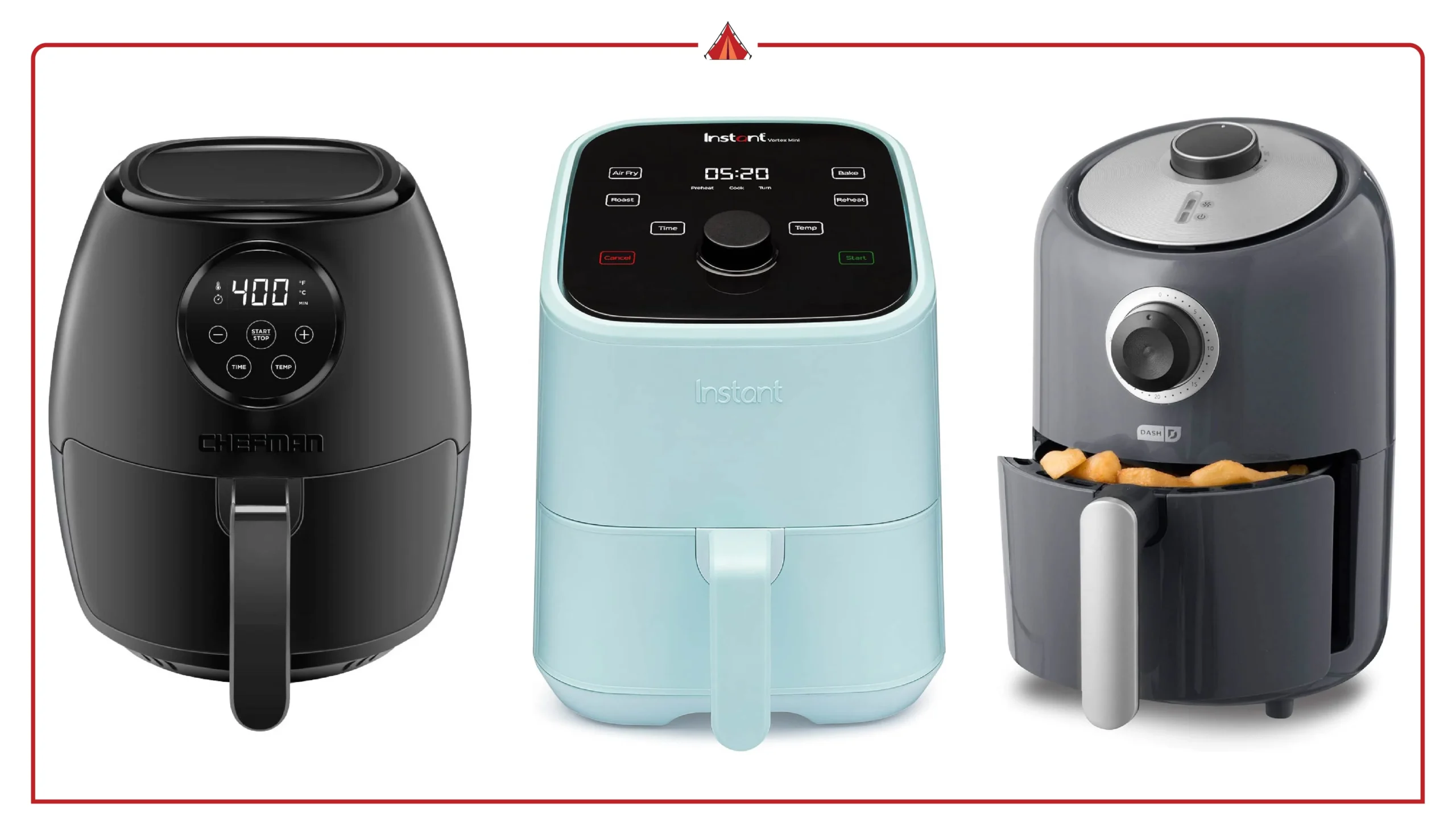
Best Compact Pick: The Dash Tasti-Crisp 2.6-Quart is built for small spaces and single-portion cooking. If counter space is your primary constraint, nothing in this category beats its footprint-to-function ratio.
For the full breakdown on all eight picks — including who each one is really built for — keep reading.
How These Air Fryers Compare at a Glance
| Product | Brand | Capacity | Best For | Standout Feature |
|---|---|---|---|---|
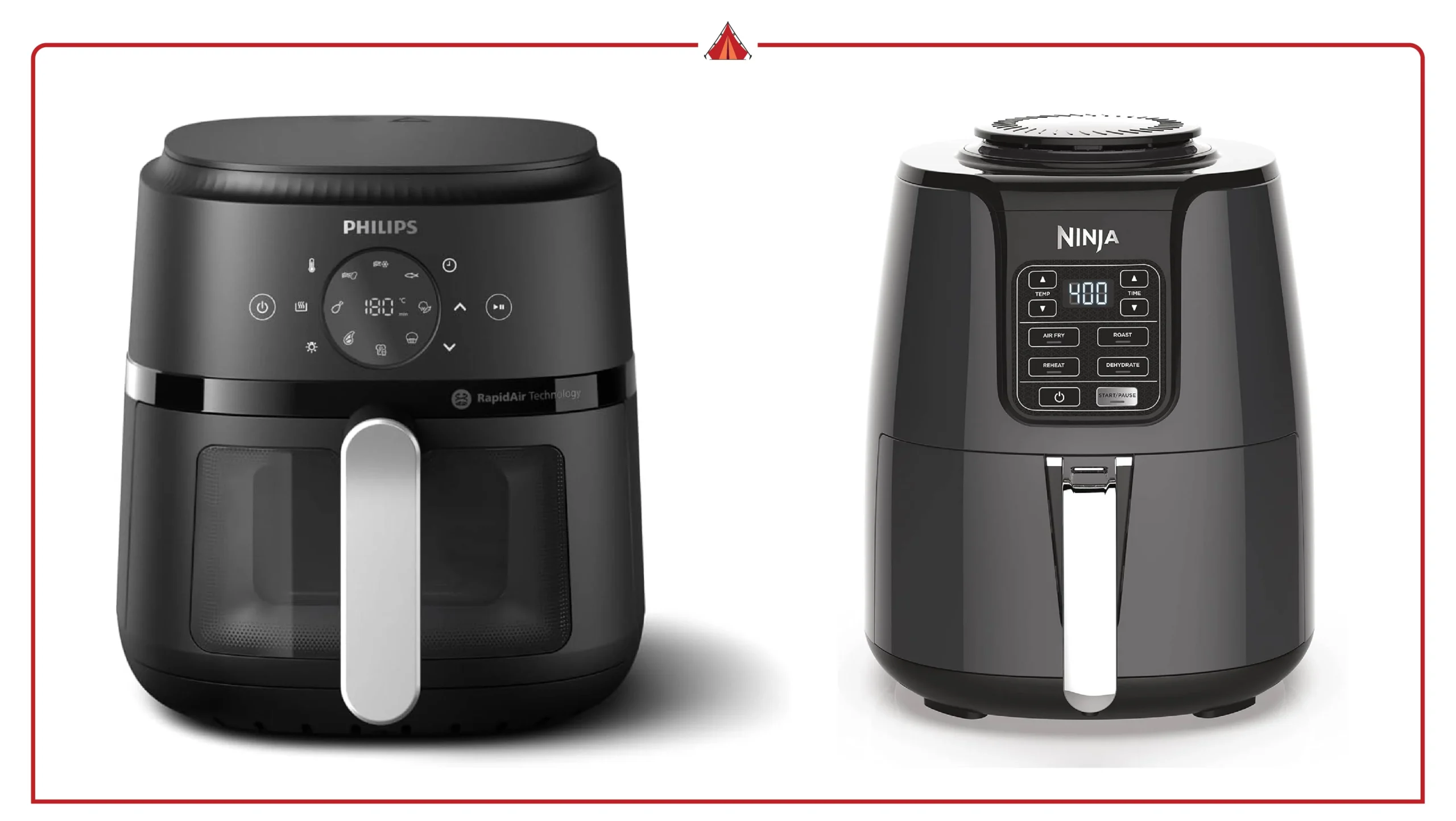
| Ninja AF101 Air Fryer | Ninja | 4 Qt | First-time buyers, singles and couples | Wide temp range (105°F–400°F) for versatile cooking |
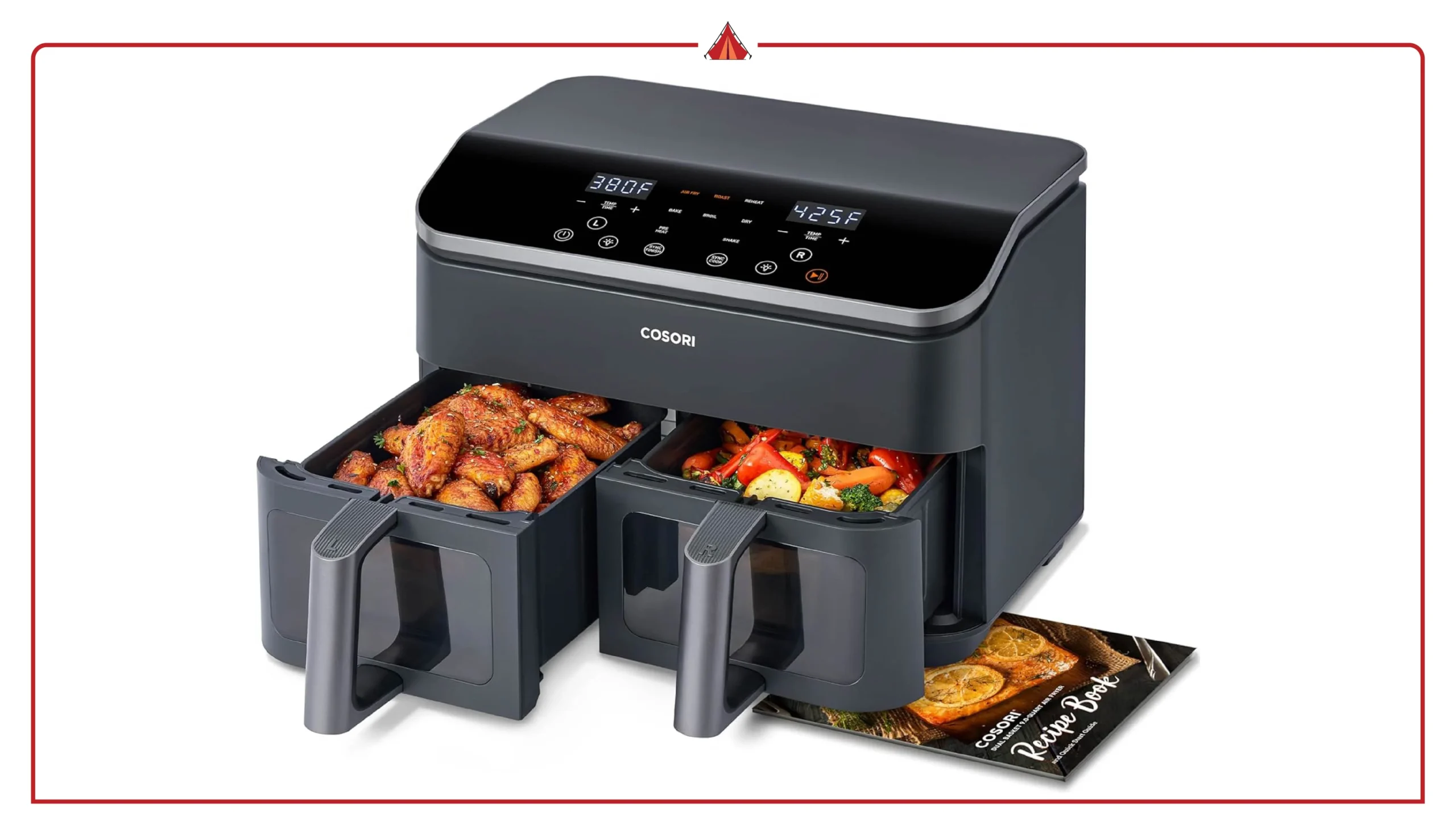
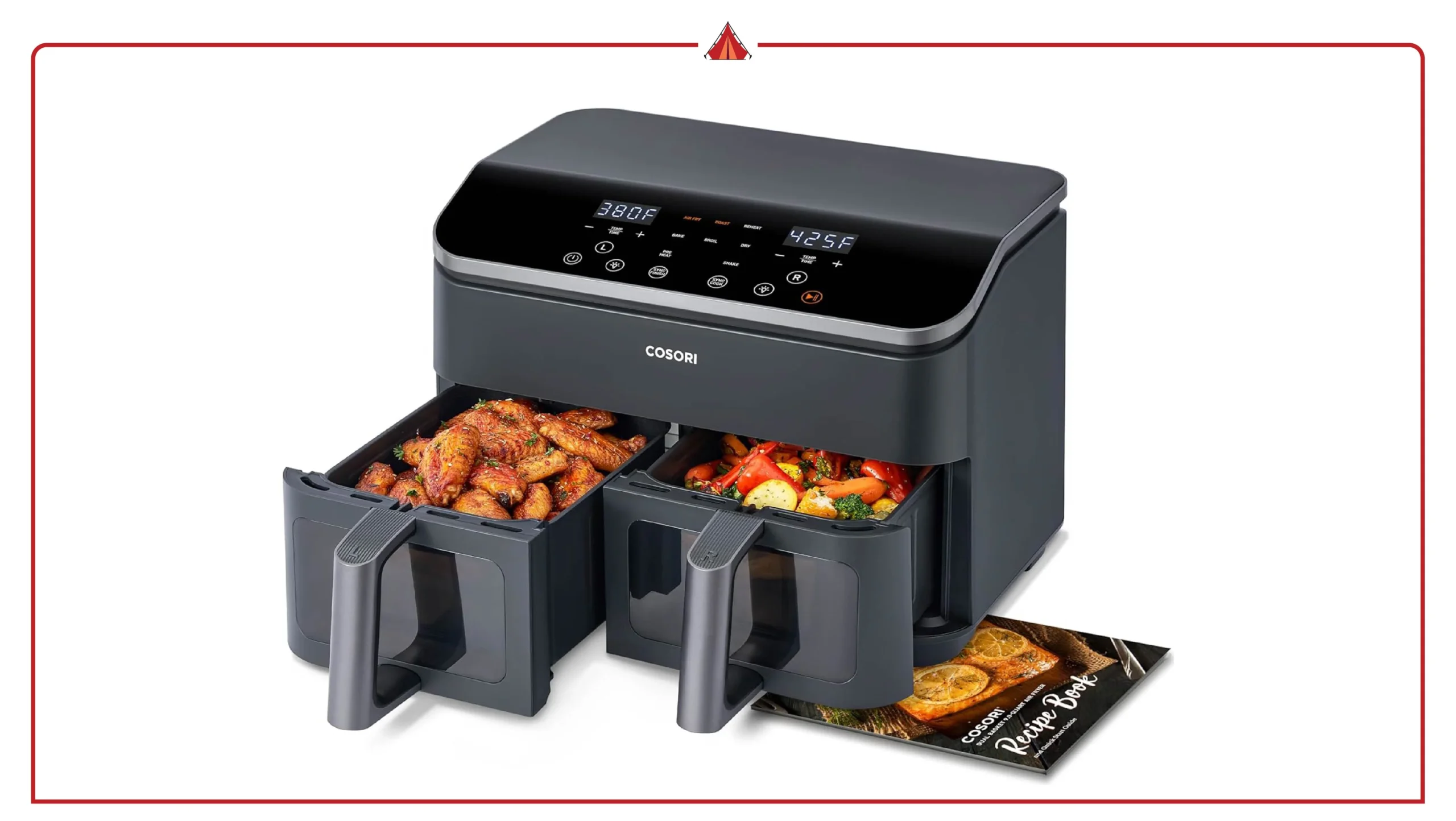
| Cosori Air Fryer 4.7-Qt | Cosori | 4.7 Qt | Everyday home cooks | Square basket maximizes usable cooking surface |
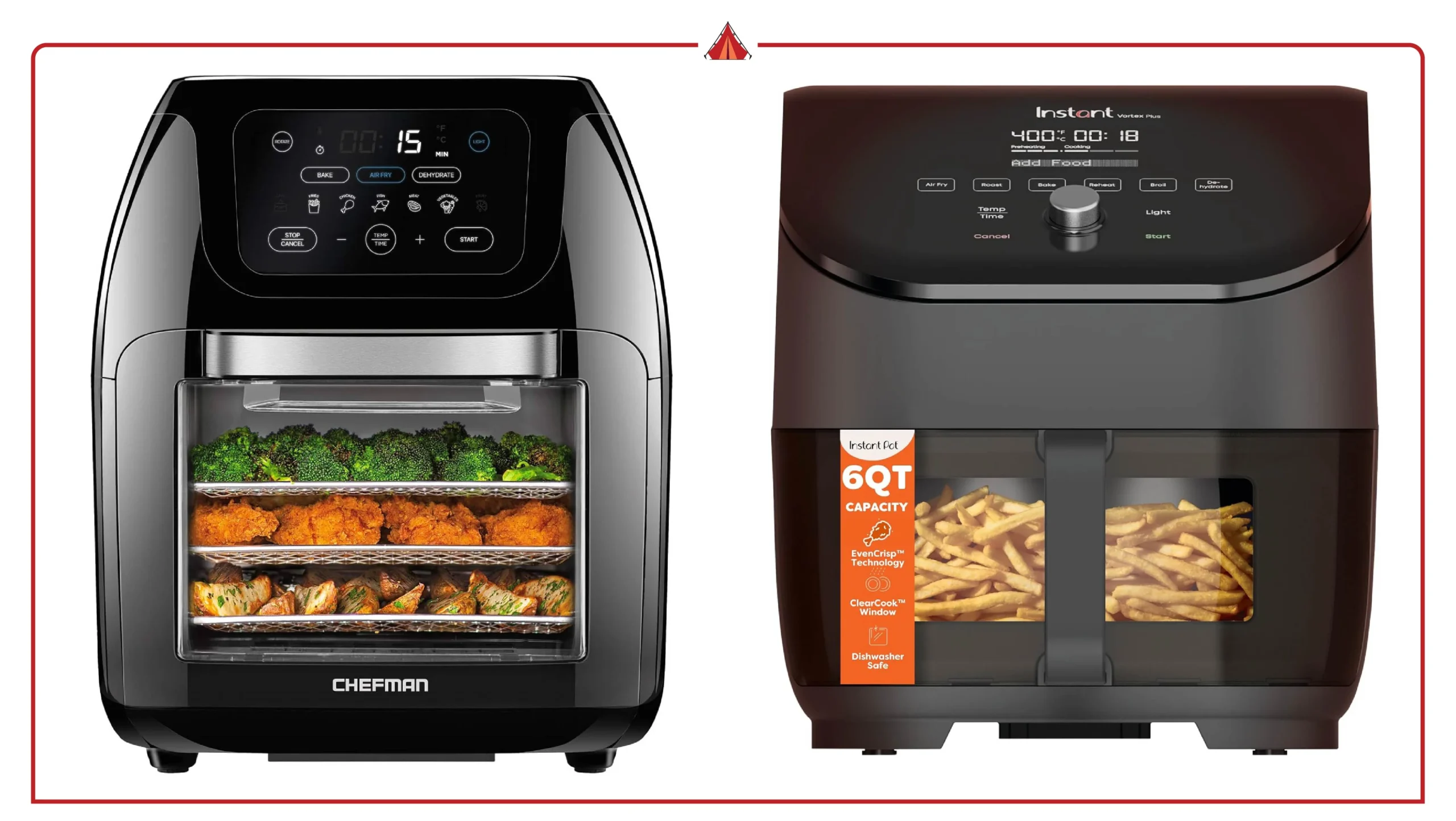
| Instant Vortex 4-in-1 Air Fryer | Instant | 6 Qt | Families and meal preppers | EvenCrisp technology reduces hot spots |
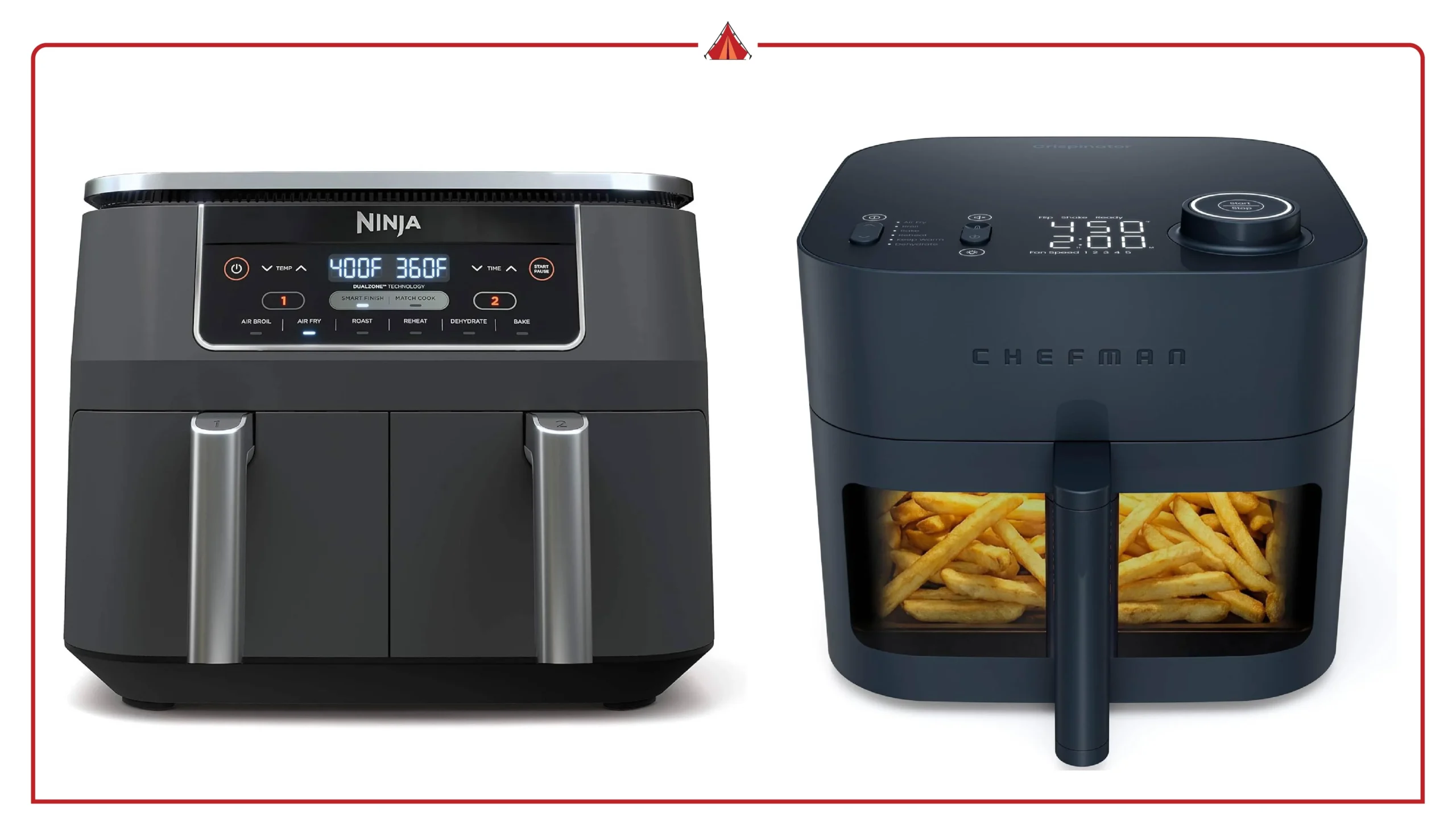
| Chefman TurboFry Touch Air Fryer | Chefman | 8 Qt | Maximum capacity on a budget | Largest capacity available in this price tier |
| Gourmia GAF686 Digital Air Fryer | Gourmia | 6 Qt | Value-focused buyers wanting digital controls | 12 one-touch cooking functions |
| Dash Tasti-Crisp Electric Air Fryer | Dash | 2.6 Qt | Singles, students, small spaces | One of the smallest footprints in the category |
| Black+Decker Purify Air Fryer | Black+Decker | 2 Lt | Occasional users, minimalist buyers | Simple dial controls — zero learning curve |
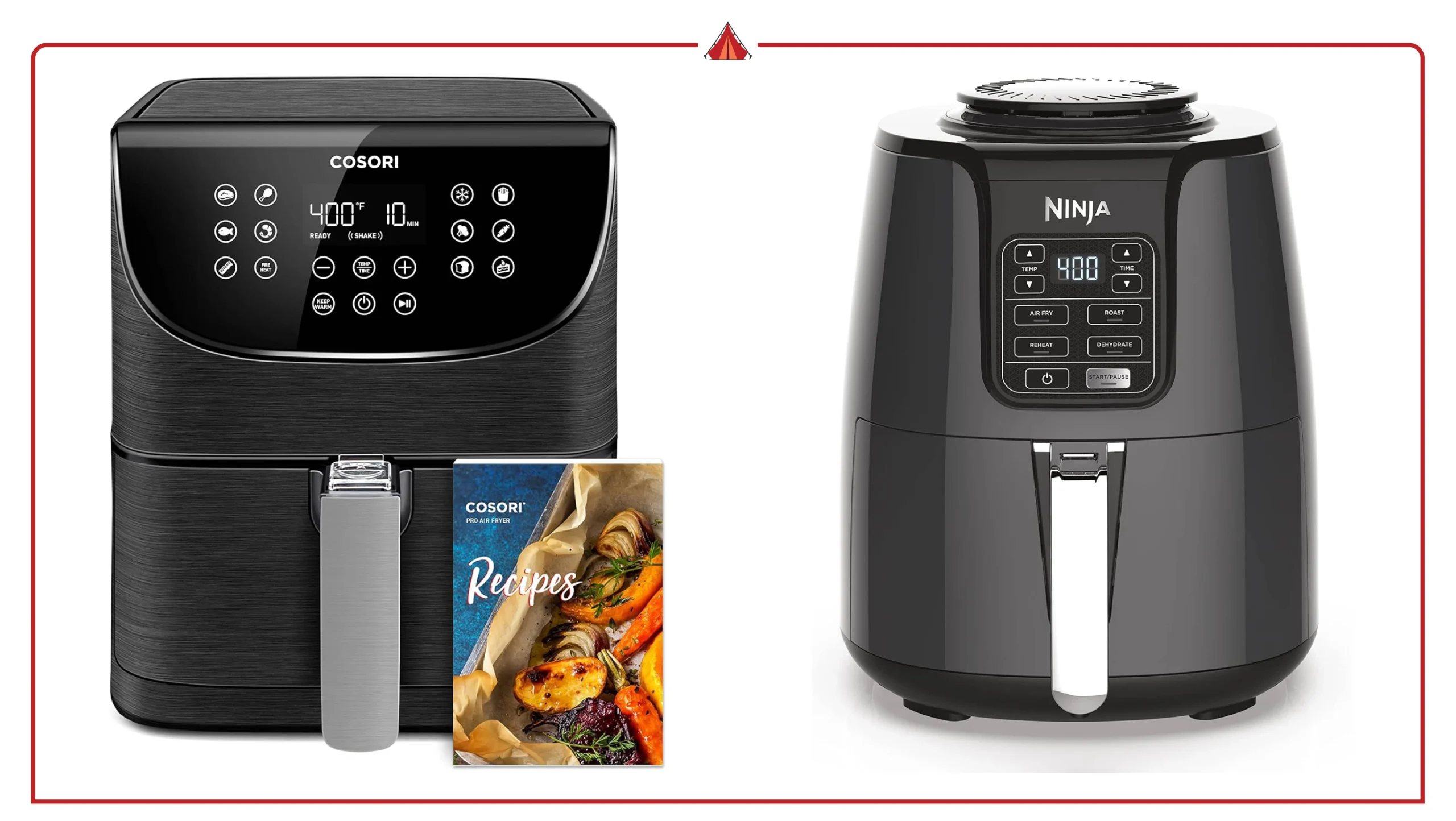
Ninja AF101 Air Fryer — Best Overall Under $100

Who it’s best for: First-time air fryer buyers and singles or couples who want a compact, no-fuss model that delivers consistent results across everyday cooking tasks.
The Ninja AF101 has held its position as one of the most recommended air fryers in this price tier for good reason — it does the fundamentals exceptionally well without overcomplicating the experience. The 4-quart basket is the right size for most one- or two-person households, handling everything from a couple of chicken breasts to a generous portion of fries without requiring you to cook in batches. It heats up quickly, maintains temperature reliably, and produces the kind of crisp exterior on proteins and vegetables that justifies owning an air fryer in the first place.
What separates the AF101 from similarly priced competitors is its temperature range. Running from 105°F all the way up to 400°F, it covers a wider spectrum of cooking tasks than most budget and mid-range models — including dehydrating fruits, vegetables, and jerky at the low end, which typically requires a dedicated appliance. For buyers who want one machine that can handle more than just frozen foods and reheating, that range matters. Cleanup is handled by a dishwasher-safe basket and crisper plate, which removes one of the most common friction points with air fryer ownership.
Key Features:
- 4-quart ceramic-coated basket — right-sized for one to two people
- Temperature range of 105°F to 400°F — supports dehydrating, roasting, and crisping
- Dishwasher-safe basket and crisper plate for fast cleanup
- Compact footprint fits comfortably on most standard counters
- Simple control panel — minimal learning curve for first-time users
Pros:
- Consistently reliable heat output with minimal hot spots
- Wide temperature range adds genuine versatility beyond basic air frying
- Easy to clean — dishwasher-safe parts reduce post-cook friction
Cons:
- 4-quart capacity becomes limiting when cooking for three or more people
- No smart features or app connectivity for buyers who want guided cooking
Cosori Air Fryer 5-Qt — Best for Everyday Home Cooks

Who it’s best for: Home cooks who prepare varied meals regularly and want preset-driven convenience, a slightly larger basket than the Ninja, and optional app support for recipe guidance.
The Cosori 5-Qt sits just above the Ninja AF101 in capacity but competes in the same price band, and for buyers who cook more varied meals, that difference is meaningful. The square basket design is the detail most buyers overlook when comparing quart sizes — a square 5-quart basket provides noticeably more usable flat surface area than a round basket of the same stated volume, which means more food in a single layer and better crisping results across the board. If you’ve ever had to cook fries in two rounds because they were piled on top of each other, a square basket solves that problem.
The nine one-touch preset functions cover the cooking tasks most households return to repeatedly — chicken, steak, seafood, vegetables, fries, and more — which makes the Cosori a strong choice for cooks who want guidance built in rather than having to set temperature and time manually every session. For buyers who want to go deeper, the Cosori app adds recipe libraries and remote monitoring, though the appliance works perfectly well without it. The main trade-off is that the app integration, while genuinely useful for some, adds a layer of complexity that buyers who just want to press a button and cook may find unnecessary.
Key Features:
- 4.7-quart square basket — more usable cooking surface than round baskets at the same quart size
- Nine one-touch preset functions covering the most common proteins and vegetables
- Cosori app compatibility for recipe browsing and remote monitoring
- Preheat and shake-reminder functions built into the cooking cycle
- Dishwasher-safe basket and crisper plate
Pros:
- Square basket design delivers better single-layer cooking capacity than the stated quarts suggest
- Preset functions reduce the guesswork for less experienced cooks
- App integration adds genuine value for buyers who want guided recipes
Cons:
- App dependency can feel unnecessary for buyers who want a purely manual cooking experience
- Slightly larger footprint than the Ninja AF101 — requires a bit more dedicated counter space
Instant Vortex 4-in-1 Air Fryer (6-Quart) — Best for Families

Who it’s best for: Families of three to four and weekly meal preppers who need genuine batch-cooking capacity without pushing past the $100 ceiling.
The jump from 4 to 6 quarts is not just a number — it’s the difference between cooking chicken thighs in two rounds and fitting them all in at once. The Instant Vortex delivers that capacity at a price point that still sits comfortably in the mid-range tier, which makes it one of the most practical buys on this list for anyone regularly cooking for a full household. A full pound of fries, a whole small chicken, or a batch of salmon fillets for four — the basket handles it without requiring the kind of spatial engineering that smaller models demand.
What Instant Pot got right with the Vortex is restraint. Rather than loading the appliance with a dozen presets that most buyers will never use, they built in four programs — Air Fry, Roast, Bake, and Reheat — that cover the scenarios a real household returns to week after week. The EvenCrisp technology, which drives high-velocity hot air circulation, produces consistently crisp results across a full basket load, which is where many large-capacity budget models fall short. Food at the edges cooks at the same rate as food in the center, and that consistency is what earns repeat use. The one honest trade-off is footprint — a 6-quart appliance takes up meaningful counter real estate, and buyers in compact kitchens should measure before committing.
Key Features:
- 6-quart capacity handles full family meals and large batch cooks in a single round
- Four built-in programs — Air Fry, Roast, Bake, Reheat — cover the most-used cooking scenarios
- EvenCrisp technology circulates air at high velocity for consistent results across a full basket
- Simple LED display with intuitive controls — easy to operate without a manual
- Dishwasher-safe basket and tray for straightforward cleanup after large cooks
Pros:
- 6-quart capacity is genuinely useful for families — eliminates the need to batch cook most meals
- EvenCrisp circulation produces even results across the full basket, not just the center
- Four focused programs keep the interface clean and easy to use
Cons:
- Larger footprint requires dedicated, permanent counter space — not suited to small kitchens
- Fewer preset options than competitors like the Cosori may feel limiting for variety-focused cooks
Chefman TurboFry Touch Air Fryer (8-Quart) — Best Value Per Quart
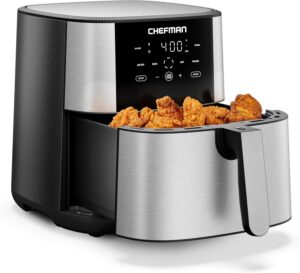
Who it’s best for: Budget-conscious buyers who want the largest possible cooking capacity under $100 and are willing to trade some build refinement for sheer volume.
Eight quarts for under $100 is an unusual value proposition in this category — most air fryers at this capacity sit meaningfully higher in price, which is what makes the Chefman TurboFry Touch worth a serious look for the right buyer. If your primary requirement is volume — cooking for a large family, preparing multiple dishes simultaneously, or batch cooking proteins for the week — the TurboFry Touch delivers more usable space per dollar than anything else on this list. A full rack of chicken wings, a large tray of roasted vegetables, and enough fries to feed five people comfortably all fit within the basket without compromise.
The touch-screen interface and digital display land noticeably above what you’d expect at this price point. Controls are responsive, the display is clear, and the overall interaction feels closer to a mid-range appliance than a budget one. The flat basket design also simplifies cleanup more than most — the wide, shallow shape makes it easy to wipe down and fits more naturally in a standard dishwasher than deeper round baskets. Where the TurboFry Touch asks for patience is in its build quality. The plastic housing and some of the internal components feel less substantial than the Ninja or Instant Vortex, and buyers who prioritize longevity over capacity will want to factor that in. For buyers who cook in volume and replace appliances on a practical rather than sentimental timeline, however, the trade-off is entirely reasonable.
Key Features:
- 8-quart capacity — the largest on this list and unusually large for this price tier
- Touch-screen digital controls with a clear display — feels more premium than the price suggests
- Flat, wide basket design simplifies loading, unloading, and dishwasher cleaning
- Adjustable time and temperature controls for manual cooking across a wide range of tasks
- Compact relative to its capacity — Chefman has engineered the footprint reasonably well for an 8-quart unit
Pros:
- Best capacity-per-dollar ratio on this entire list — nothing else at this price offers 8 quarts
- Touch-screen interface is responsive and intuitive despite the budget positioning
- Flat basket design makes cleanup faster and easier than deeper round alternatives
Cons:
- Plastic build quality feels noticeably less refined than the Ninja or Instant Vortex at comparable prices
- Cooking consistency across the full 8-quart basket can vary — hot spots are more noticeable than in smaller models
Gourmia GAF686 6-Quart Digital Air Fryer — Best Budget Digital Pick

Who it’s best for: Value-focused buyers who want a large-capacity air fryer with digital controls and multiple presets but don’t want to pay mid-range prices to get them.
The Gourmia GAF686 occupies an interesting position on this list — it offers 6-quart capacity and 12 one-touch cooking functions at a price that typically undercuts most competitors with the same specifications. For buyers who want digital convenience and genuine batch-cooking volume without spending toward the top of the under-$100 range, it presents a compelling case. The FryForce 360° air circulation system moves hot air efficiently around the basket, producing reasonably consistent results across a full load of food — something that larger budget models often struggle to deliver reliably.
The 12 preset functions are a genuine differentiator at this price point. Most models in the budget and lower mid-range tiers offer four to six presets at most — the Gourmia nearly doubles that, covering proteins, vegetables, baked goods, and snack-style foods within a single interface. For buyers who cook varied meals across the week and want preset guidance rather than manual temperature management, that breadth is practically useful rather than just a spec-sheet talking point. The limitation worth being direct about is temperature precision at lower settings. For straightforward air frying and roasting tasks, the GAF686 performs well. For lower-temperature applications like dehydrating or slow roasting, the temperature control becomes less reliable, and buyers with those specific use cases would be better served by the Ninja AF101’s wider and more accurate range.
Key Features:
- 6-quart capacity handles full family meals and batch cooking without downsizing portions
- 12 one-touch cooking presets — broadest preset range on this list at this price tier
- FryForce 360° technology promotes even air circulation across the full basket
- Digital display with clear controls — accessible for less experienced cooks
- Dishwasher-safe basket and crisper tray for practical everyday cleanup
Pros:
- 12 preset functions offer more guided cooking variety than any other model at this price point
- 6-quart capacity delivers genuine family-sized cooking volume without a premium price
- Compact footprint relative to its capacity — manages counter space better than expected for a 6-quart unit
Cons:
- Temperature accuracy at lower settings is inconsistent — not reliable for dehydrating or precision low-heat cooking
- Build materials feel budget-grade on close inspection despite the capable feature set
Dash Tasti-Crisp Electric Air Fryer (2.6-Quart) — Best for Small Spaces

Who it’s best for: Singles, students, and anyone working with a genuinely constrained counter — someone who needs an air fryer that earns its place in a small kitchen without dominating it.
There is a version of the air fryer category that most roundups underserve: the buyer who lives alone, cooks one portion at a time, and has roughly the counter space of a large cutting board to work with. The Dash Tasti-Crisp was built for exactly that person. At 2.6 quarts, it is one of the smallest air fryers available from a recognized brand, and its footprint reflects that — it fits comfortably on counters where a 4-quart model simply wouldn’t, and stores easily in a standard cabinet when not in use. For a student apartment, a studio kitchen, or a compact galley setup, that spatial efficiency is not a nice-to-have. It is the deciding factor.
Cooking performance at this size is honest rather than exceptional. The Tasti-Crisp handles single-portion proteins, reheated leftovers, and snack-sized batches of fries or vegetables reliably and quickly. It heats up faster than larger models by virtue of its smaller chamber, which makes it a genuinely practical choice for weeknight meals where speed matters more than volume. The auto-shutoff feature adds a basic safety layer that matters more for this use case than it might seem — buyers cooking in small spaces, often while multitasking, benefit from an appliance that looks after itself. The color range is a secondary but real consideration: Dash offers the Tasti-Crisp in more color options than almost any competitor in this category, which makes it a natural fit for design-conscious buyers who want their appliances to work with their kitchen rather than against it. The capacity ceiling is real and worth stating plainly — this is a one-person machine, and buyers who ever need to cook for two will find it limiting almost immediately.
Key Features:
- 2.6-quart capacity — one of the smallest footprints available from a recognized air fryer brand
- Auto-shutoff function prevents overcooking and adds a practical safety layer for inattentive cooking
- Available in a wide range of colors — more design options than any other model on this list
- Heats up quickly relative to larger models — practical for fast weeknight single-portion cooking
- Lightweight and easy to store — fits in a standard cabinet without requiring dedicated counter space
Pros:
- Smallest footprint on this list — the only genuinely compact option for tight kitchen spaces
- Auto-shutoff adds useful safety functionality for solo cooks and multitaskers
- Wide color range makes it the strongest pick for design-conscious or style-forward buyers
Cons:
- 2.6-quart capacity is a hard ceiling — not suitable for cooking more than one portion at a time under any circumstances
- No digital controls or presets — temperature and time are set manually with dials, which limits precision
Black+Decker Purify 2-Liter Air Fryer (HF110SBD) — Best for Occasional Use
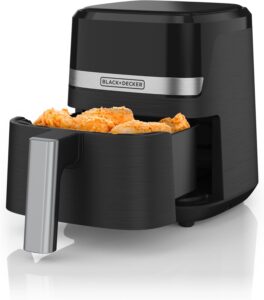
Who it’s best for: Infrequent cooks, minimalist buyers, or anyone who wants a simple, low-commitment appliance for reheating and occasional small-batch cooking without spending more than necessary.
Not every buyer needs an air fryer that does twelve things. Some buyers need one that reheats last night’s roasted vegetables without turning them to mush, crisps up a portion of frozen snacks on a Tuesday evening, and then sits quietly out of the way until next time. The Black+Decker Purify is built for that use case — a no-frills, low-footprint appliance that handles the basics competently and asks almost nothing of the person using it. There are no presets to navigate, no app to download, and no digital interface to interpret. Two dials — one for temperature, one for time — and the appliance does the rest.
That simplicity is a genuine strength for a specific type of buyer. Less tech-comfortable users, older buyers, or anyone who finds modern appliance interfaces unnecessarily complicated will find the Purify immediately accessible — the learning curve is essentially zero. The 2-liter capacity keeps expectations appropriately sized: this is a reheating and snack-cooking machine, not a meal-prep workhorse. Leftovers come out consistently better than a microwave produces, with texture and crispness that reheating in a conventional oven requires significantly more time to achieve. The honest limitation is that dial-based temperature control without digital feedback means precision is approximate rather than exact, and buyers who want to cook proteins to a specific internal temperature or follow recipes with precise heat requirements will quickly find the Purify’s manual controls frustrating. It is an appliance that rewards buyers who want simplicity and punishes those who want control.
Key Features:
- Simple dial controls for temperature and time — zero learning curve, immediately accessible to all users
- 2-liter capacity is well-matched to reheating portions and small-batch snack cooking
- Compact and lightweight — easy to store in a cabinet between uses
- Non-stick basket is straightforward to hand-wash and maintain
- Black+Decker brand reliability — a recognized name with a long track record in home appliances
Pros:
- Simplest interface on this list — no digital controls, no presets, no setup required
- Compact footprint and light weight make storage effortless between uses
- Produces noticeably better reheating results than a microwave for crisp-textured foods
Cons:
- Dial-based controls offer only approximate temperature precision — not suitable for recipe-driven or technique-focused cooking
- 2-liter capacity is among the smallest on this list — limits usefulness to strictly single-portion or snack-sized tasks
How to Choose the Best Air Fryer Under $100
The air fryer category is crowded, and the under-$100 tier is where the noise is loudest. Identical quart sizes perform differently depending on basket shape. Identical preset counts serve different types of cooks. A spec sheet will not tell you which model is right for your kitchen — but the five decisions below will.
Capacity — Match the Basket to Your Household
Capacity is the first filter, and it should be applied before any other consideration. Buying too small means cooking in batches, which defeats one of the core practical advantages of owning an air fryer. Buying too large means a machine that dominates your counter without justification.
A practical guide by household size: 2 to 3 quarts works well for one person cooking single portions. Four to 4.7 quarts is the right range for couples who cook full meals together regularly. Six quarts is where family cooking becomes genuinely practical — enough space for a complete protein and a side without batching. Eight quarts makes sense only if volume is your primary requirement and you have the counter space to support it permanently.
One important caveat: stated quart sizes are not standardized across brands. A 4.7-quart square basket from Cosori delivers more usable flat cooking surface than a 4-quart round basket from a competing brand — even though the numbers suggest a modest difference. When comparing capacity, look at basket shape alongside the quart figure.
Read Next: Best Air Fryer for a Family of 4 in 2026: Large-Capacity Picks That Actually Deliver
Basket Shape — Round vs Square
This is the detail most buyers overlook entirely, and it has a direct impact on cooking results. Round baskets are the more common design — they’re traditional, easy to manufacture, and functional for most tasks. Square baskets, as used in the Cosori models, offer more usable flat surface area at the same stated quart size because they eliminate the curved dead zones at the edges of a round basket.
In practical terms, a square basket means more food in a single layer. More food in a single layer means better air circulation around each piece, which means more consistent crisping across the entire batch. If you regularly cook foods that benefit from flat, even placement — fries, chicken tenders, vegetables, fish fillets — a square basket will produce better results than a round one of nominally equal size. For buyers comparing two models with similar capacities, basket shape is often the deciding factor in real-world performance.
Preset Functions — How Many Do You Actually Need?
The honest answer is: probably fewer than the spec sheet suggests. Most households return to a handful of cooking tasks repeatedly — chicken, fries, vegetables, reheating — and the presets that cover those tasks are the only ones that see regular use. A model with four well-calibrated presets will serve most buyers better than one with twelve loosely defined ones.
That said, presets do serve a real purpose for less experienced cooks. They remove the guesswork from temperature and time settings, which lowers the barrier to actually using the appliance on busy weeknights. If you’re a confident cook who’s comfortable setting temperature and time manually, presets are a convenience rather than a necessity. If you’re new to air frying or cook varied meals across the week, a broader preset range — like the Gourmia’s twelve functions — adds genuine practical value.
The one preset category worth paying specific attention to is Dehydrate. If you have any interest in making jerky, dried fruit, or vegetable chips at home, it requires a specific low-temperature sustained heat function that most basic models don’t include. The PowerXL Vortex Pro is the only model on this list that offers it within the under-$100 range at a mid-size capacity.
Read Next: Best Air Fryers for Meal Prep in 2026: High-Capacity Picks That Save You Time Every Week
Ease of Cleaning
Air fryers are used frequently or abandoned entirely — and ease of cleaning is one of the primary factors that determines which outcome applies. A basket that requires soaking, scrubbing, or hand-washing after every use creates enough friction that the appliance starts getting skipped in favor of less work. A dishwasher-safe basket removes that friction almost entirely.
Most models on this list include dishwasher-safe baskets and crisper trays, which is the baseline expectation you should hold any air fryer to in 2026. The exceptions — like the Black+Decker Purify, which requires hand-washing — are worth noting before buying, particularly for buyers who cook frequently. Flat basket designs, like the Chefman TurboFry Touch, also tend to clean more easily than deep round baskets because they offer fewer interior angles for food residue to accumulate in.
A practical tip that applies across all models: clean the basket after every use rather than leaving residue to harden. Air fryer baskets with baked-on grease are significantly harder to clean than baskets wiped down while still warm, regardless of whether they’re dishwasher-safe or not.
Counter Space and Storage
An air fryer that doesn’t fit your kitchen comfortably will either live on the floor of a cabinet or create daily frustration on your counter. Measure before you buy — it takes thirty seconds and eliminates one of the most common sources of post-purchase regret in this category.
As a general rule: compact models like the Dash Tasti-Crisp and Black+Decker Purify can be stored in a standard upper cabinet and brought out as needed. Four to 5-quart models like the Ninja AF101, Cosori, and PowerXL are light enough to move but large enough that most buyers leave them on the counter permanently. Six-quart and above models — the Instant Vortex, Gourmia, and Chefman — require dedicated permanent counter space and should be treated as fixed appliances when assessing whether they fit your kitchen.
If counter space is a genuine constraint, resist the temptation to buy for maximum capacity. A 6-quart air fryer stored in a cabinet is less useful than a 4-quart one that lives on your counter and gets used every day.
Read Next: Best Small Air Fryers for One or Two People: Compact Picks That Don’t Sacrifice Performance
Frequently Asked Questions
Q: What is the best air fryer under $100 for a family? A: The Instant Vortex 4-in-1 Air Fryer in the 6-quart size is the strongest family pick at this price point. It handles full meal portions for three to four people in a single cook cycle without batching, and the EvenCrisp circulation system produces consistent results across a full basket load. For families who cook frequently and need reliable volume, it delivers more practical value per dollar than any other model on this list.
Q: Is a $100 air fryer good enough, or should I spend more? A: For the majority of home cooks, yes — the under-$100 tier covers every fundamental air frying need without meaningful compromise. The performance gap between a well-chosen $80 air fryer and a $150 model is narrow for everyday cooking tasks like proteins, vegetables, fries, and reheating. Where premium models justify their price is in build longevity, smart connectivity, and multi-function cooking — features that matter to some buyers and are irrelevant to many others.
Q: What size air fryer do I need for one or two people? A: A 4 to 4.7-quart model covers most one- and two-person households comfortably. That capacity handles a full meal for two — a protein and a side — in a single cook cycle without requiring batching. If you cook single portions exclusively, a 2.6-quart model like the Dash Tasti-Crisp is sufficient and takes up significantly less counter space. Size up if you meal prep in advance rather than cooking to order each night.
Read Next: Best Air Fryers for Beginners in 2026: Simple, Reliable, and Easy to Use
Q: Do air fryers under $100 come with presets and digital controls? A: Most do, though not all. The majority of mid-range models in this price tier — including the Cosori, Instant Vortex, Gourmia, and PowerXL — include digital displays and multiple one-touch preset functions. Basic models like the Black+Decker Purify use manual dial controls with no presets, which suits some buyers but limits cooking precision. If digital controls and presets matter to you, they are widely available under $100 without needing to compromise on capacity.
Q: How do I clean an air fryer basket properly? A: For dishwasher-safe baskets, a standard dishwasher cycle handles routine cleaning effectively. For hand-wash models, warm soapy water and a soft non-abrasive sponge removes most residue without damaging the non-stick coating. The most important habit regardless of model is cleaning the basket after every use while it is still warm — baked-on grease is significantly harder to remove once it has cooled and hardened. Avoid steel wool or abrasive scrubbers on any non-stick surface.
Q: Can you bake in an air fryer under $100? A: Yes, most mid-range models include a Bake function or support baking through manual temperature settings. The Instant Vortex, PowerXL Vortex Pro, and Gourmia GAF686 all include a dedicated Bake mode. Smaller models without a Bake preset can still handle basic baking tasks — muffins, cookies, and small cakes — by setting the temperature manually between 320°F and 350°F. Results are comparable to a conventional oven for small batch baking, though capacity limits what can be baked in a single round.
Q: What is the difference between a 4-quart and a 6-quart air fryer? A: The practical difference is batch size and cooking frequency. A 4-quart basket handles meals for one to two people in a single cycle. A 6-quart basket handles meals for three to four people without requiring multiple rounds. Beyond capacity, 6-quart models are physically larger and require more permanent counter space — they are not practical as store-away appliances. If you cook for two or fewer people consistently, the extra capacity of a 6-quart model adds footprint without adding utility.
Read Next: Best Large Air Fryers (6 Qt and Above) in 2026: Top Picks for Big Batches and Meal Prep
Final Verdict
The under-$100 air fryer tier is more capable than most buyers expect going in — and more varied than the spec sheets suggest. Eight models, eight different answers to the same core question: which one is actually right for you? Here is where each pick earns its place.
The Ninja AF101 is the best overall choice for most buyers. It is reliable, compact, easy to use from day one, and produces consistently good results across the cooking tasks that real households return to week after week. If you are buying your first air fryer and your household is one or two people, start here. It is the model most likely to still be on your counter two years from now.
The Instant Vortex 4-in-1 (6-Quart) is the clearest choice for families. It delivers the capacity to cook a full meal for four in a single round, the EvenCrisp circulation to do it consistently, and a focused set of four programs that cover everything most households actually need. For buyers who have been batching meals in a smaller model and wondering why they bother, this is the upgrade that fixes the problem.
The Cosori 4.7-Qt is the better pick over the Ninja for buyers who cook varied meals regularly and want preset-driven guidance. The square basket advantage is real, the preset range is practical, and the app integration adds genuine value for cooks who want recipe support built into the appliance itself.
The Chefman TurboFry Touch (8-Quart) is the right answer for one specific buyer: someone who needs maximum volume at minimum cost and is willing to accept a trade on build quality to get it. For large households or batch-cooking enthusiasts who replace appliances on a practical timeline, the value proposition is difficult to argue with.
The Gourmia GAF686 makes the most sense for buyers who want a large-capacity digital air fryer at the lowest possible entry point. Twelve presets and 6-quart capacity at a price that typically undercuts competitors with the same specifications — for straightforward cooking tasks, it delivers well above its cost.
The Dash Tasti-Crisp and the Black+Decker Purify serve buyers with specific, constrained needs rather than general households. The Dash is the only honest answer for single-person buyers in small spaces where footprint is the primary constraint. The Black+Decker is the right call for occasional users and anyone who finds modern appliance interfaces unnecessarily complicated — simplicity is its feature, not its limitation.
No model on this list is a compromise. Each one is the right answer for a specific buyer with a specific kitchen and a specific set of needs. Match the model to your situation — not to the highest spec sheet — and you will not need to buy another one anytime soon.