Air Fryer vs Deep Fryer: Which One Is Worth Buying for Your Kitchen?

This post contains affiliate links. We may earn a commission if you purchase through our links, at no extra cost to you.
Most people frame this as a health debate. Eat clean, buy the air fryer. Love fried food, keep the deep fryer. But that framing misses the point — and it’s exactly why so many people end up with the wrong appliance sitting on their counter.
The real question isn’t which one is healthier. It’s which one actually fits the way you cook, the results you expect, and the trade-offs you’re willing to live with. Because both appliances make promises, and both have real limitations that most buyers only discover after the fact.
Air fryers have earned their popularity. They’re fast, they’re versatile, and they produce genuinely crispy results with a fraction of the oil. But they don’t replicate deep-fried texture — and if that texture is what you’re after, no amount of marketing will close that gap.
Deep fryers, on the other hand, deliver the real thing. The crust, the color, the interior moisture that only pressurized hot oil can produce. But they come with oil costs, splatter, storage, and cleanup that light-use buyers consistently underestimate.
This guide cuts through both sides honestly. You’ll find nine product recommendations spanning both categories — budget through premium — along with a buyer’s guide built around the questions that actually determine which appliance belongs in your kitchen. By the end, you’ll know exactly which one to buy, and why.
Air Fryer vs Deep Fryer — The Short Answer
If you want a versatile, low-maintenance appliance that handles everyday cooking with minimal oil and easy cleanup, buy an air fryer. If authentic deep-fried texture is non-negotiable — the kind you get from a restaurant fryer or a county fair booth — a deep fryer is the only appliance that actually delivers it. These are different tools solving different problems, and the right choice depends entirely on what you’re cooking and how often you’re cooking it.
For most home kitchens, an air fryer wins on flexibility. For serious frying — wings, donuts, fish and chips, churros — a deep fryer wins on results.
Our Top Picks at a Glance
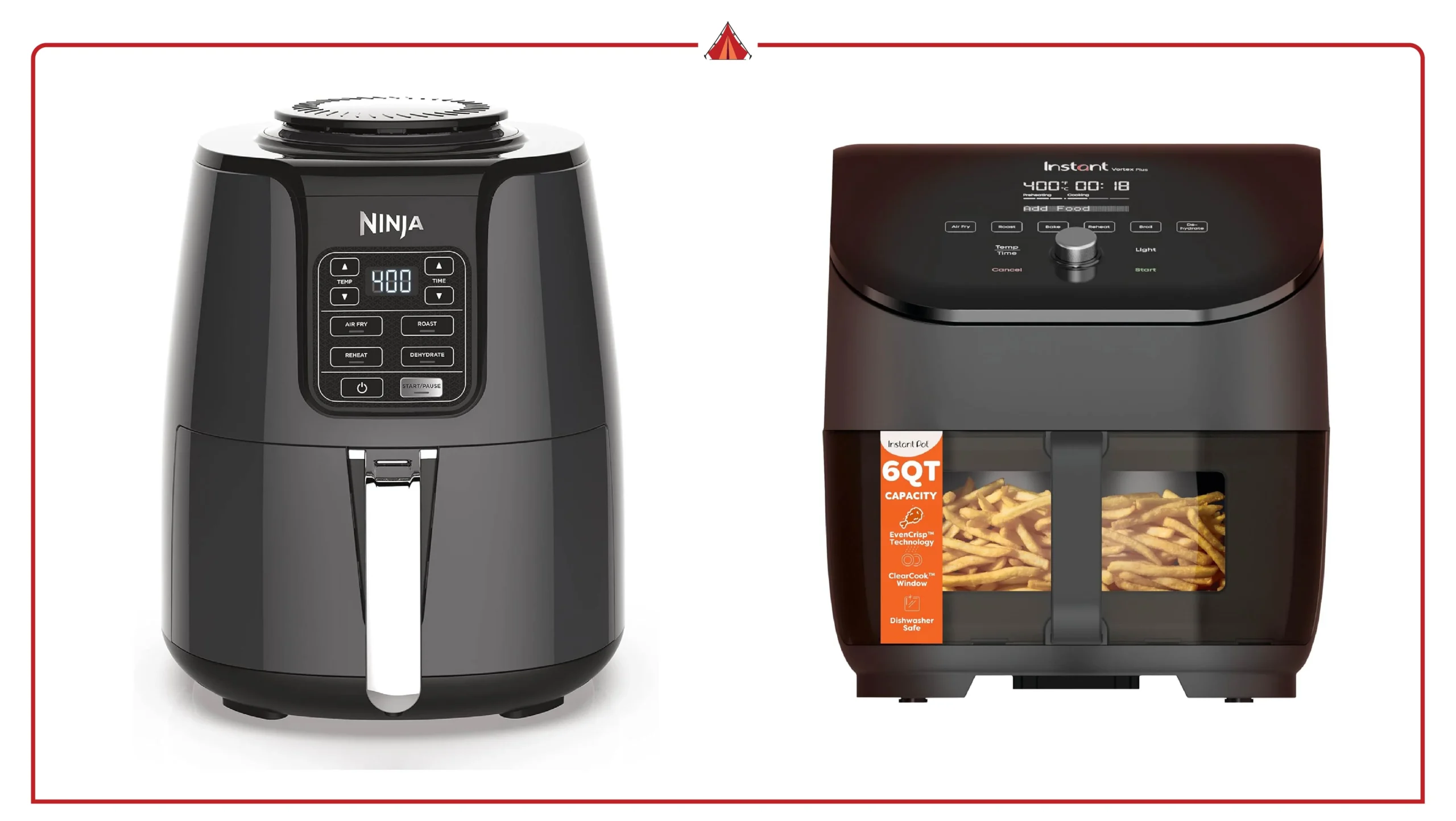
Best Air Fryer Overall — Ninja AF101 Air Fryer — The most reliable entry point into air frying — compact, consistent, and easy to live with daily. A strong starting point for anyone making the switch from conventional cooking.
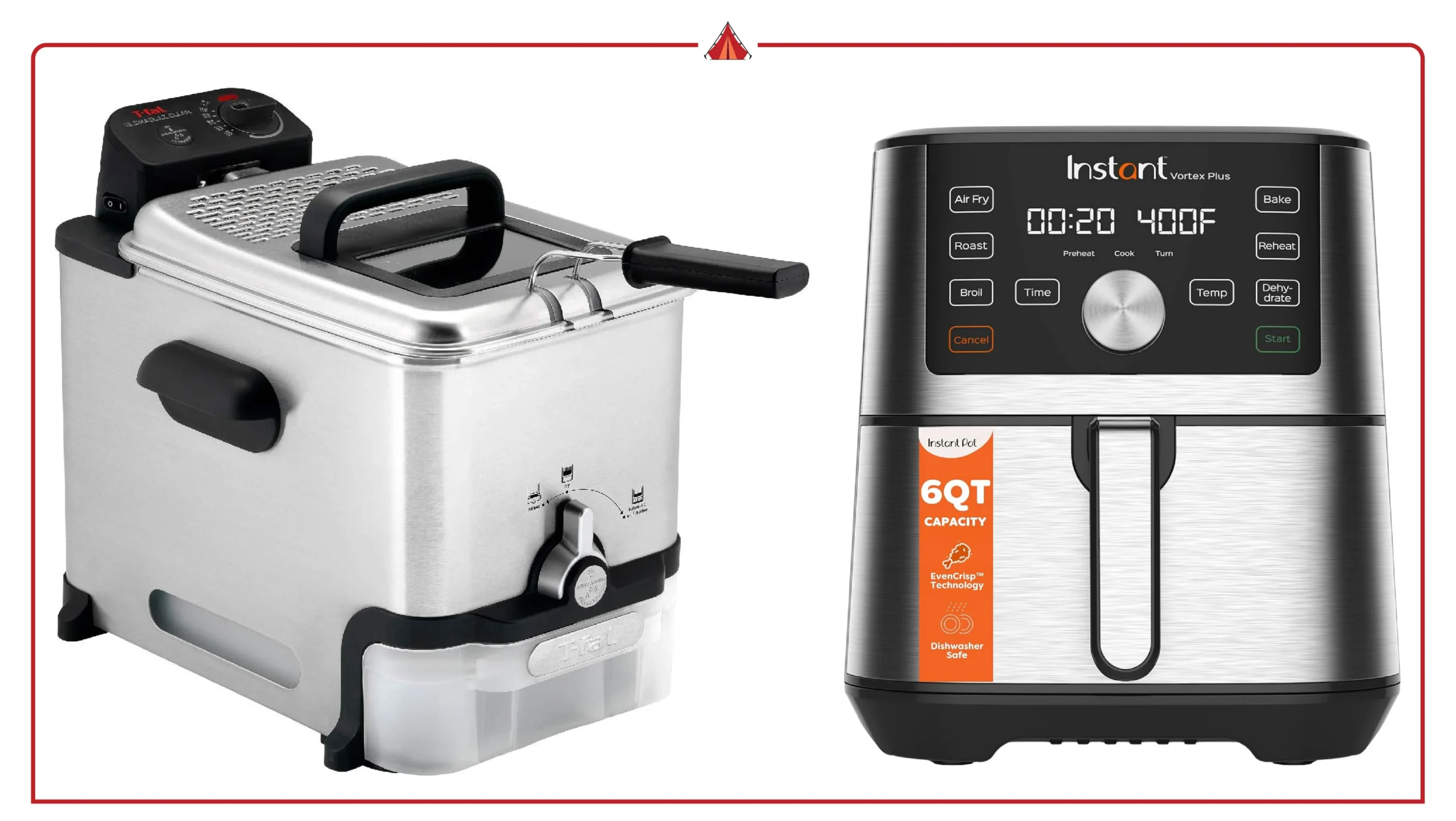
Best Deep Fryer for Authentic Results — T-fal FR8000 Deep Fryer — Adjustable temperature control, a generous oil capacity, and a built-in filtration system make this the most practical deep fryer for home cooks who fry regularly and want professional results without a commercial setup.
Best for Versatility — Breville Smart Oven Air Fryer Pro — For buyers who want one appliance to do everything — air fry, roast, bake, broil, dehydrate, and more — the Breville replaces a drawer full of countertop tools without compromising on any of them.
Air Fryer vs Deep Fryer — Side-by-Side Comparison
Not sure where to start? The table below gives you a fast read on every product in this guide — what type it is, what it’s built for, and the single feature that sets it apart. Use it to shortlist the two or three models that match your cooking style, then dig into the full reviews below.
| Product | Type | Capacity | Best For | Standout Feature |
|---|---|---|---|---|
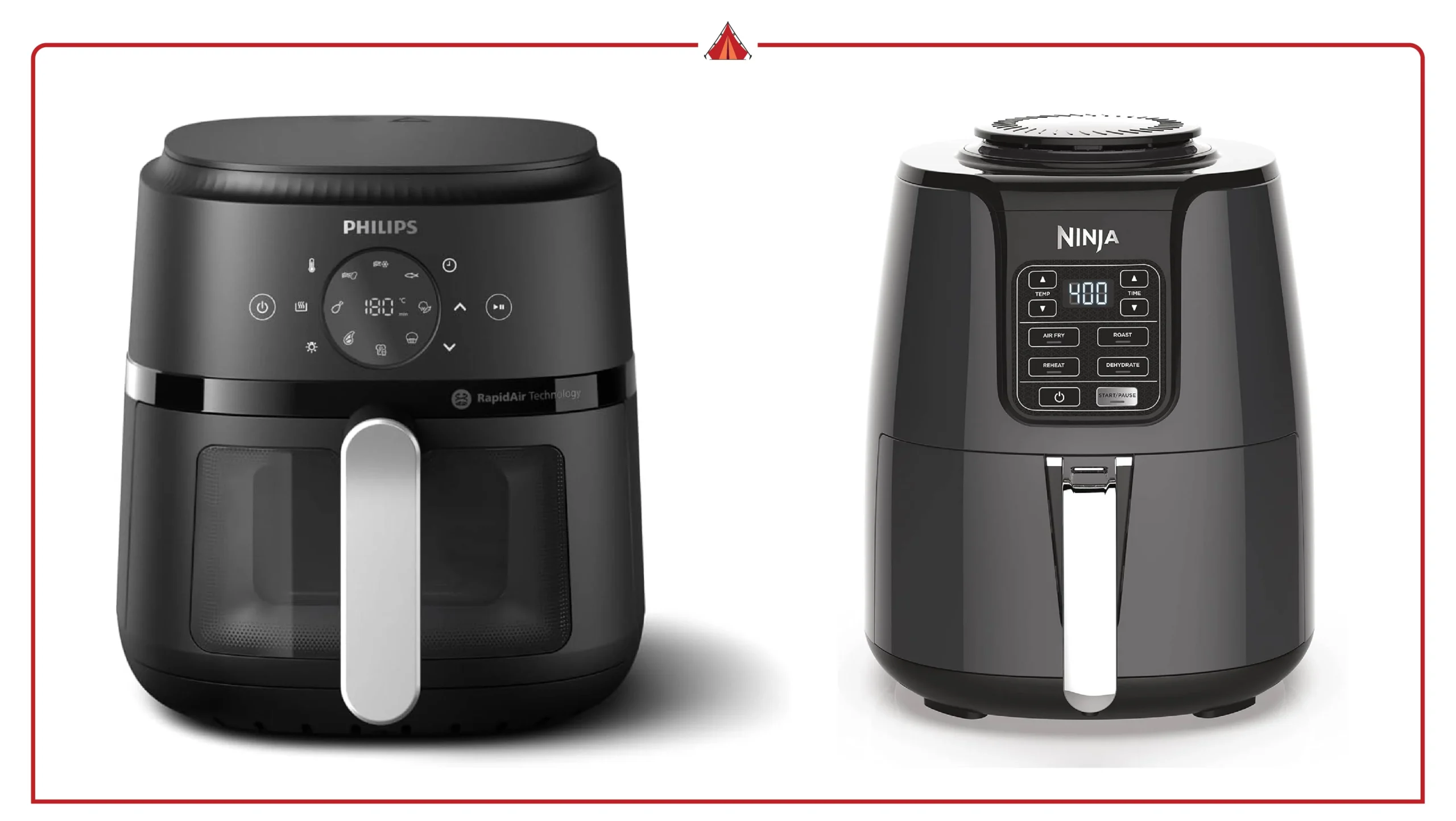
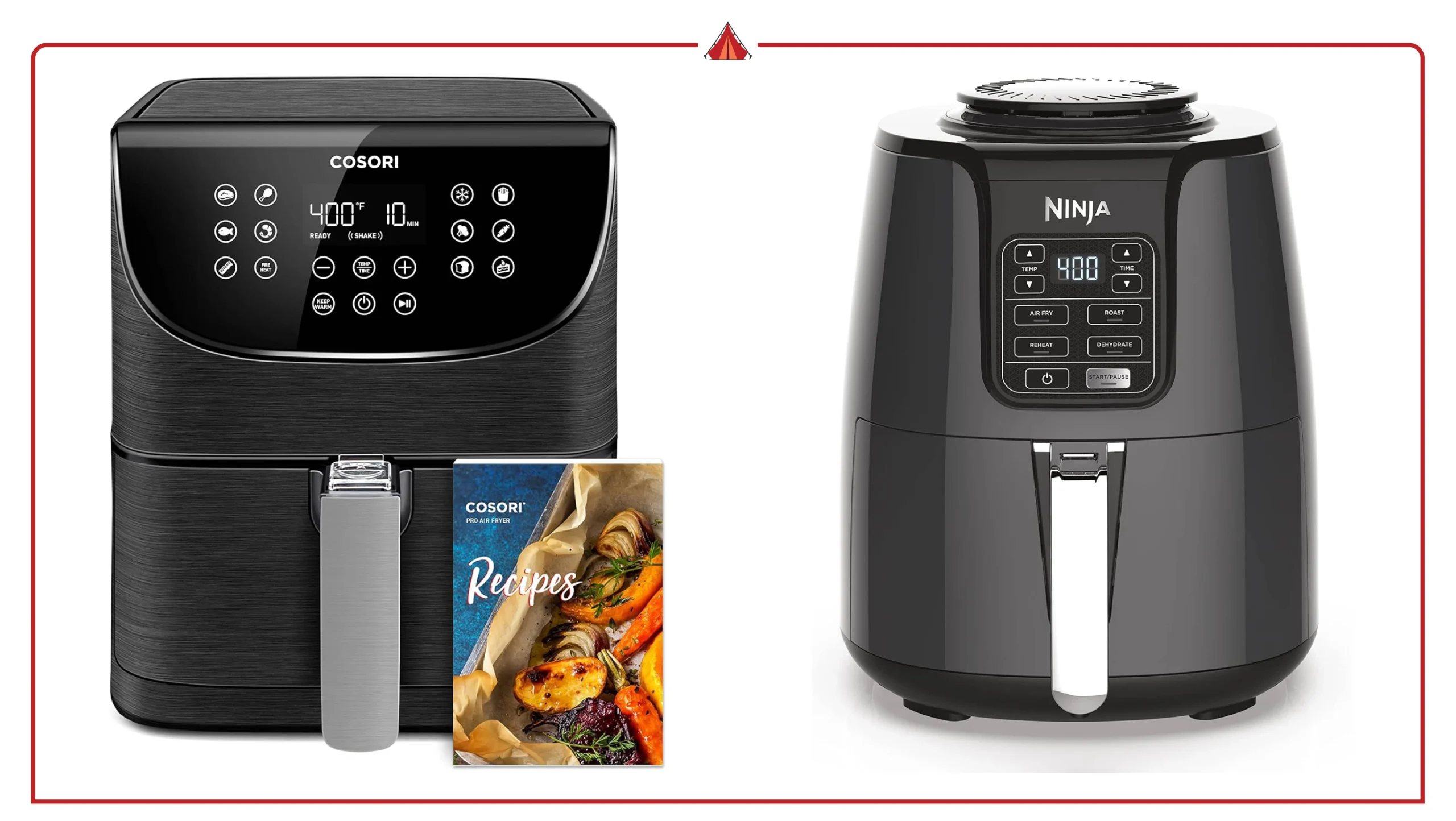
| Ninja AF101 | Air Fryer | 4 Qt | Beginners / Small households | Compact and reliable with a wide temp range |
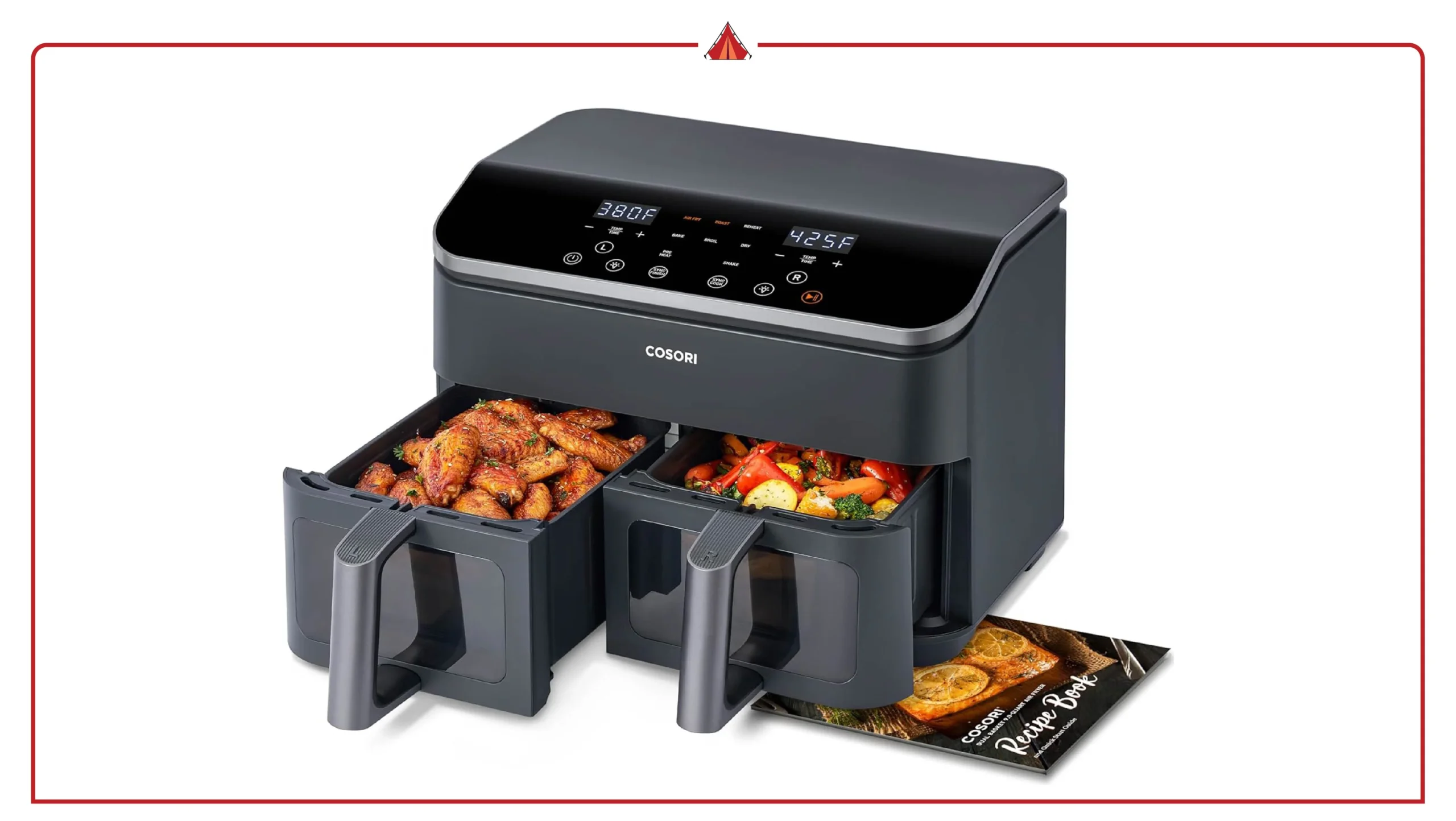
| Cosori Pro II | Air Fryer | 5.8 Qt | Everyday home cooks | Square basket maximizes space with 12 cooking presets |
| Philips Premium Airfryer XXL | Air Fryer | 3 lb food | Larger households | Fat removal technology with TurboStar circulation |
| Cosori Smart WiFi Air Fryer | Air Fryer | 5.8 Qt | Smart home kitchens | Full Alexa and Google Assistant voice control |
| Instant Vortex Plus 6-in-1 | Air Fryer | 6 Qt | Families / Multi-use | Six functions with a clear cooking window |
| Presto FryDaddy | Deep Fryer | 4-cup oil | Budget batch frying | Simple single-temp operation with snap-on lid storage |
| T-fal FR8000 | Deep Fryer | 3.5 L oil | Frequent fryers | Adjustable thermostat with automatic oil filtration |
| Cuisinart CDF-200 | Deep Fryer | 4 L oil | Mid-range buyers | 1,800W fast recovery with fully dishwasher-safe parts |
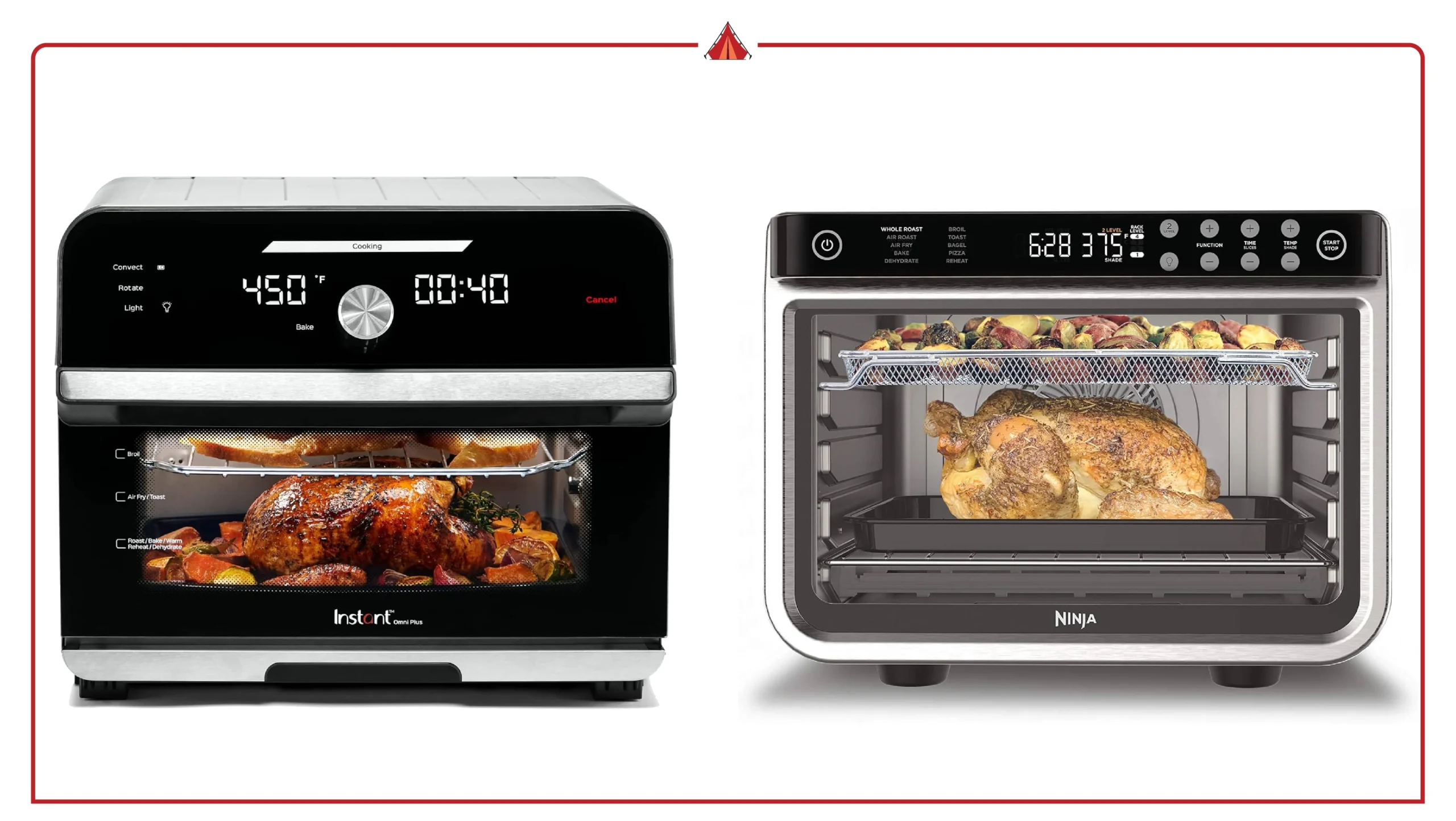
| Breville Smart Oven Air Fryer Pro | Air Fryer / Oven | Full oven size | Multi-appliance replacement | 13 functions with Super Convection airflow |
Ninja AF101 Air Fryer — Best for Beginners

Who it’s best for: First-time air fryer buyers and small households of one to three people who want reliable, no-learning-curve results without paying for features they won’t use.
The Ninja AF101 is the air fryer most people should start with — not because it’s the flashiest option on this list, but because it does exactly what it promises without getting in the way. There are no app connections to set up, no presets to scroll through, no steep learning curve to climb. You set the temperature, set the timer, and it cooks. For buyers coming from a conventional oven or a stovetop, that simplicity is genuinely valuable in the first few weeks of building new cooking habits.
Performance-wise, the AF101 punches well above its position in the market. The wide temperature range — 105°F all the way to 400°F — means it handles more than just frozen foods and reheating. You can dehydrate fruit, crisp up roasted vegetables, and cook chicken thighs with a legitimately crunchy skin. The 4-quart basket is right-sized for one to three people, and the dishwasher-safe basket and crisper plate mean cleanup takes minutes rather than the kind of scrubbing that kills enthusiasm for a new appliance fast.
Where it falls short is capacity. If you’re regularly cooking for four or more, you’ll find yourself running two batches on most meals — and that friction adds up. For larger households, the Instant Vortex Plus or the Philips XXL will serve you better. But for the buyer this product is actually built for, the AF101 is one of the most well-matched products on this entire list.
Key Features:
- 4-quart ceramic-coated basket fits meals for one to three people
- Temperature range of 105°F–400°F covers air frying, roasting, reheating, and dehydrating
- Dishwasher-safe basket and crisper plate for fast, low-effort cleanup
- Wide temperature control in 5-degree increments for precise cooking
- Compact footprint fits comfortably on most countertops without dominating the space
Pros:
- Genuinely simple to use from day one — no app, no setup, no confusion
- Consistent, reliable crisping across a wide variety of foods
- Easy to clean in a way that actually holds up in daily use
Cons:
- 4-quart capacity becomes a limitation quickly for households of four or more
- No preset functions or smart features for buyers who want more automation
Cosori Pro II Air Fryer — Best for Everyday Home Cooks

Who it’s best for: Home cooks who prepare a variety of meals daily and want preset versatility, a generous basket size, and optional app connectivity without stepping into premium price territory.
The Cosori Pro II sits in the sweet spot of the air fryer market — capable enough to handle real cooking, straightforward enough not to overwhelm, and priced in a range that’s easy to justify for daily use. Where the Ninja AF101 wins on simplicity, the Cosori Pro II wins on range. The 5.8-quart square basket is a meaningful upgrade over round alternatives at a similar size — the shape eliminates dead corner space and lets you lay food flat in a single layer more consistently, which directly affects how evenly everything crisps.
The 12 one-touch presets cover the foods most home cooks actually make — chicken, steak, seafood, vegetables, fries, and more — and the companion app adds a library of guided recipes for buyers who want structured cooking rather than guesswork. The shake reminder is a small feature that earns its keep fast: a mid-cook prompt to toss or flip food is the difference between evenly crisped results and a batch with one overdone side. For buyers who are still building confidence in the kitchen, that kind of guardrail matters more than it might seem.
The one honest caveat is the app itself. It works, but connectivity can be inconsistent, and buyers who were drawn in by the smart features occasionally find themselves defaulting to manual controls after the novelty wears off. That’s not a dealbreaker — the Cosori Pro II performs well with or without app integration — but buyers who are specifically purchasing for smart functionality should look at the Cosori Smart WiFi model instead, which handles that experience more reliably.
Key Features:
- 5.8-quart square basket maximizes usable cooking surface versus round designs
- 12 one-touch presets covering the most common proteins, vegetables, and sides
- Companion app with 100+ guided recipes and remote start capability
- Shake reminder function prompts mid-cook tossing for consistent results
- Preheat and keep-warm functions for timing flexibility around busy schedules
Pros:
- Square basket design makes a genuine, practical difference in even cooking
- Preset range covers the meals most home cooks actually make week to week
- Performs well as a manual air fryer even without using the app
Cons:
- App connectivity can be unreliable — not a dependable feature for every kitchen setup
- Slightly larger footprint than the Ninja AF101 — countertop space required
Philips Premium Airfryer XXL — Best Premium Air Fryer

Who it’s best for: Larger households of four or more and serious home cooks who want the most established, most refined air fryer on the market and are willing to pay for the difference in performance.
Philips invented the air fryer category, and the Premium XXL is the product that makes that history relevant. This isn’t a brand story — it’s an engineering one. The TurboStar technology at the core of the Philips design circulates hot air more aggressively and more evenly than most competitors manage, and the practical result is browning that happens consistently across the entire basket rather than concentrated in one zone. For buyers who have been frustrated by uneven results from other air fryers, that difference is immediately noticeable and worth paying for.
The Fat Removal Technology is the other feature that earns its place rather than just its marketing. A raised mesh bottom channels excess grease away from food during cooking, which matters most for fattier proteins like chicken thighs, sausages, and bacon — foods that tend to sit in their own rendered fat in conventional air fryers and lose the crispness you were after. It’s a small structural detail that produces a consistently better result across a specific but common set of ingredients. At the XXL capacity level, the Philips also handles whole chickens and larger roasts in a way that smaller-basket competitors simply cannot, which changes what the appliance is capable of on a practical level.
The honest limitation here is value fit. The Philips Premium XXL is an excellent product, but excellent for a specific buyer — one who cooks for a larger household regularly, who will use the full capacity, and who cares about the performance ceiling of the appliance. For a single person or a couple who cooks light meals a few times a week, the premium price buys capability that will never get used. Match it to the right household and it’s hard to argue against. Match it to the wrong one and it’s an expensive basket taking up counter space.
Key Features:
- 3-lb food capacity accommodates full meals for four or more, including whole chickens and larger roasts
- Twin TurboStar technology delivers more aggressive, more even hot air circulation than most competing designs
- Fat Removal Technology channels excess grease away from food via a raised mesh bottom
- QuickClean basket with non-stick mesh removes and cleans in seconds
- Wide temperature range and precise control across all cooking modes
Pros:
- Among the most consistent, even crisping performance available in a home air fryer
- Full-capacity cooking genuinely serves households of four or more without batching
- Fat removal feature produces noticeably better results on high-fat proteins
Cons:
- Premium price point is difficult to justify for light users or smaller households
- Larger physical footprint demands dedicated counter space — not a compact appliance
Cosori Smart WiFi Air Fryer — Best for Smart Home Kitchens
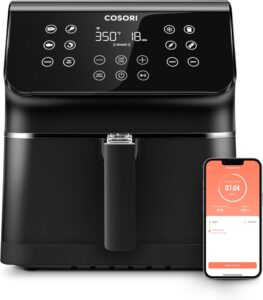
Who it’s best for: Tech-forward home cooks who are already invested in a smart home ecosystem and want their air fryer to integrate with voice control, app-based scheduling, and remote monitoring rather than treating connectivity as a bonus feature.
There is a meaningful difference between an air fryer that has an app and an air fryer that is genuinely built around smart functionality. The Cosori Pro II falls into the first category — capable with or without connectivity. The Cosori Smart WiFi falls into the second. The integration here is deeper, more reliable, and more practically useful for buyers who actually want to cook remotely, trigger preheating from another room, or build the air fryer into a broader Alexa or Google Assistant routine. If that describes your kitchen, this is the model that delivers it properly.
The 5.8-quart square basket carries over the same design advantage from the Pro II — more usable flat cooking surface versus round competitors at the same stated capacity. The 13 cooking functions cover the full range of what a modern air fryer should handle: air fry, roast, bake, broil, dehydrate, and beyond. Where the smart experience earns its keep most practically is in the real-time notifications. Preheat alerts, cook completion notifications, and the ability to adjust time and temperature remotely via the VeSync app mean less time standing in the kitchen waiting and more flexibility around the rest of a busy schedule. For households where dinner prep runs alongside homework, work calls, or putting kids to bed, that kind of ambient control is genuinely useful rather than just novel.
The limitation is a straightforward one: the value proposition shrinks significantly in kitchens without reliable WiFi coverage or in households where smart home integration simply isn’t part of daily life. Buyers who are drawn to the feature set on paper but don’t actually use voice assistants or app-controlled appliances will find themselves with a capable air fryer they’re using on manual mode — which is fine, but doesn’t justify the step up from the Pro II. Be honest about how you actually cook before choosing this over its sibling.
Key Features:
- Full Alexa and Google Assistant compatibility for hands-free voice control
- 13 cooking functions including air fry, roast, bake, broil, and dehydrate
- VeSync app delivers real-time preheat alerts, cook completion notifications, and remote temperature adjustment
- 5.8-quart square basket design maximizes usable cooking surface
- Scheduled cooking and remote start via app for flexible meal timing
Pros:
- Smart home integration is genuinely reliable rather than a checkbox feature
- 13 cooking functions cover nearly every countertop cooking task in one appliance
- Remote monitoring and notifications add real practical value for busy households
Cons:
- Smart features require stable WiFi — value drops sharply in low-connectivity kitchens
- Buyers without existing smart home setups will underuse what they are paying for
Instant Vortex Plus 6-in-1 Air Fryer — Best for Families
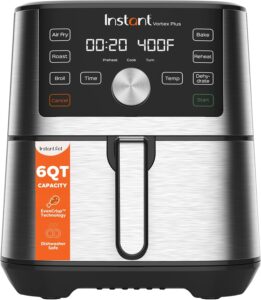
Who it’s best for: Families of four or more who need a high-capacity air fryer that handles full meals in a single batch, replaces multiple countertop appliances, and holds up to daily heavy use without becoming a maintenance burden.
The Instant Vortex Plus earns its place on this list by solving the problem that trips up most family-sized households when they first move to air frying — capacity that sounds generous on paper but disappoints in practice. Six quarts is genuinely large in this category, and the interior dimensions are proportioned in a way that lets you cook a full tray of chicken pieces, a complete batch of fries, or a sizeable portion of roasted vegetables without splitting into two rounds. For households that cook dinner for four on a weeknight and need the process to be fast and low-effort, removing the second batch from the equation changes the experience entirely.
The six cooking functions — air fry, roast, broil, bake, reheat, and dehydrate — cover enough ground to make this a legitimate multi-appliance replacement rather than a single-purpose fryer with bonus settings nobody uses. The EvenCrisp technology, which drives airflow from the top down through the food rather than just around it, produces more consistent browning across larger batches than side-circulation designs manage. The clear cooking window is a feature that sounds minor until you’ve used it — being able to check on food mid-cook without releasing heat or interrupting the cycle is a small quality-of-life improvement that adds up across dozens of uses. For parents managing dinner alongside everything else happening in a household at 6pm, that visibility matters.
The trade-off is physical footprint. At six quarts, the Instant Vortex Plus is a large appliance, and it needs to be treated as a permanent countertop fixture rather than something you pull out and put away. Kitchens with limited counter space will feel the constraint immediately. It is also worth noting that six functions is plenty for most families but falls short of the Breville Smart Oven’s thirteen-function range for buyers who want the absolute maximum versatility from a single appliance. For straightforward family cooking without premium complexity, though, the Vortex Plus hits the target cleanly.
Key Features:
- 6-quart capacity handles full family meals in a single batch without splitting
- Six cooking functions: air fry, roast, broil, bake, reheat, and dehydrate
- EvenCrisp technology drives airflow top-down for consistent browning across larger loads
- Clear cooking window allows mid-cycle monitoring without opening the basket
- One-touch controls with a clear digital display for straightforward daily operation
Pros:
- Genuine six-quart capacity eliminates the two-batch problem for families of four or more
- EvenCrisp airflow produces consistently even results across larger food volumes
- Clear cooking window adds real practical convenience during busy meal prep
Cons:
- Large footprint requires dedicated, permanent counter space — not suitable for tight kitchens
- Six functions covers family cooking well but falls short of the versatility ceiling set by premium multi-function models
Presto FryDaddy Electric Deep Fryer — Best Budget Deep Fryer

Who it’s best for: Budget-conscious buyers who fry occasionally rather than regularly and want authentic deep-fried results for small batches without committing to the cost, complexity, or countertop footprint of a full-sized deep fryer.
The Presto FryDaddy is not trying to be a sophisticated appliance, and that honesty is exactly what makes it work. There are no temperature dials to calibrate, no digital displays to navigate, no filtration systems to maintain. You add oil, you plug it in, you fry. For a buyer who wants real deep-fried results a few times a month — game day wings, occasional homemade fries, a batch of donuts for a weekend breakfast — that simplicity is not a limitation. It is the entire point. The barrier to entry is low enough that buyers who might otherwise default to a pan of oil on the stovetop will actually use this instead, which is both safer and more consistent.
The four-cup oil capacity fries up to four servings in a single batch, which is right-sized for the buyer this product is built for. Smaller households, occasional fryers, and anyone who wants to test deep frying before committing to a larger unit will find the FryDaddy fits that use case without waste. The non-stick interior and snap-on lid are genuinely useful features at this price point — the lid keeps stored oil covered between uses, which extends oil life and removes the need to drain and refrigerate after every session. For an appliance used a few times a month rather than daily, that convenience is worth more than it might appear.
The honest limitation is the fixed temperature. The FryDaddy operates at a single preset heat level with no adjustment, which works well for the foods it was designed around — french fries, chicken pieces, onion rings — but creates problems the moment you move into foods that require lower or more precise temperatures. Donuts, fish, and certain battered items perform better at specific temperatures that the FryDaddy cannot hit on demand. If your frying repertoire extends beyond the basics, the T-fal FR8000 with its adjustable thermostat is the more capable choice. But for buyers who know exactly what they want to fry and want the lowest-friction way to do it, the FryDaddy delivers every time.
Key Features:
- 4-cup oil capacity fries up to four servings per batch — right-sized for small households and occasional use
- Single fixed-temperature operation requires no setup, calibration, or learning curve
- Non-stick interior cleans quickly without heavy scrubbing
- Snap-on lid stores oil directly in the unit between uses, extending oil life
- Compact footprint stores easily in a cabinet when not in use
Pros:
- Lowest barrier to entry of any deep fryer on this list — plug in and fry immediately
- Snap-on lid oil storage eliminates the drain-and-refrigerate process between sessions
- Compact enough to store away rather than occupy permanent counter space
Cons:
- Fixed temperature with no adjustment limits versatility across different foods and battering styles
- Four-cup oil capacity is too small for larger households or anyone frying for a crowd
T-fal FR8000 Deep Fryer — Best for Frequent Fryers

Who it’s best for: Home cooks who fry regularly — weekly or more — and need adjustable temperature control, a capacity that handles larger batches, and a built-in oil management system that makes repeated use practical rather than messy.
If the Presto FryDaddy is built for the occasional fryer who wants simplicity, the T-fal FR8000 is built for the cook who has already decided that deep frying is a regular part of how they feed their household and needs an appliance that holds up to that frequency without becoming a chore. The adjustable thermostat — spanning 265°F to 375°F — is the feature that separates serious deep fryers from entry-level ones, and it matters more than most buyers initially expect. Different foods require different temperatures not just for optimal results but for food safety, and the ability to dial in the right heat for fish versus chicken versus doughnuts versus churros is the difference between a deep fryer that expands your cooking and one that limits it to a narrow rotation of basics.
The 3.5-liter oil capacity handles up to 2.65 pounds of food per batch, which is a meaningful step up from the FryDaddy’s four-cup ceiling and sufficient for feeding a family of four without running multiple rounds. The feature that makes the FR8000 genuinely practical for frequent use, though, is the oil filtration system. After cooking, the system automatically filters used oil through a strainer and stores it in a sealed container, ready for the next session. For buyers who fry regularly, oil management is the single biggest friction point — the draining, the straining, the storage, the mess — and the FR8000 addresses it in a way that makes weekly frying feel sustainable rather than laborious. That alone justifies the step up from a simpler unit for the right buyer.
The one caution worth flagging is the filtration process itself. The system works well when handled deliberately, but rushing it creates splashing risk — hot oil and impatience are a bad combination, and buyers who expect the process to be as fast as it is automatic will occasionally find themselves dealing with the consequences. Treat the filtration step as a cool-down process rather than an instant cleanup solution and the FR8000 rewards you with one of the most practical frequent-use deep frying setups available at its price point.
Key Features:
- Adjustable thermostat from 265°F to 375°F delivers precise temperature control across a wide range of foods and frying styles
- 3.5-liter oil tank with 2.65-lb food capacity handles larger batches for families of four
- Automatic oil filtration system strains and stores used oil in a sealed container for reuse
- Indicator light signals when oil has reached the target temperature before cooking begins
- Removable parts simplify cleaning between sessions for buyers frying multiple times per week
Pros:
- Adjustable temperature control unlocks a far wider range of foods than fixed-temp deep fryers allow
- Oil filtration system makes frequent frying genuinely practical by removing the biggest maintenance friction point
- Capacity handles full family-sized batches without splitting into multiple rounds
Cons:
- Oil filtration process requires patience — rushing it creates a splashing risk with hot oil
- Larger oil volume means higher ongoing oil cost and more responsibility around safe disposal over time
Cuisinart CDF-200 Deep Fryer — Best Mid-Range Deep Fryer

Who it’s best for: Mid-range buyers who want a trusted kitchen brand, a larger oil capacity for bigger batches, precise temperature control, and the convenience of fully dishwasher-safe components — without stepping into premium pricing.
Cuisinart has built its reputation on producing kitchen appliances that sit at a reliable intersection of performance and practicality, and the CDF-200 is a clean expression of that approach applied to deep frying. Where the T-fal FR8000 earns its place through oil management and frequent-use practicality, the CDF-200 earns its through build quality, cleanup convenience, and the kind of cooking consistency that comes from a 1,800-watt heating element that recovers temperature fast between batches. Temperature recovery speed is an underappreciated spec in deep fryer buying decisions — when you lower cold food into hot oil, the oil temperature drops immediately, and a weak heating element that struggles to recover produces greasy, under-crisped results rather than the clean fry you were after. The CDF-200 handles that recovery efficiently enough that back-to-back batches hold up in quality from the first to the last.
The four-liter oil capacity is the largest on this list among dedicated deep fryers, which makes the CDF-200 the most capable option for buyers who entertain, cook for larger groups, or simply want the headroom to fry without rationing batch sizes. The adjustable temperature dial runs from 175°F to 375°F — a wider low-end range than the T-fal — which opens up more delicate frying applications like tempura, certain fish preparations, and foods that need a gentler heat to cook through without over-browning the exterior. The indicator light removes guesswork from the preheat process, signaling clearly when the oil is at temperature and ready to cook rather than leaving buyers to estimate.
What genuinely separates the CDF-200 in its price tier is the cleanup story. The removable bowl, lid, and basket are all fully dishwasher safe — not just technically dishwasher compatible in the fine print, but designed to go straight in without hand-washing first. For a deep fryer, that is a meaningful differentiator. Oil residue cleanup is the single biggest reason buyers stop using deep fryers after the novelty wears off, and an appliance that removes that friction entirely extends the useful life of the product in a real household significantly. The honest trade-off is the oil volume itself — four liters means a meaningful ongoing oil cost, and buyers who fry infrequently will find themselves managing oil storage and disposal more often than the cooking frequency justifies. Match the capacity to your actual usage and the CDF-200 rewards you with one of the most complete mid-range deep frying experiences available.
Key Features:
- 4-liter oil capacity — the largest among dedicated deep fryers on this list — handles bigger batches and larger groups
- 1,800-watt heating element delivers fast temperature recovery between batches for consistent fry quality
- Adjustable temperature dial from 175°F to 375°F covers delicate applications like tempura through high-heat frying
- Indicator light signals preheat completion clearly before cooking begins
- Removable bowl, lid, and basket are all fully dishwasher safe for complete, low-effort cleanup
Pros:
- Fully dishwasher-safe components remove the biggest maintenance friction point in deep fryer ownership
- Fast temperature recovery between batches maintains consistent fry quality from first batch to last
- Wide temperature range accommodates a broader cooking repertoire than most competing mid-range units
Cons:
- Four-liter oil volume creates higher ongoing oil costs and more frequent disposal responsibility for light users
- Larger physical footprint than the T-fal FR8000 — requires dedicated counter or storage space
Breville Smart Oven Air Fryer Pro — Best Premium Multi-Function Pick

Who it’s best for: Premium buyers who want a single countertop appliance that genuinely replaces a conventional oven, a dedicated air fryer, a toaster, a dehydrator, and more — and who cook frequently enough and diversely enough to justify both the investment and the counter space it demands.
There is a category of kitchen appliance buyer who has accumulated too many single-purpose tools, runs out of counter space before running out of cooking needs, and wants one well-built unit that handles everything without compromising on any of it. The Breville Smart Oven Air Fryer Pro was designed for exactly that buyer, and it delivers on that promise more completely than anything else at its price point. Thirteen cooking functions is not a marketing number padded with redundant modes — it is a genuinely functional range that includes air fry, roast, bake, broil, toast, bagel, cookies, pizza, proof, reheat, warm, slow cook, and dehydrate, each calibrated as a distinct cooking environment rather than a renamed version of the one before it.
The Super Convection mode is the feature that makes the air frying function competitive with dedicated air fryers rather than being a compromise addition to an oven. By increasing airflow up to 30% beyond standard convection, the Breville produces the kind of rapid surface crisping that air frying is known for — without the capacity limitations that make basket-style air fryers a batching exercise for larger households. The interior accommodates a 14-pound turkey, a full 9×13 baking dish, or up to nine slices of toast simultaneously. For a household that roasts, bakes, air fries, and dehydrates across a given week, that interior volume means the Breville handles all of it in a single footprint rather than requiring a rotation of appliances in and out of storage. The interior light and the Element IQ system — which distributes power intelligently across the heating elements based on the selected function — add the kind of precision engineering detail that separates Breville’s approach from competitors building multi-function ovens as a feature checklist rather than a cooking system.
The conversation about this appliance always comes back to two things: price and footprint. Both are significant, and both deserve honest treatment. The Breville Smart Oven Air Fryer Pro is a large appliance. It needs to live on the counter permanently — this is not something you slide in and out of a cabinet between uses. For kitchens with generous counter space, that is a straightforward trade-off for the consolidation it provides. For smaller kitchens, it may simply not be a viable option regardless of how compelling the feature set is. On price, the calculus depends entirely on what it is replacing. For a buyer who currently owns a countertop toaster oven, a separate air fryer, and a dehydrator, the Breville consolidates all three into one unit that outperforms each of them individually. For a buyer who only needs to air fry chicken thighs a few nights a week, it is a significant overspend for capability that will never be used. Know which buyer you are before you commit.
Key Features:
- 13 distinct cooking functions including air fry, roast, bake, broil, slow cook, proof, dehydrate, and more
- Super Convection mode increases airflow by up to 30% for dedicated air fryer performance in an oven format
- Interior accommodates a 14-lb turkey, a full 9×13 baking dish, or up to nine slices of toast
- Element IQ system distributes heating power intelligently across elements based on the selected cooking function
- Interior oven light for clear visibility throughout the cooking process without opening the door
Pros:
- Thirteen genuinely distinct cooking functions make this a credible replacement for multiple countertop appliances
- Super Convection air frying delivers results competitive with dedicated basket-style air fryers at significantly higher capacity
- Interior volume eliminates the batching problem entirely for households that cook for four or more regularly
Cons:
- Premium price point requires honest self-assessment — buyers who only need basic air frying will significantly overpay for unused capability
- Large permanent footprint is non-negotiable — not suitable for kitchens with limited counter space
Air Fryer vs Deep Fryer — How to Choose the Right One for You
Picking between an air fryer and a deep fryer is not a matter of which appliance is objectively better. It is a matter of which one is better for the way you actually cook. The reviews above tell you what each product does well. This section tells you how to figure out which category belongs in your kitchen.
The Real Difference in Results
This is the part most buying guides soften, and it shouldn’t be softened. Air fryers and deep fryers do not produce the same results. An air fryer circulates hot air at high speed around food to create surface crisping through convection. A deep fryer submerges food entirely in oil heated to a precise temperature, which creates a fundamentally different crust — one that forms through direct contact with hot oil rather than hot air.
The practical difference is texture and moisture retention. Deep-fried food develops a crust that seals surface moisture in more completely, which is why properly fried chicken has a juicy interior that air-fried chicken, at its best, approaches but does not fully replicate. For foods where that distinction matters — traditional fried chicken, fish and chips, battered onion rings, churros, donuts — a deep fryer produces a result that an air fryer cannot match regardless of temperature setting or cook time. For foods where it matters less — roasted vegetables, reheated leftovers, frozen fries, chicken wings — an air fryer performs extremely well and in some cases produces a cleaner, less greasy result than deep frying would.
Health Considerations — What the Numbers Actually Mean
Air fryers use significantly less oil than deep fryers — often a light spray versus several liters of submerged oil — and that difference in oil volume does translate to a meaningful difference in fat content per serving for most foods. That is a real and honest health distinction, not a marketing claim.
What it does not mean is that air-fried food is inherently healthy or that deep-fried food is inherently harmful in the context of an otherwise balanced diet. The health impact of either appliance depends almost entirely on what you are cooking and how often you are eating it. For buyers where reduced oil consumption is a genuine priority — managing cholesterol, reducing caloric intake, cooking for someone with dietary restrictions — the air fryer is the clearer choice. For buyers who fry occasionally and prioritize result quality over oil reduction, the health distinction is unlikely to be the deciding factor.
Kitchen Fit — Space, Smell, and Cleanup
Air fryers and deep fryers make very different demands on a kitchen beyond the cooking itself, and underestimating those demands is one of the most common reasons buyers end up disappointed.
Deep fryers require oil — purchasing it, heating it, storing it between uses, and eventually disposing of it responsibly. The smell of deep frying permeates a kitchen and lingers, which matters more in open-plan living spaces and smaller apartments than in larger homes with good ventilation. Splatter is a reality with open-basket deep fryers, and cleanup — even with dishwasher-safe components like the Cuisinart CDF-200 — takes longer than wiping down an air fryer basket. None of these are dealbreakers for buyers who fry regularly and love the results. But they are costs that need to be accounted for honestly.
Air fryers are cleaner, faster to clean, and produce far less ambient smell during cooking. The trade-off is that they are still countertop appliances with a meaningful footprint — the Instant Vortex Plus and the Breville Smart Oven in particular require permanent counter real estate. Smaller units like the Ninja AF101 are more forgiving on space but cap out at a capacity that limits what you can cook in a single batch.
Who Should Buy an Air Fryer
An air fryer is the right choice if you cook for one to four people regularly, want a versatile appliance that handles more than just frying, and value speed and easy cleanup over the absolute authenticity of deep-fried results. It is particularly well matched to buyers who are health-conscious without being restrictive, who reheat food frequently and want better results than a microwave produces, who are new to cooking and want an appliance with a low learning curve, or who want to consolidate countertop tools into a single multi-function unit. If you recognize yourself in that description, start with the Ninja AF101 for simplicity, step up to the Cosori Pro II for everyday cooking versatility, or go straight to the Breville Smart Oven if full appliance consolidation is the goal.
Read Next: Best Air Fryers of 2026: Our Top 8 Picks for Every Budget and Kitchen Size
Who Should Buy a Deep Fryer
A deep fryer is the right choice if authentic fried texture is non-negotiable for the foods you cook most often, if you fry regularly enough to justify the oil volume and maintenance, and if the cleanup trade-off is one you are willing to make for the quality of results it produces. It is particularly well matched to buyers who cook for larger households and need batch capacity that a basket-style air fryer cannot provide, who entertain frequently and want to produce restaurant-quality fried food at home, or who have specific foods — traditional fried chicken, fish, battered items, donuts — where the deep-fried result is meaningfully different and that difference matters to them. If that describes your household, the Presto FryDaddy handles occasional small-batch frying without commitment, the T-fal FR8000 is the right tool for regular weekly use, and the Cuisinart CDF-200 serves larger households and more diverse frying needs most completely.
Budget Reality — What You Get at Each Tier
Across both appliance categories, the budget tier gets you a reliable, single-purpose tool that handles the core job well and asks you to accept limitations on capacity, temperature control, or versatility in exchange for the lower entry cost. The Ninja AF101 and the Presto FryDaddy both sit here — honest, capable, and well-matched to buyers whose needs are straightforward.
The mid-range tier adds meaningful capability without crossing into premium pricing. You get larger capacity, more cooking functions, better temperature control, and features — like the Cosori Pro II’s preset range or the T-fal FR8000’s oil filtration system — that make daily or weekly use significantly more practical. This is where most households find the best balance of performance and value.
The premium tier, represented here by the Philips Premium Airfryer XXL and the Breville Smart Oven Air Fryer Pro, is for buyers with specific needs that the mid-range cannot fully address — larger household capacity, multi-appliance replacement, or the highest available performance ceiling. The premium price is justified when the capability gets used. When it doesn’t, it is simply money spent on headroom that sits idle.
Frequently Asked Questions — Air Fryer vs Deep Fryer
Q: Does an air fryer actually taste as good as a deep fryer?
A: For most everyday foods — chicken wings, frozen fries, roasted vegetables, reheated leftovers — an air fryer produces genuinely excellent results that satisfy most households completely. For foods where the deep-fried crust is the defining characteristic — traditional battered chicken, donuts, churros, fish and chips — a deep fryer produces a result that an air fryer approaches but does not fully replicate. The honest answer is that it depends entirely on what you are cooking and how important textural authenticity is to you.
Q: Is an air fryer healthier than a deep fryer?
A: Air fryers use significantly less oil than deep fryers — typically a light spray versus several liters of submerged oil — which does produce a meaningful reduction in fat content per serving for most foods. That is a real distinction, not a marketing claim. However, the overall health impact of either appliance depends on what you are cooking and how frequently you are eating it, rather than the appliance itself being inherently healthy or unhealthy.
Q: Can you fry everything in an air fryer that you can in a deep fryer?
A: Most foods that are commonly deep fried can be cooked in an air fryer with good results, but not identical ones. Foods with wet batters — traditional beer-battered fish, for example — do not work well in an air fryer because the batter drips before it sets, whereas submerged oil sets it instantly. Breaded and dry-coated foods perform much better in an air fryer than wet-battered ones, and most everyday fried foods fall into that category.
Q: How much oil does a deep fryer use compared to an air fryer?
A: A typical home deep fryer requires between three and four liters of oil to operate — enough to fully submerge the food being cooked. An air fryer requires little to no added oil for most foods, and when oil is used it is typically measured in teaspoons rather than liters. For buyers frying frequently, that difference in oil consumption represents a meaningful ongoing cost difference in addition to the health distinction.
Q: Which is easier to clean — an air fryer or a deep fryer?
A: Air fryers are consistently easier to clean. Most baskets and crisper plates are dishwasher safe, and the absence of large oil volumes means there is no draining, straining, or storage process between uses. Deep fryers require managing used oil after every session — filtering it, storing it, and eventually disposing of it — in addition to cleaning the bowl, basket, and lid. Models like the Cuisinart CDF-200 with fully dishwasher-safe components reduce that burden significantly, but the oil management step remains regardless of the model.
Q: Is a deep fryer worth it if I already own an air fryer?
A: It depends on whether there are specific foods you cook regularly where deep-fried results matter enough to justify a second appliance. If you find yourself frequently unsatisfied with air-fried versions of battered foods, traditional fried chicken, or donuts, a compact option like the Presto FryDaddy adds authentic deep-frying capability without a large footprint or significant investment. If your air fryer is meeting your needs across the foods you actually cook most often, adding a deep fryer is unlikely to change your cooking in a way that justifies the addition.
Q: What size air fryer do I need for a family of four?
A: A family of four generally needs a minimum of five to six quarts to cook full meals in a single batch without splitting into two rounds. The Cosori Pro II at 5.8 quarts handles most family meals comfortably, and the Instant Vortex Plus at six quarts provides the most headroom for larger portions and varied dishes. Anything below five quarts will require batching for a household of four, which adds time and reduces the practicality of the appliance for weeknight cooking.
Read Next: Best Air Fryer for a Family of 4 in 2026: Large-Capacity Picks That Actually Deliver
Final Verdict — Which One Should You Actually Buy?
After working through every product on this list and every dimension of the air fryer versus deep fryer decision, the honest conclusion is this: most households should buy an air fryer, and a specific subset of households should buy a deep fryer. The difference between those two groups comes down to one question — how much does authentic deep-fried texture matter to you in the foods you cook most often? If the answer is “a lot, and I cook those foods regularly,” a deep fryer will serve you better than any air fryer on this list regardless of how advanced it is. If the answer is “not enough to manage liters of oil on a regular basis,” an air fryer will meet your needs more completely and with significantly less friction.
Our Final Picks
Best Overall Air Fryer — Ninja AF101 The most well-matched air fryer for the widest range of buyers. It is simple enough for first-time users, capable enough for daily cooking, easy enough to clean that it actually stays in rotation, and compact enough to fit in kitchens where space is a real constraint. If you are buying your first air fryer and are not sure where to start, start here.
Best Air Fryer for Everyday Family Cooking — Instant Vortex Plus 6-in-1 For households of four or more who cook dinner daily and need a single-batch solution that eliminates the batching problem entirely, the Instant Vortex Plus delivers the capacity and the cooking range to make air frying work at family scale without compromise.
Best Premium / Multi-Function Pick — Breville Smart Oven Air Fryer Pro For buyers who want one appliance to replace everything on their counter and cook at the highest level across every function, the Breville is the only product on this list that genuinely delivers on that promise. It is a significant investment — and the right one for the right kitchen.
Best Budget Deep Fryer — Presto FryDaddy For buyers who fry occasionally, want authentic results without a large commitment, and need the lowest-friction entry point into deep frying, the FryDaddy does exactly what it promises every time. No learning curve, no complexity, no regrets.
Best Deep Fryer for Regular Use — T-fal FR8000 For households that fry weekly and need adjustable temperature control, genuine batch capacity, and an oil management system that makes repeated use sustainable, the T-fal FR8000 is the most practical deep fryer on this list for the buyer who has already decided that deep frying is part of how they cook.
Whichever direction you go, the right appliance is the one that fits the way you actually cook — not the way you imagine you might cook once you own it. Buy for your real habits, your real kitchen, and the results that actually matter to you. That is the decision you will not regret.