Best Air Fryers for Beginners in 2026: Simple, Reliable, and Easy to Use

This post contains affiliate links. We may earn a commission if you purchase through our links, at no extra cost to you.
Walk into any kitchen store or scroll Amazon for five minutes and the air fryer aisle becomes overwhelming fast. Basket or oven-style? Four quarts or six? Digital controls or dial? Pre-sets or manual? For a first-time buyer, the sheer number of options has a way of turning a simple purchase into an exhausting research project.
Here’s the thing: buying your first air fryer doesn’t need to be complicated. The best beginner air fryers share a short list of qualities — intuitive controls, a forgiving learning curve, easy cleanup, and consistent results right out of the box. The specs that dominate product listings? Most of them won’t matter to you until you’ve cooked a hundred meals and know exactly what you want next.
This guide cuts through all of it. We’ve identified the nine best air fryers for beginners in 2026 — covering every budget from under $50 to premium multi-function units — and matched each one to a specific type of first-time buyer. Whether you’re cooking for yourself in a small apartment, feeding a family on weeknights, or just want one reliable appliance that does what it promises, there’s a clear answer here for you.
By the time you finish reading, you’ll know exactly which air fryer to buy, why it fits your situation, and what to expect when you plug it in for the first time.
Best Air Fryers for Beginners — Top 3 Picks
Not ready to read the full guide yet? Here are the three best air fryers for beginners in 2026 based on ease of use, reliability, and value at each price tier.
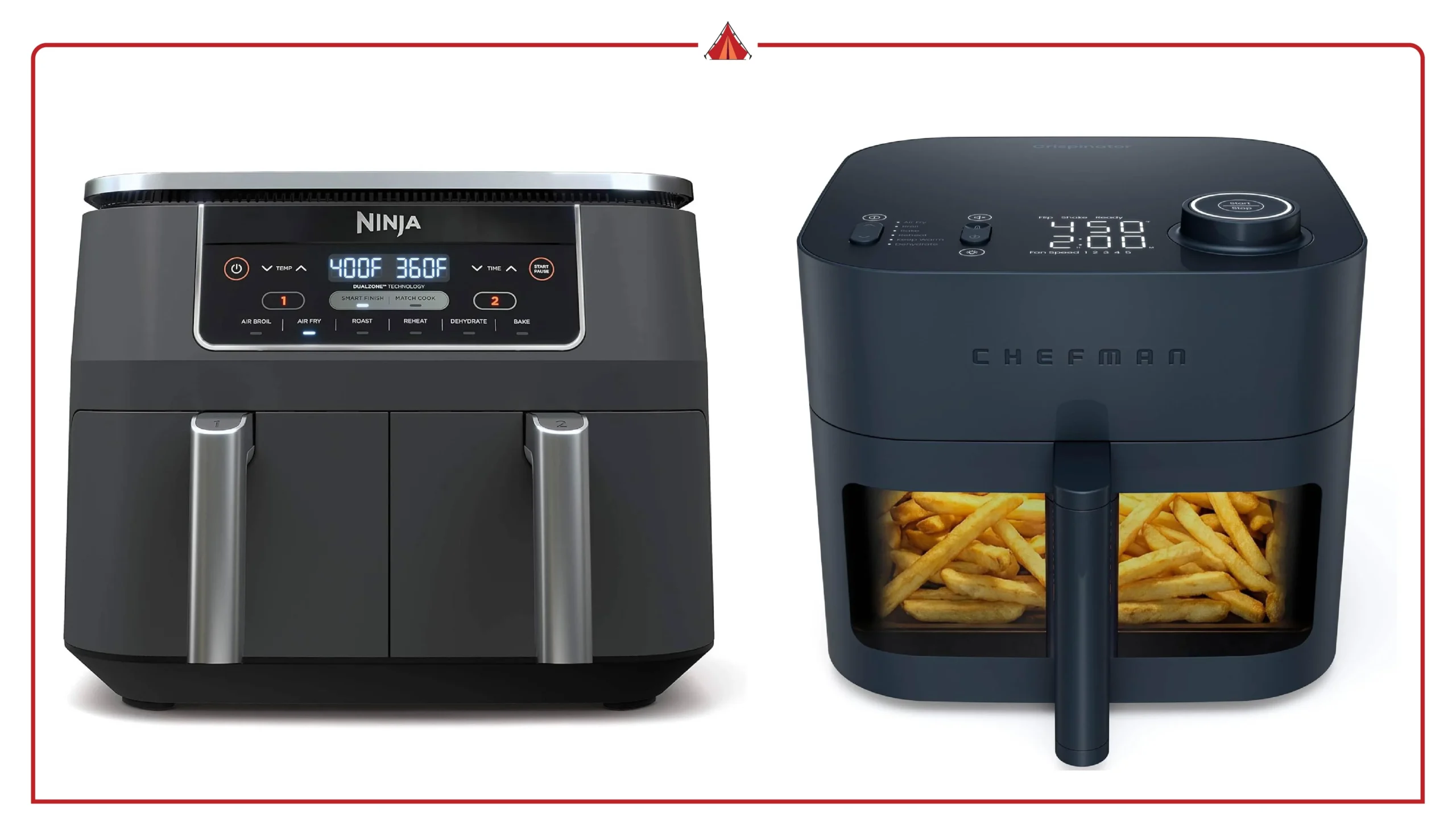
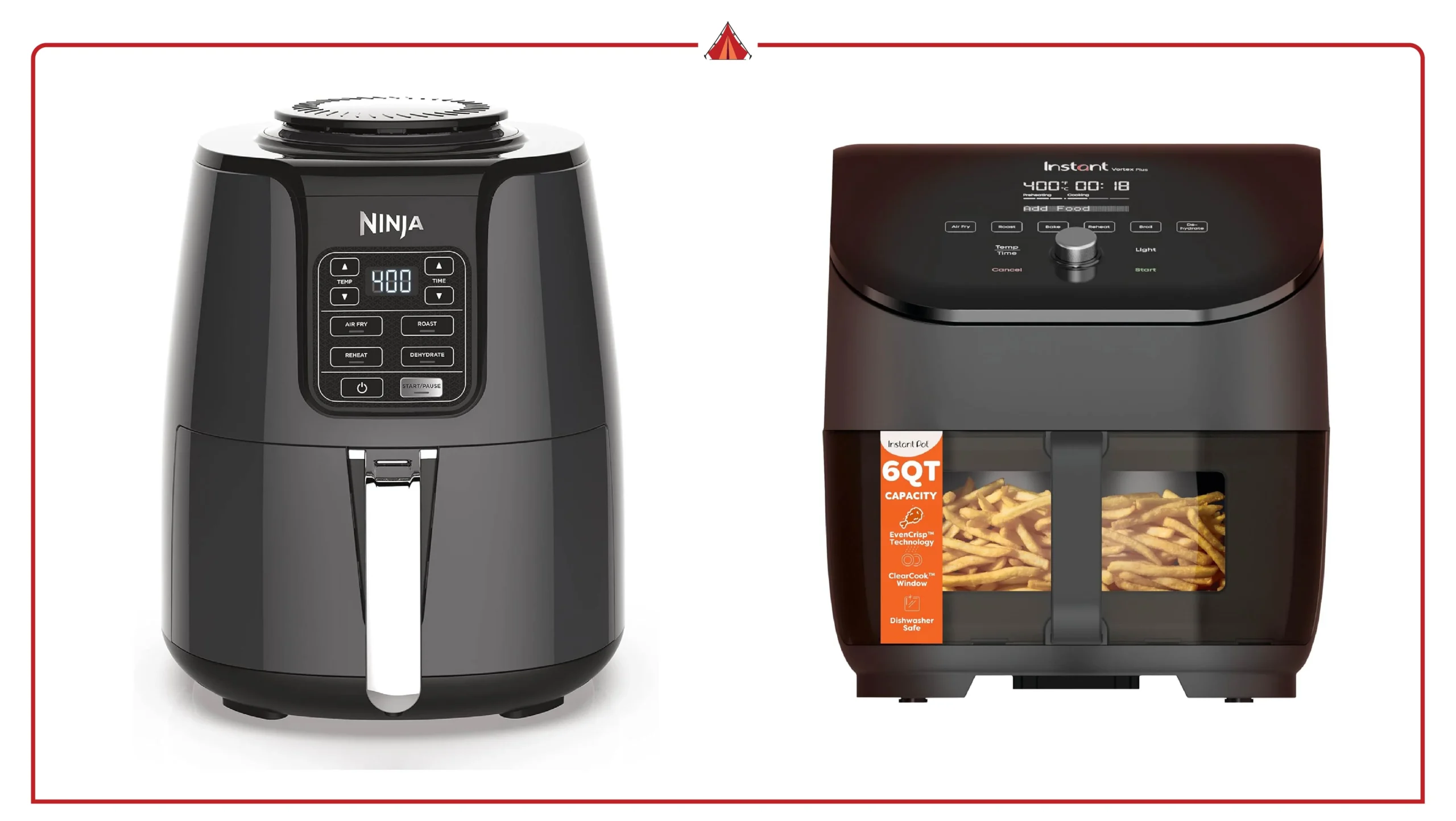
Best Overall: Ninja AF101 Air Fryer The most consistently recommended beginner air fryer on the market. Simple four-function controls, a forgiving cooking range, and a dishwasher-safe basket make it the easiest path from unboxing to first meal. Best for individuals and couples.
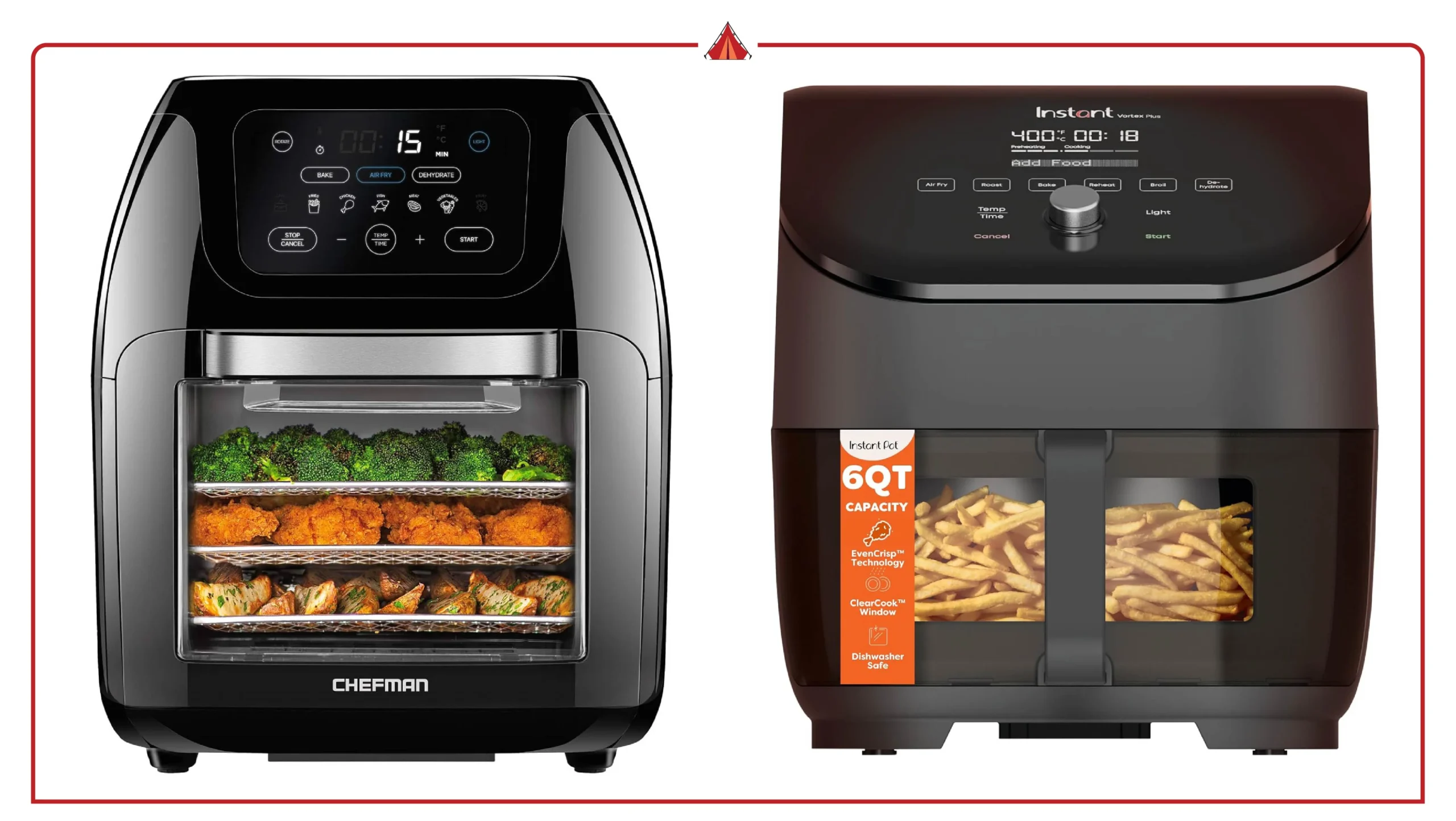
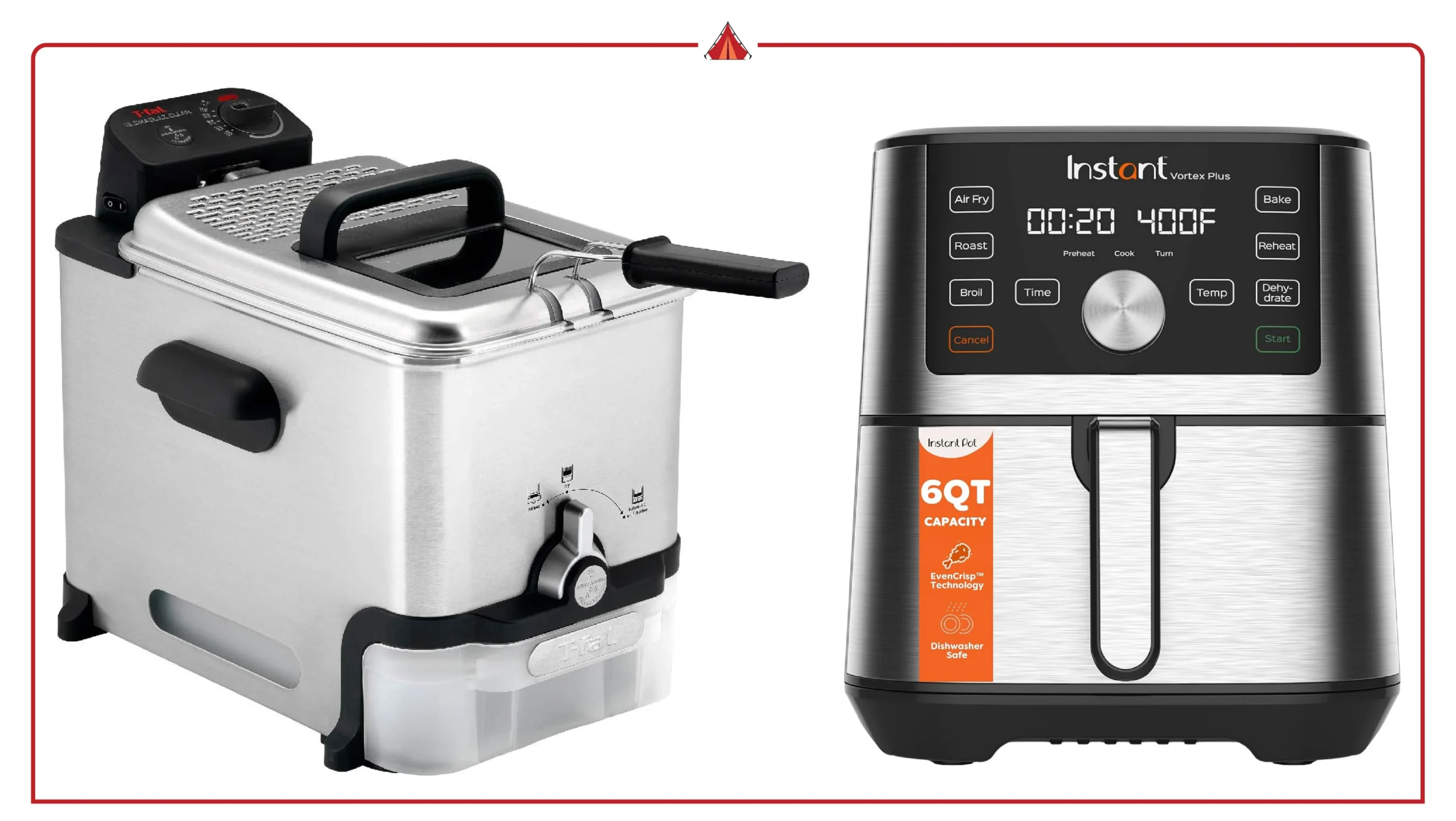
Best for Families: Instant Vortex 4-in-1 Air Fryer 6 Qt Six quarts of capacity with one-touch Smart Programs that handle time and temperature automatically. If you’re cooking for three or more people and want results without the guesswork, this is the most practical starting point.
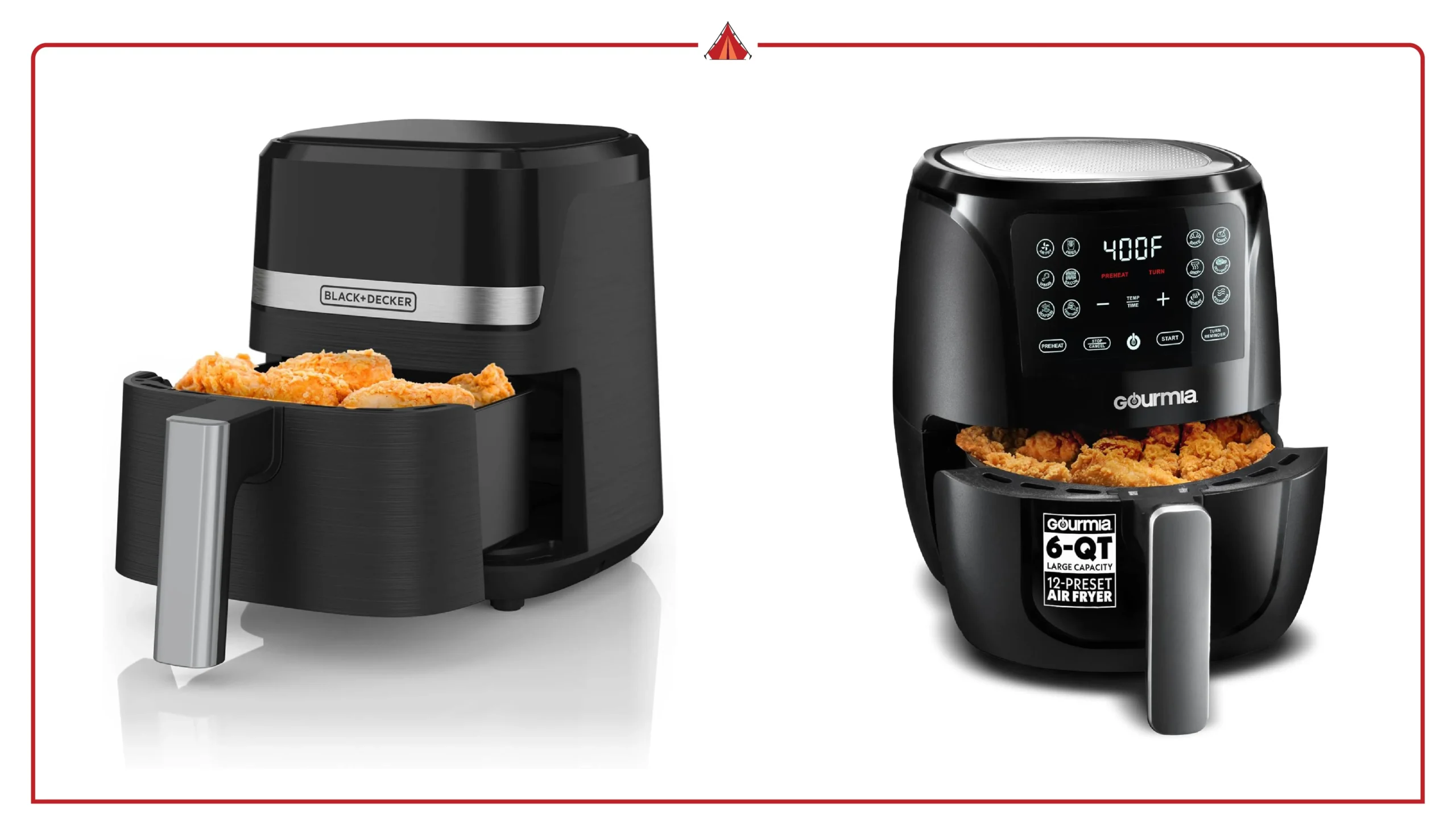
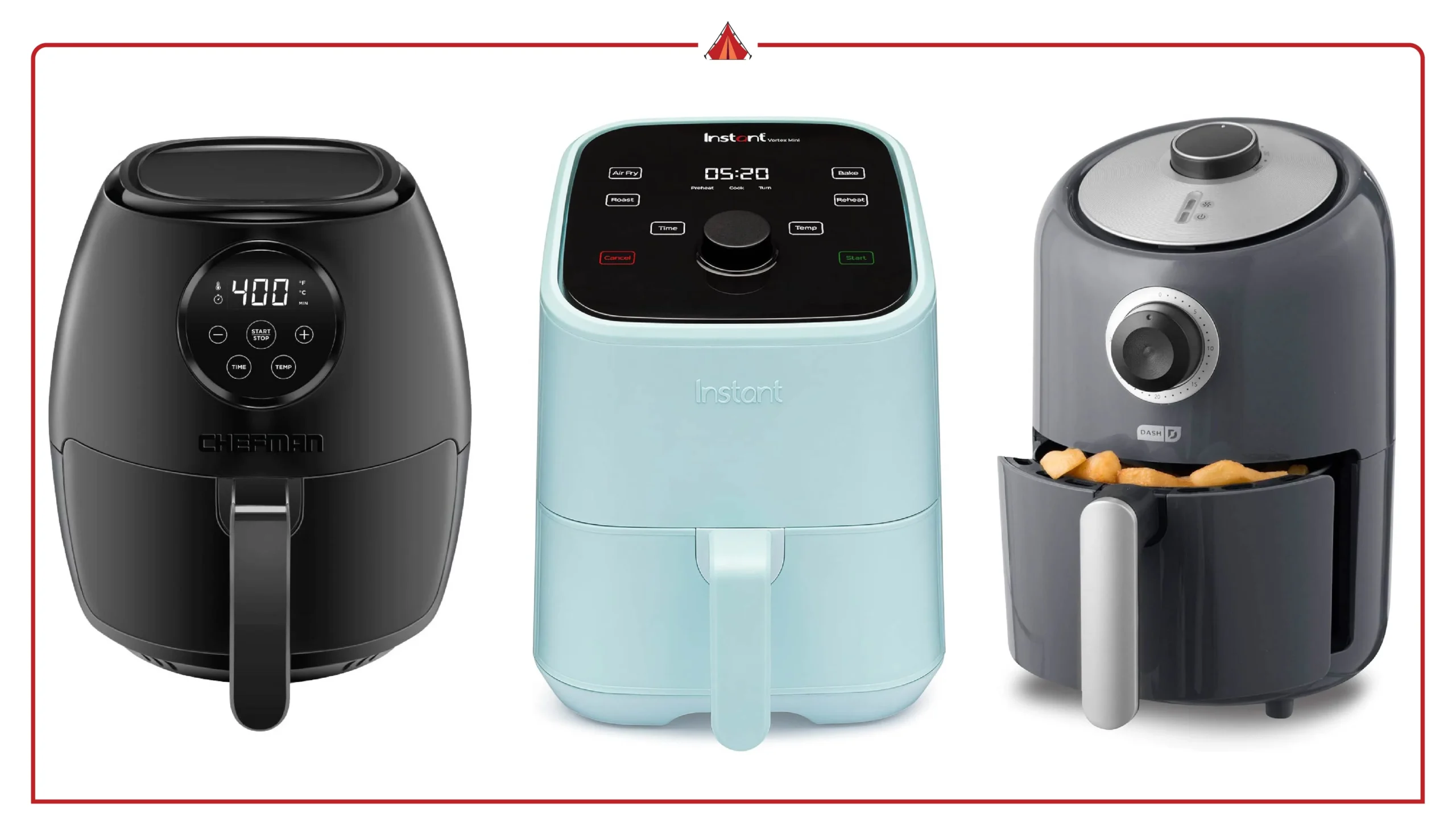
Best Budget Pick: Chefman TurboFry Touch Air Fryer 5 Qt Solid digital controls, a clean single-basket design, and genuine beginner-friendly performance at a price that makes the first air fryer purchase low-risk. A strong starting point if you’re not ready to commit to a higher spend.
Keep reading for the full breakdown of all nine picks, plus a buyer’s guide that explains exactly what to look for before you buy.
Quick Comparison — Best Beginner Air Fryers of 2026
| Product | Brand | Capacity | Best For | Standout Feature |
|---|---|---|---|---|
| Ninja AF101 Air Fryer | Ninja | 4 Qt | Individuals and couples wanting a reliable, no-fuss first air fryer | Four pre-set programs with wide 105°F–400°F temperature range |
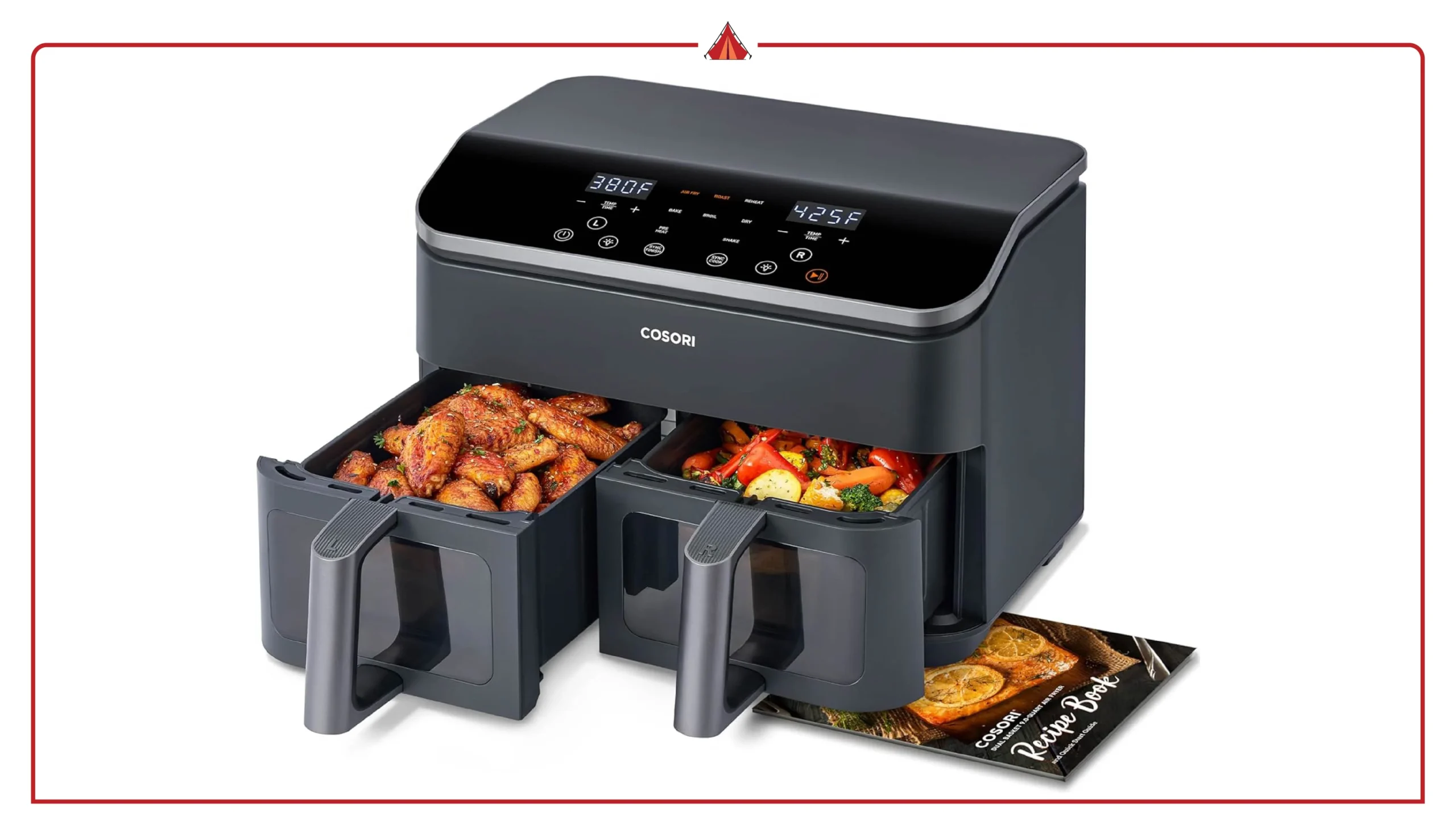
| Cosori TurboBlaze Air Fryer | Cosori | 5.8 Qt | Beginners who want app-guided recipes to build confidence faster | Free app with 100+ guided recipes and touchscreen interface |
| Instant Vortex 4-in-1 Air Fryer | Instant | 6 Qt | Beginner families who want automatic time and temperature | One-touch Smart Programs with EvenCrisp airflow technology |
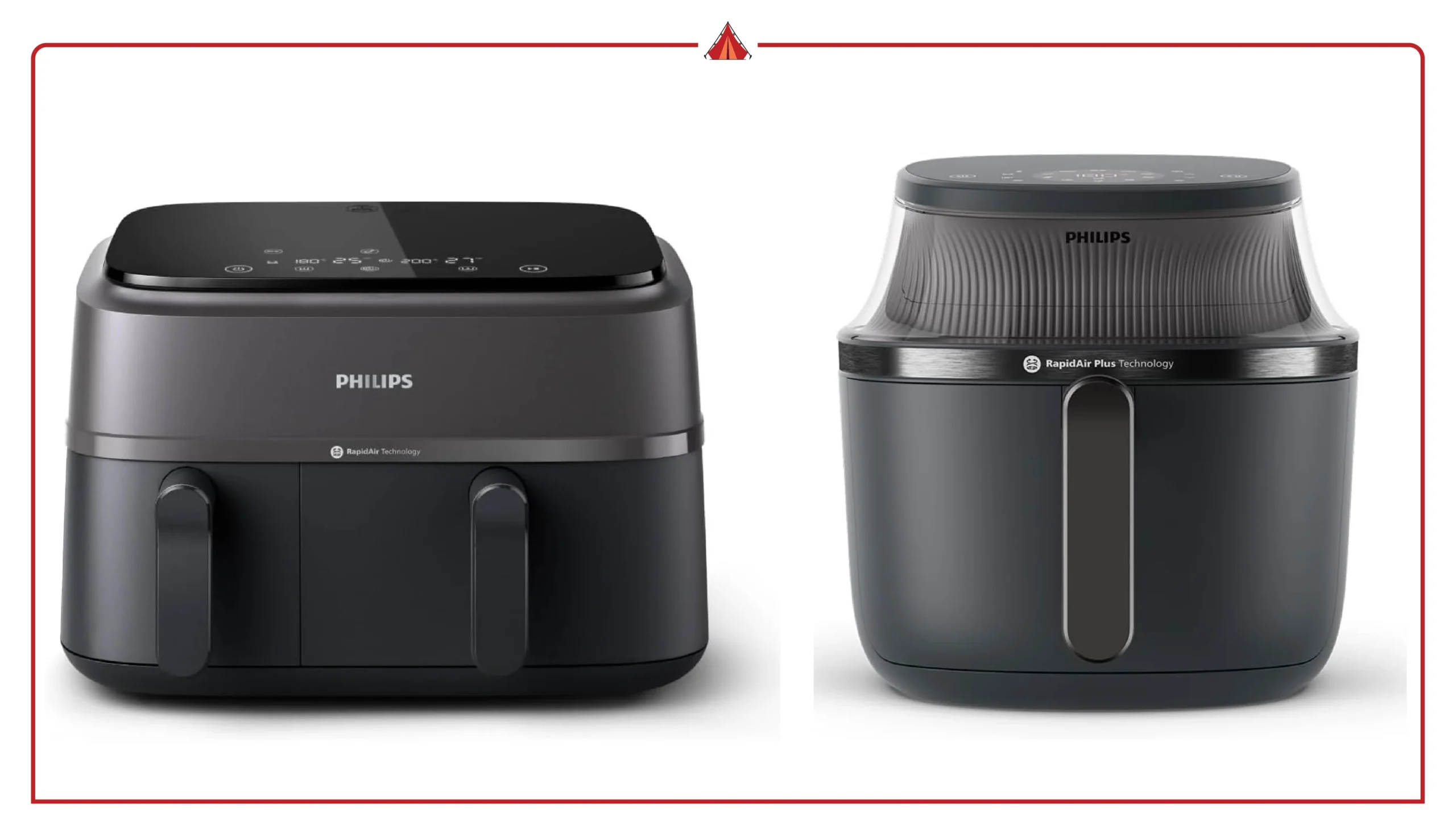
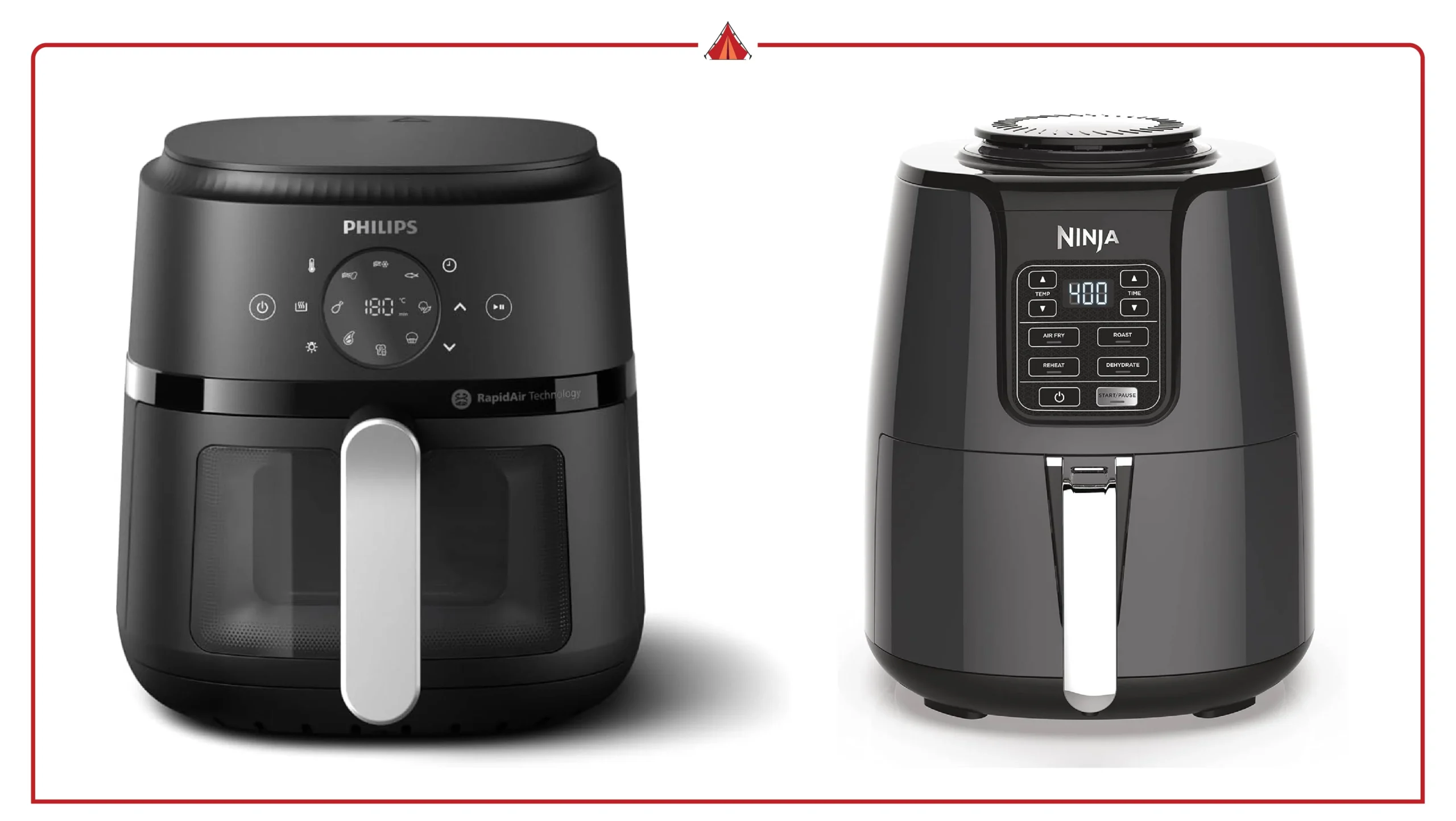
| Philips Essential Compact Air Fryer | Philips | 3 Qt | Beginners who prioritize brand reliability in a compact footprint | Rapid Air technology for consistent, even heating results |
| Chefman TurboFry Touch Air Fryer | Chefman | 5 Qt | Budget-conscious beginners wanting digital controls at low cost | Auto-shutoff and cool-touch handle for added beginner safety |
| Cuisinart Air Fryer Toaster Oven TOA-60 | Cuisinart | 0.6 Cu Ft | Beginners replacing multiple countertop appliances at once | Seven cooking functions including Air Fry, Bake, Broil, and Toast |
| BLACK+DECKER Purify Air Fryer | BLACK+DECKER | 2 Lt | Solo beginners or very small kitchens needing the simplest option | Analog dial controls — zero digital learning curve |
| Ninja Foodi 2-Basket Air Fryer DZ201 | Ninja | 8 Qt | Beginner families who want dual-zone cooking from day one | DualZone technology cooks two foods to finish simultaneously |
Ninja AF101 Air Fryer — Best Overall for Beginners

Who it’s best for: First-time buyers who want a proven, low-complexity air fryer from a trusted brand — ideal for individuals and couples cooking everyday meals.
The Ninja AF101 has held its position as the go-to beginner air fryer recommendation for good reason: it does exactly what a first-time buyer needs and nothing that gets in the way. There are no overcomplicated menus, no app required, and no steep learning curve to climb before dinner is on the table. Four clearly labeled functions — Air Fry, Roast, Reheat, and Dehydrate — cover the full range of what most new users will actually cook in the first year of ownership.
What separates the AF101 from cheaper competitors at a similar capacity is the temperature range. Running from 105°F all the way up to 400°F, it gives beginners room to experiment beyond basic fries and chicken wings. That lower end of the range makes it genuinely useful for dehydrating fruit or keeping food warm — functions that feel like a bonus discovery rather than a selling point. The basket and crisper plate are both dishwasher-safe, which matters more than most buyers anticipate before they’ve dealt with a unit that isn’t. Cleanup after a busy weeknight should take less than two minutes.
Key Features:
- Four pre-set functions: Air Fry, Roast, Reheat, Dehydrate
- Wide temperature range: 105°F–400°F
- 4-quart ceramic-coated nonstick basket
- Dishwasher-safe basket and crisper plate
- Compact footprint fits most standard countertops
Pros:
- Intuitive controls that require no instruction manual to navigate
- Consistent, reliable cooking results from the first use
- Cleanup is genuinely fast with fully dishwasher-safe components
Cons:
- 4-quart capacity is limiting for households regularly cooking for three or more
- Lacks a digital display — time and temperature are set via analog dials, which some buyers prefer but others find less precise
Cosori TurboBlaze Air Fryer 5.8 Qt — Best for App-Guided Cooking

Who it’s best for: Beginners who want step-by-step recipe guidance built into their cooking experience and a larger capacity than the standard entry-level unit provides.
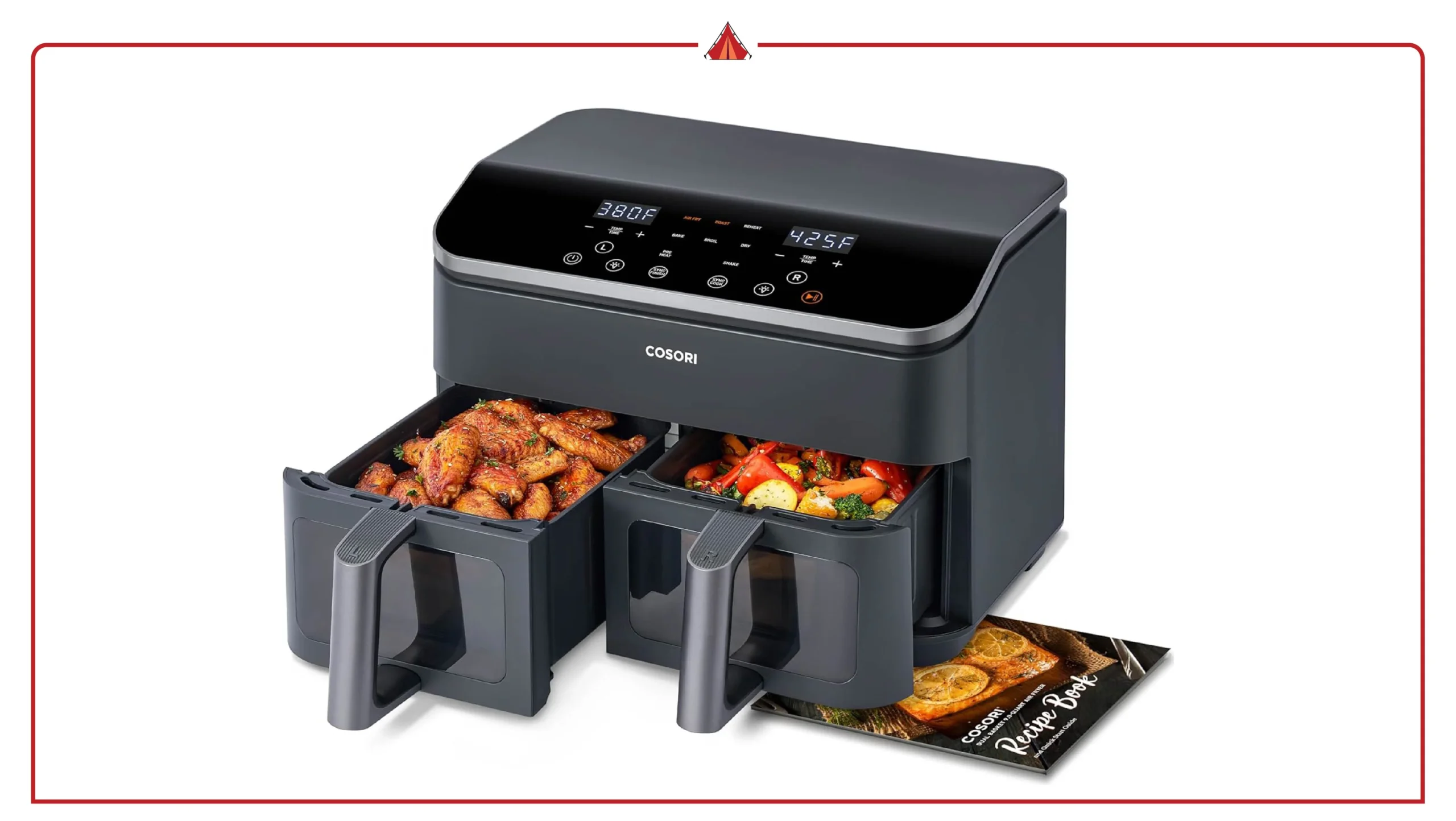
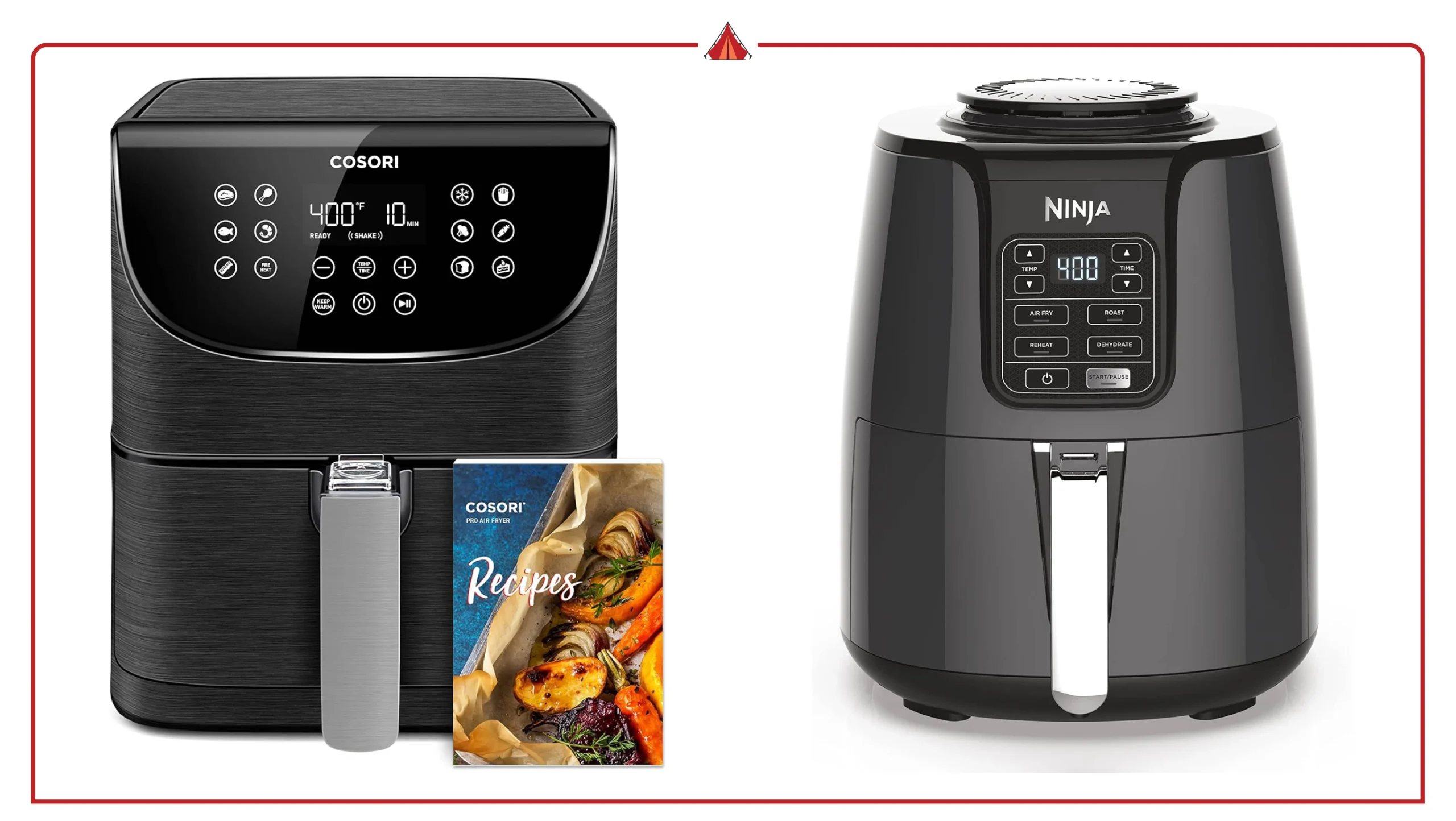
The Cosori TurboBlaze makes a compelling case for beginners who feel genuinely uncertain in the kitchen — not just uncertain about air fryers, but uncertain about cooking in general. The free Cosori app connects directly to the unit and walks users through 100+ recipes with pre-configured time and temperature settings that transfer automatically to the fryer. For a first-time buyer who doesn’t yet have a mental library of cooking times and temperatures, that guided experience can be the difference between a appliance that gets used daily and one that ends up in a cabinet after two weeks.
Beyond the app, the TurboBlaze holds its own on pure performance. The 5.8-quart square basket offers meaningfully more usable cooking space than round baskets at the same stated capacity — a practical advantage when cooking a full batch of wings or a larger portion of vegetables in one go. The touchscreen interface is clean and responsive, and five cooking functions cover the realistic range of what a beginner will reach for most: Air Fry, Bake, Roast, Broil, and Reheat. Where some competitors in this tier feel like they’re padding their feature count, the Cosori keeps its controls focused and approachable.
Key Features:
- Free COSORI app with 100+ guided recipes and auto-transfer settings
- 5.8-quart square basket for maximized usable cooking space
- Five cooking functions via responsive touchscreen interface
- Preheat and Keep Warm functions for flexible meal timing
- Dishwasher-safe basket and crisper plate
Pros:
- App-guided cooking removes the guesswork entirely for new users
- Square basket design delivers more usable space than comparable round baskets
- Touchscreen interface is clean, intuitive, and easy to read at a glance
Cons:
- App dependency can feel unnecessary for users who prefer straightforward manual control
- Touchscreen may be less responsive over time compared to physical button alternatives
Instant Vortex 4-in-1 Air Fryer 6 Qt — Best for Beginner Families

Who it’s best for: First-time buyers cooking for three or more people who want automatic time and temperature guidance without sacrificing capacity for the sake of simplicity.
For beginner families, the most common air fryer mistake is buying a unit that’s simply too small for the job. A 4-quart basket that works perfectly for one or two people becomes a frustrating bottleneck when you’re trying to get chicken, vegetables, and a side on the table at the same time. The Instant Vortex solves that problem at the entry level by pairing a genuinely useful 6-quart capacity with one-touch Smart Programs that handle the two things new users get wrong most often — time and temperature. Select your food type, press start, and the unit calculates the rest.
What makes the Vortex particularly well-suited to beginners is the EvenCrisp airflow system, which circulates heat consistently enough that results don’t depend heavily on technique. Experienced air fryer users learn quickly when to shake the basket, when to flip, and how to position food for optimal airflow. Beginners don’t have that instinct yet, and the Vortex’s airflow design is forgiving enough to produce solid results even when technique isn’t perfect. For a household making the jump from oven cooking to air frying for the first time, that consistency removes a lot of early frustration. The Instant brand will also feel familiar to anyone already using an Instant Pot — the interface logic and general build philosophy carry over in ways that make the learning curve feel shorter than it actually is.
Key Features:
- One-touch Smart Programs: Air Fry, Roast, Broil, Bake
- EvenCrisp technology for consistent airflow and reliable results
- 6-quart capacity handles full family-sized portions in one cycle
- Clear digital display with easy time and temperature adjustment
- Dishwasher-safe cooking tray and basket
Pros:
- Automatic time and temperature Smart Programs reduce beginner guesswork significantly
- 6-quart capacity is genuinely practical for families without requiring a premium spend
- EvenCrisp airflow produces consistent results even with imperfect food placement
Cons:
- Exterior surfaces get noticeably hot during longer cook cycles — requires adequate counter clearance away from walls and cabinets
- Fewer cooking functions than some competitors at the same capacity and price tier
Philips Essential Compact Air Fryer — Best Premium Compact Pick

Who it’s best for: Beginners who want the most reliable cooking performance in a compact footprint and are willing to pay a premium for a brand that pioneered the category.
Philips invented the air fryer. That’s not marketing language — the company holds the original patent and has been refining the technology longer than any competitor on this list. For a beginner who wants to start with the most proven hardware available and isn’t working with a tight budget, the Essential Compact is the clearest expression of that engineering experience at an accessible price point within the Philips lineup. The Rapid Air technology at its core circulates heat more evenly than most units in this size class, which means more consistent results across a wider variety of foods — not just fries and wings, but fish, vegetables, and baked goods that are less forgiving of uneven heat distribution.
The Fat Removal Technology is a genuine differentiator rather than a feature added for marketing purposes. A specifically designed basket channels excess fat away from food as it cooks, collecting it separately rather than letting food sit in it. For health-conscious beginners who chose an air fryer partly to reduce oil intake, that function delivers on the promise in a way that standard basket designs don’t. The tradeoff is capacity — the compact footprint that makes this unit attractive for smaller kitchens also means the basket fills up faster than 5- and 6-quart competitors. For solo users or couples who cook in batches rather than all at once, that’s a manageable limitation. For families, it’s a genuine constraint worth weighing carefully before purchasing.
Key Features:
- Rapid Air technology for consistent, even heat circulation
- Fat Removal Technology channels excess fat away from food during cooking
- Compact footprint suited to smaller counters and limited kitchen space
- Intuitive analog-style dial controls with clear temperature markings
- Dishwasher-safe drawer and basket for straightforward cleanup
Pros:
- Most even and consistent cooking performance in its size class
- Fat Removal Technology genuinely delivers on the lower-oil cooking promise
- Build quality and long-term durability noticeably ahead of budget-tier competitors
Cons:
- Higher price relative to capacity — smaller basket than competitors at a comparable cost
- Compact size makes it a poor fit for households cooking for more than two people regularly
Chefman TurboFry Touch Air Fryer 5 Qt — Best Budget Pick
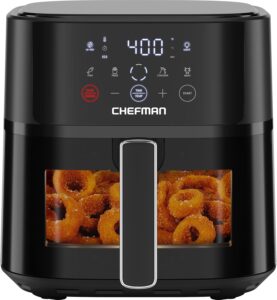
Who it’s best for: Budget-conscious first-time buyers who want digital controls and reliable everyday performance without committing to a higher spend on an appliance they’re still testing out.
There’s a reasonable argument for not spending much on your first air fryer. You don’t yet know how often you’ll use it, which functions you’ll actually reach for, or what capacity you’ll wish you had after six months of real cooking. The Chefman TurboFry Touch is built for exactly that buyer — someone who wants a genuine, functional introduction to air frying without the financial risk of a mid-range or premium purchase. At 5 quarts, it offers more usable cooking space than the typical entry-level unit, which means it won’t feel immediately undersized the way smaller budget competitors often do once real household cooking begins.
The digital touchscreen keeps the interface clean and approachable, with pre-set cooking functions that cover the basics well — fries, chicken, fish, and vegetables are all handled reliably at the default settings. The auto-shutoff feature is a meaningful addition for beginners who are still building the habit of monitoring cook times, and the cool-touch handle removes one of the more common anxiety points for first-time users unfamiliar with how hot air fryer components get during operation. Where the Chefman shows its budget positioning most clearly is in build quality — the exterior plastics feel lighter and less substantial than mid-range competitors, and long-term durability is a reasonable concern if daily use is the plan. For occasional to regular use during a get-to-know-you period with air frying, however, it performs well above its price point.
Key Features:
- Digital touchscreen with pre-set cooking functions for common meals
- 5-quart capacity — larger than most competitors at the same price tier
- Auto-shutoff function prevents overcooking for inattentive first-time users
- Cool-touch handle for safe basket removal during and after cooking
- Flat, dishwasher-safe basket for fast and straightforward cleanup
Pros:
- Delivers genuine digital control and pre-set functionality at the lowest price tier
- 5-quart capacity provides more cooking space than typical budget alternatives
- Auto-shutoff and cool-touch handle make it one of the safer options for new users
Cons:
- Build quality feels noticeably lighter than mid-range competitors — durability is a concern with heavy daily use
- Pre-set functions are less refined than those found on Ninja or Cosori units at higher price points
Cuisinart Air Fryer Toaster Oven — Best for Replacing Multiple Appliances

Who it’s best for: Beginners who want to consolidate their countertop appliances into one capable unit from day one — particularly those setting up a first kitchen or working with limited cabinet storage.
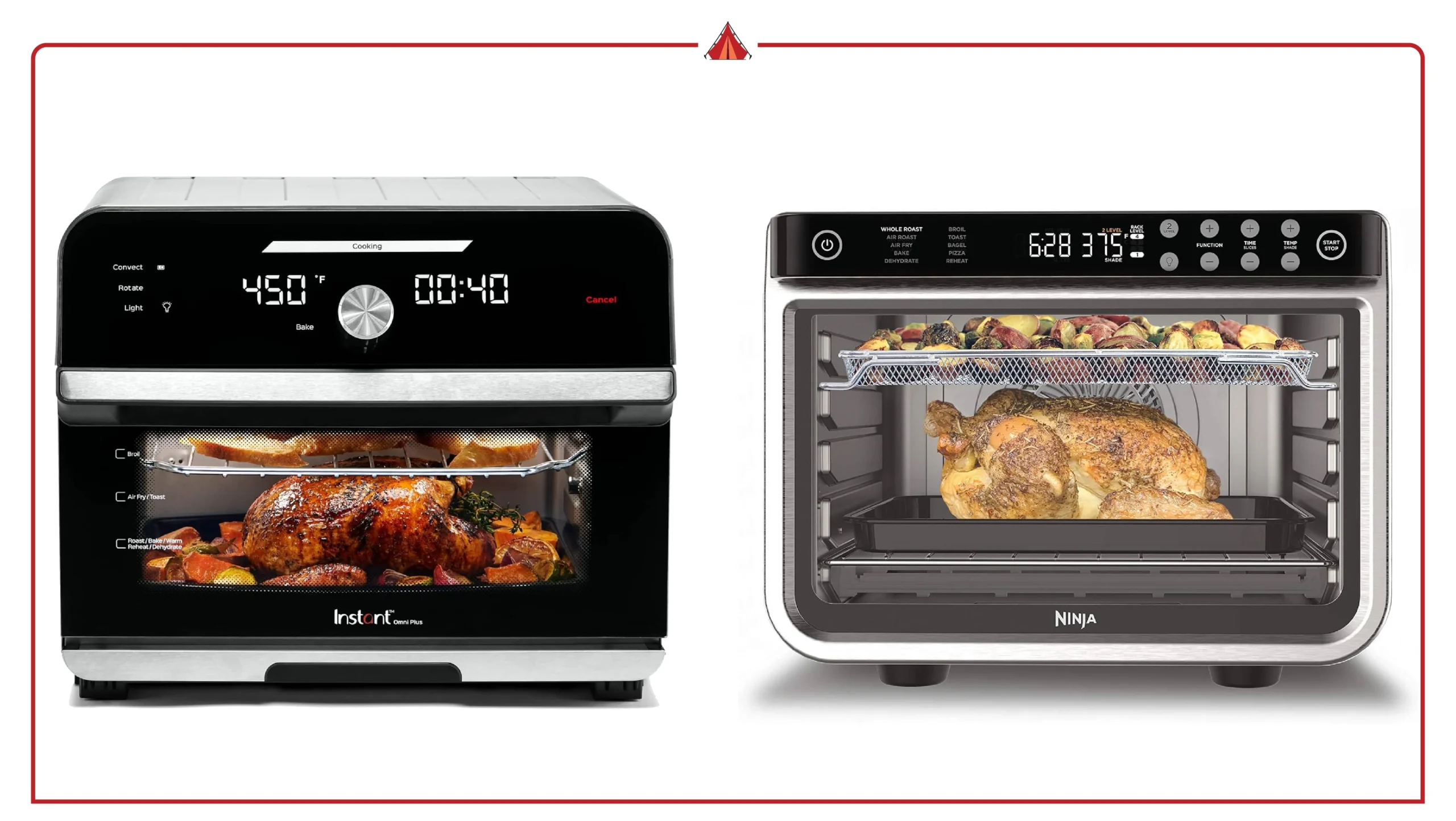
Most beginner air fryer buyers are thinking about one appliance solving one problem. The Cuisinart TOA-70 is for the buyer who steps back and asks a slightly different question: what if one purchase could replace the toaster, the toaster oven, and the air fryer at the same time? For anyone setting up a first kitchen, downsizing, or simply tired of countertop clutter, that framing changes the value calculation entirely. The TOA-70 isn’t the cheapest option on this list, but measured against the combined cost of the three appliances it replaces, it repositions itself as one of the more economical decisions a beginner can make.
The seven cooking functions — Air Fry, Convection Bake, Convection Broil, Bake, Broil, Warm, and Toast — are each handled with the build quality and consistency that Cuisinart has built its countertop reputation on. The interior is large enough to air fry a whole small chicken, fit a 12-inch pizza, or toast six slices of bread simultaneously, which puts it in a different practical league than basket-style units at comparable price points. For beginners, the learning curve is slightly steeper than a single-function basket air fryer — there are more dials, more functions, and more spatial awareness required when loading the interior tray versus a simple pull-out basket. That said, the controls are clearly labeled and logically laid out, and most users report feeling comfortable with the full function set within the first week of use. The tradeoff is footprint — the TOA-70 occupies meaningful counter space, and for kitchens where every inch matters, that’s a genuine constraint worth measuring before purchasing.
Key Features:
- Seven cooking functions: Air Fry, Convection Bake, Convection Broil, Bake, Broil, Warm, Toast
- Large interior capacity fits a whole small chicken or 12-inch pizza
- Three clearly labeled control dials for function, temperature, and time
- Includes air fryer rack, baking pan, and oven rack in the box
- Trusted Cuisinart build quality with stainless steel exterior finish
Pros:
- Replaces multiple countertop appliances in a single purchase — strong long-term value
- Interior capacity handles full meals that basket-style units cannot manage in one cycle
- Cuisinart build quality offers durability well beyond the typical beginner-tier product
Cons:
- Larger footprint requires significant dedicated counter space — not suitable for compact kitchens
- Slightly steeper learning curve than a simple basket air fryer due to the expanded function set
GoWISE USA 8-in-1 Air Fryer — Best for Guided Pre-Set Cooking
Who it’s best for: Beginners who want the most hand-held guidance possible at the lowest price point — particularly first-time buyers who feel intimidated by cooking from scratch and want a pre-set for nearly every common meal.
For a certain type of beginner, the appeal of an air fryer isn’t just faster cooking — it’s the promise that the appliance will do most of the thinking. The GoWISE USA 8-in-1 is built squarely around that appeal. Eight meal-specific pre-sets cover the foods most beginners actually cook in the first months of air fryer ownership: fries, chicken, steak, fish, shrimp, pork, cake, and pizza. Each pre-set comes factory-calibrated with a time and temperature combination that produces reliable results without requiring the user to make a single judgment call. For someone who has never owned an air fryer and finds the blank canvas of manual temperature settings genuinely anxiety-inducing, that structure is a meaningful comfort.
The included recipe guide reinforces that beginner-first positioning in a way that few competitors bother with at this price point. Rather than leaving new users to search YouTube or trial-and-error their way through the first few weeks, GoWISE includes printed guidance in the box that maps directly to the eight pre-set functions. The 5.8-quart square basket offers the same spatial efficiency advantage seen in the Cosori TurboBlaze — more usable cooking area than a round basket at the same stated capacity. Where the GoWISE falls short of mid-range competitors is in cooking consistency. Results are reliable when using the pre-sets as intended for their designated foods, but performance becomes less predictable when users start experimenting outside those parameters — which most air fryer owners inevitably do as their confidence grows. For a first-year air fryer, it delivers solid value. As a long-term kitchen workhorse, it may feel limiting sooner than the alternatives.
Key Features:
- Eight meal-specific pre-sets: Fries, Chicken, Steak, Fish, Shrimp, Pork, Cake, Pizza
- 5.8-quart square basket for maximized usable cooking space
- Touchscreen display with clear time and temperature readout
- Includes printed recipe guide in the box for immediate first-use guidance
- Preheat and keep warm functions for flexible meal timing
Pros:
- Eight targeted pre-sets cover the full range of most beginner cooking needs
- Included recipe guide provides immediate out-of-the-box direction for new users
- Square basket design delivers more usable cooking space than round alternatives at the same capacity
Cons:
- Cooking consistency drops noticeably when operating outside the designated pre-set parameters
- Build quality and long-term durability fall behind mid-range competitors at a similar capacity and price point
BLACK+DECKER Purify Air Fryer — Best for Solo Beginners and Small Spaces

Who it’s best for: Solo beginners or anyone with a very small kitchen who wants the simplest possible introduction to air frying — with zero digital complexity and a footprint that fits almost anywhere.
There is a version of the beginner air fryer buyer that the rest of this list doesn’t fully serve: the person cooking for one, living in a small apartment, and genuinely uninterested in touchscreens, apps, or pre-set menus. For that buyer, the BLACK+DECKER Purify makes more practical sense than any other unit on this list. The analog dial controls — one for temperature, one for time — are the most intuitive interface available in the category. There is no pairing process, no digital display to interpret, and no function menu to navigate. You set the dial, press start, and cook. For an absolute first-time user who simply wants to understand what an air fryer does before committing to a more featured unit, that simplicity is a genuine virtue rather than a compromise.
The 2-liter capacity is the defining constraint of this unit and the factor that determines whether it belongs in a buyer’s shortlist at all. For a single serving of fries, a chicken breast, a handful of vegetables, or reheating last night’s leftovers, it performs reliably and quickly. The compact size also means it heats up faster than larger units, which makes it a practical choice for quick single-serving meals on a tight schedule. What it cannot do is scale. Two people eating at the same time will find themselves cooking in separate batches, and anything resembling a family meal is simply outside its operational range. The easy-slide basket requires no complicated assembly and wipes clean in under a minute, which reinforces the overall design philosophy of this unit: remove every possible barrier between the user and their first successful air-fried meal. For the right buyer in the right living situation, it does exactly that.
Key Features:
- Analog dial controls for temperature and time — zero digital learning curve
- 2-liter capacity suited to single-serving meals and snacks
- Easy-slide basket with no multi-part assembly required
- Compact footprint fits comfortably on the smallest kitchen counters
- Simple wipe-clean interior for fast post-meal cleanup
Pros:
- Analog dial interface is the most intuitive control system available in the category
- Ultra-compact size fits kitchen spaces where no other unit on this list would
- Fast heat-up time makes it practical for quick single-serving meals
Cons:
- 2-liter capacity is too small for anything beyond single servings — not scalable for two or more people
- Lacks digital pre-sets, preheat function, and keep-warm capability found on larger competitors
Ninja Foodi 2-Basket Air Fryer DZ201 — Best for Beginner Families Who Want to Scale Up

Who it’s best for: Beginner families who want to skip the entry-level capacity entirely and start with a unit that handles full multi-component meals from day one — without needing an upgrade in twelve months.
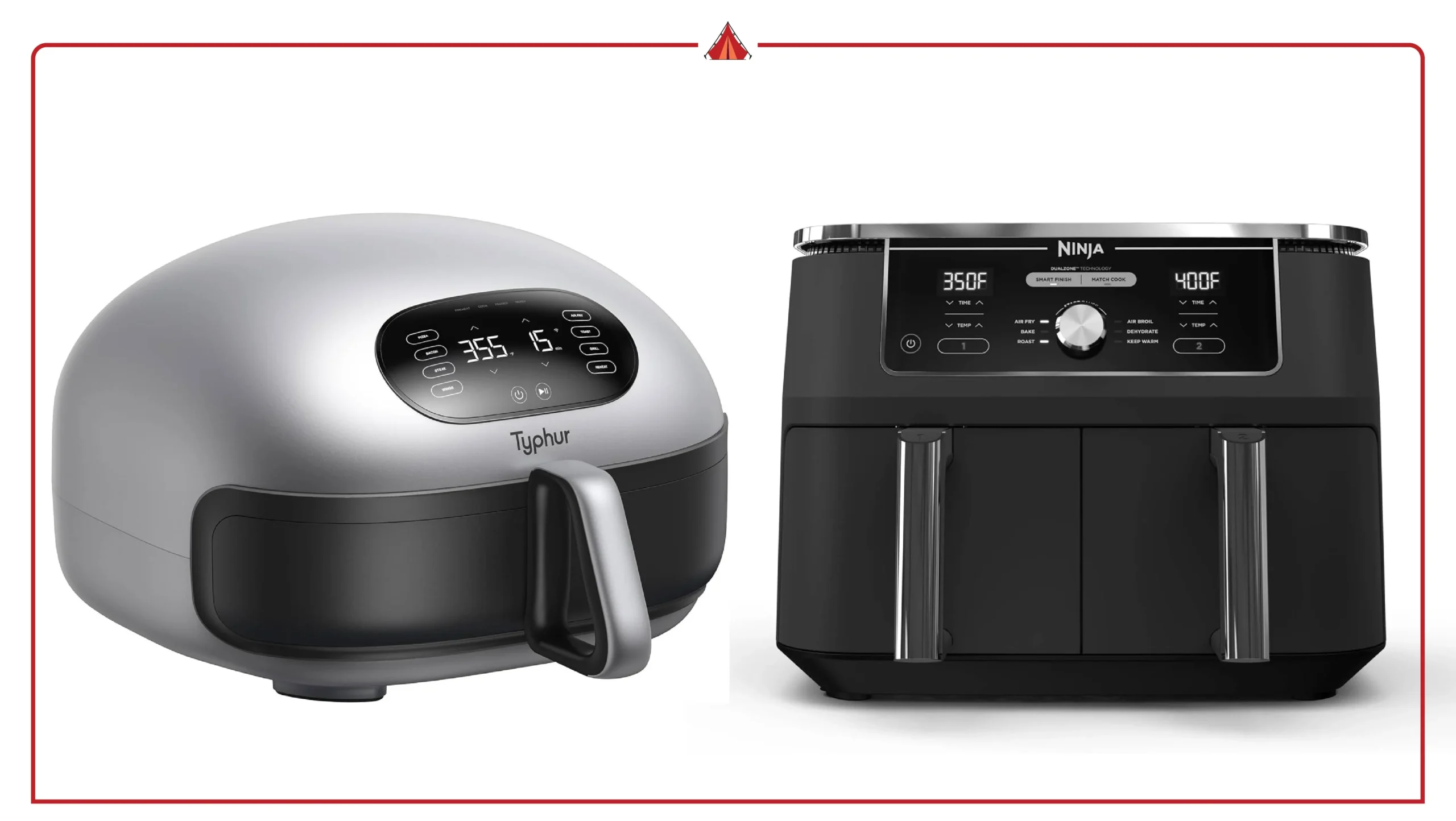
Most beginner air fryer guides steer first-time buyers toward the smallest, simplest unit available and treat scaling up as a later problem. That logic works for individuals and couples, but for a household of four or more, starting small often means replacing the unit within a year once the capacity frustration becomes routine. The Ninja Foodi DZ201 makes a different argument: buy the right size once, accept a slightly steeper learning curve upfront, and arrive at confident daily use faster than the incremental upgrade path allows. At 8 quarts of total capacity split across two independent baskets, it handles the kind of full family meals — a protein in one basket, a vegetable side in the other, both finishing at the same time — that a single-basket unit simply cannot replicate in one uninterrupted cook cycle.
The DualZone technology is the feature that defines this unit and separates it from every other product on this list. Two independent heating elements allow each basket to run at a completely different temperature and for a completely different duration, with a Smart Finish function that automatically staggers the start times so both baskets complete cooking simultaneously. For a beginner family that has spent years timing stovetop burners and oven trays to land everything on the table at once, that coordination happening automatically is a meaningful quality-of-life improvement from the first use. Six one-touch programs — Air Fry, Air Broil, Roast, Bake, Dehydrate, and Reheat — keep the function set approachable despite the more advanced hardware underneath. The unit is larger and heavier than anything else on this list, and the price reflects the step up in capability, but for a family household treating this as a primary weeknight cooking tool rather than a supplementary appliance, the value proposition is clear and well-supported by the feature set.
Key Features:
- DualZone technology with two independent 4-quart baskets and separate heating elements
- Smart Finish function staggers start times so both baskets complete cooking simultaneously
- Six one-touch programs: Air Fry, Air Broil, Roast, Bake, Dehydrate, Reheat
- 8-quart total capacity handles full family-sized multi-component meals in one cycle
- Both baskets and crisper plates are dishwasher-safe for straightforward cleanup
Pros:
- DualZone technology eliminates the batch-cooking frustration that limits single-basket units for families
- Smart Finish coordination removes the timing complexity of cooking multiple components simultaneously
- 8-quart total capacity handles full family meals without requiring a second cook cycle
Cons:
- Larger footprint and heavier build than any other unit on this list — requires dedicated counter space
- Higher price point than a true entry-level unit — a steeper initial commitment for first-time buyers still testing their air fryer habits
How to Choose Your First Air Fryer: What Actually Matters
The air fryer market is built around specifications that sound meaningful on a product listing but rarely translate directly into better cooking results for a beginner. Wattage numbers, pre-set counts, and accessory bundles are easy to compare but hard to evaluate without context. This guide focuses on the five factors that actually determine whether a first air fryer becomes a daily kitchen tool or an underused appliance taking up counter space.
Capacity — Match the Size to Your Household
Capacity is the single most important decision a beginner makes, and the most common source of post-purchase regret in both directions. Buy too small and every meal becomes a multi-batch exercise in patience. Buy too large and the unit dominates a counter while delivering more cooking space than a single person or couple will realistically fill.
A practical starting point: 2–3 quarts handles single servings comfortably and suits solo users in compact kitchens. 4–5 quarts is the sweet spot for one to two people who want flexibility without bulk — this tier covers the majority of everyday meals without requiring batch cooking. 6 quarts and above is where family households should start, with 8-quart dual-basket units serving households of four or more who want to cook complete multi-component meals in a single cycle.
The mistake most first-time buyers make is anchoring to the stated quart number without accounting for the shape of the basket. A 5.8-quart square basket delivers meaningfully more usable cooking area than a 5.8-quart round basket at the same stated capacity. When capacity is a priority, square basket designs offer a practical advantage that the spec sheet alone won’t communicate
Read Next: Best Air Fryer for a Family of 4 in 2026: Large-Capacity Picks That Actually Deliver
Controls — Dial vs Digital vs Touchscreen
Control interface is a matter of preference more than performance, but for beginners it has a direct impact on how quickly the unit becomes a confident daily habit rather than an occasional experiment.
Analog dials are the most intuitive starting point for users with no air fryer experience. There is no menu to navigate, no mode to select before adjusting temperature, and no screen to interpret. Set the dial, press start, cook. The BLACK+DECKER Purify is the clearest example on this list of that philosophy applied without compromise.
Digital controls with physical buttons offer a step up in precision — time and temperature are displayed numerically and adjusted in defined increments — without introducing the responsiveness variability that touchscreens can develop over time. For most beginners, this is the most practical middle ground between simplicity and control.
Touchscreens are common at the mid-range and above and work well when the interface is logically designed. The Cosori TurboBlaze and GoWISE USA both use touchscreen interfaces that are genuinely easy to navigate from day one. The main consideration is long-term reliability — touchscreen responsiveness can degrade with regular exposure to kitchen grease and steam in ways that physical controls do not.
Pre-Set Programs — Do They Actually Help?
Pre-set programs are one of the most heavily marketed features in the air fryer category and one of the most misunderstood by first-time buyers. The honest answer is that they help significantly in the short term and matter less as experience builds.
For a beginner with no reference point for air fryer cooking times and temperatures, a pre-set that handles those calculations automatically removes the two variables most likely to produce a disappointing first meal. Units like the Instant Vortex and GoWISE USA are designed with that learning phase in mind, and their pre-sets are genuinely well-calibrated for the foods they target.
What pre-sets cannot do is account for the specific thickness of a chicken breast, the moisture content of a particular vegetable, or the difference between a fresh and a frozen starting point. As beginner users develop their own cooking intuition over the first few months, they typically shift toward manual time and temperature adjustments that produce more consistent results than any factory pre-set. A unit with well-designed manual controls alongside its pre-sets — like the Ninja AF101 — ultimately serves a beginner better over the full ownership period than one that depends entirely on pre-set guidance.
Cleaning and Maintenance
Ease of cleaning is the factor that most directly determines whether an air fryer stays on the counter or migrates to a cabinet. A unit that requires significant disassembly, hand-washing of multiple components, or careful scrubbing of hard-to-reach surfaces will be used less frequently — and that pattern tends to establish itself within the first two weeks of ownership.
The minimum standard for a beginner air fryer is a dishwasher-safe basket and crisper plate. Most units on this list meet that bar. Beyond that, look for non-stick basket coatings that release food residue without aggressive scrubbing, and a single-piece basket design that eliminates the multi-part cleanup process found on some older models.
The Cuisinart TOA-60 requires slightly more cleaning attention than basket-style units due to its larger interior and tray-based cooking surface, which is worth factoring into the purchase decision for buyers who prioritize minimal post-meal cleanup time. For basket-style units, the Chefman TurboFry and Ninja AF101 both represent the most straightforward cleanup experience on this list.
Budget Tiers — What You Get at Each Level
Understanding what actually changes across price tiers helps a beginner spend at the right level for their situation rather than defaulting to the cheapest option or overspending on features they won’t use.
Under $50 delivers a functional introduction to air frying with analog or basic digital controls, smaller capacity, and lighter build quality. The BLACK+DECKER Purify and Chefman TurboFry represent the realistic ceiling of what this tier offers. Expect solid performance for everyday basics with some durability tradeoffs over time.
$50–$100 is where the most practical beginner purchases live. Capacity increases, build quality improves noticeably, and features like app connectivity, dual-zone cooking, and more refined pre-set programs become accessible. The Ninja AF101, Cosori TurboBlaze, Instant Vortex, and GoWISE USA all sit in this range and represent the strongest overall value for most first-time buyers.
$100 and above brings premium build quality, multi-function capability, and in the case of the Cuisinart TOA-60, the ability to replace multiple appliances entirely. The Philips Essential and Ninja Foodi DZ201 also occupy this tier. Spending at this level makes the most sense for buyers who are confident they will use the unit daily, are cooking for a larger household, or want a long-term kitchen investment rather than an introductory purchase.
Read Next: Best Air Fryers of 2026: Our Top 8 Picks for Every Budget and Kitchen Size
Frequently Asked Questions
Q: What size air fryer should a beginner buy? A: For most first-time buyers, a 4–5 quart basket is the most practical starting point. It handles everyday meals for one to two people without occupying excessive counter space. Households of three or more should start at 6 quarts minimum to avoid the frustration of batch cooking from day one. If you’re genuinely unsure, size up rather than down — a slightly larger unit is far less limiting than one you outgrow within the first month.
Read Next: Best Small Air Fryers for One or Two People: Compact Picks That Don’t Sacrifice Performance
Q: Is an air fryer hard to use for the first time? A: Not at all — air fryers are among the more forgiving kitchen appliances for new users. The basic operation is straightforward: place food in the basket, set a temperature and time, and press start. Units with pre-set programs simplify the process further by handling those two variables automatically. Most beginners produce a successful first meal without consulting the manual, and confidence builds quickly from there.
Q: What should I cook first in my air fryer? A: Frozen fries or potato wedges are the near-universal recommendation for a first air fryer cook. They’re forgiving of minor time and temperature variations, they cook quickly, and the result — genuinely crispy without deep-frying oil — demonstrates exactly what makes an air fryer worth owning. Chicken wings and reheated pizza are strong second choices that reinforce the same point without requiring any preparation beyond placing food in the basket.
Q: Do I need to preheat an air fryer? A: Most air fryers don’t require preheating, but a short 2–3 minute preheat improves results for foods where surface crispiness matters most — think chicken skin, breaded items, and anything you’d normally finish under a broiler. For frozen foods and most everyday cooking, skipping the preheat produces results that are difficult to distinguish from a preheated start. If your unit has a dedicated preheat function, use it for proteins and skip it for everything else.
Q: Are air fryers worth it for one person? A: Yes — arguably more so than for larger households. A compact 2–4 quart unit heats up in minutes, cooks a single serving faster than a conventional oven, and uses significantly less energy than heating a full-sized oven for one meal. The economics and convenience case is strongest for solo users who would otherwise default to takeout or microwave reheating for weeknight meals.
Q: What’s the difference between a basket air fryer and an air fryer toaster oven? A: A basket air fryer uses a pull-out drawer with a perforated basket that circulates hot air around food from all sides — it’s compact, fast, and simple to operate. An air fryer toaster oven uses a larger interior chamber with a rack or tray system, similar to a countertop convection oven, and typically handles larger quantities and a wider variety of cooking tasks. Basket units are the better starting point for most beginners. Toaster oven-style units make more sense for buyers who want to replace multiple appliances or regularly cook larger portions.
Read Next: Air Fryer vs Deep Fryer: Which One Is Worth Buying for Your Kitchen?
Q: How do I clean an air fryer after use? A: Allow the unit to cool completely before cleaning — typically 20–30 minutes after the last cook cycle. Remove the basket and crisper plate and wash them in warm soapy water or place them in the dishwasher if the manufacturer confirms they are dishwasher-safe. Wipe the interior of the unit with a damp cloth to remove any grease splatter, and clean the exterior with a dry or lightly damp cloth. Avoid submerging the main unit or using abrasive scrubbing pads on non-stick surfaces. A quick clean after every use prevents grease buildup that becomes significantly harder to remove over time.
So, Which Air Fryer Is Best for Beginners?
After reviewing nine units across every price tier and household size, three picks stand out as the clearest answers for the three most common beginner buyer profiles.
Best Overall: Ninja AF101 Air Fryer For the majority of first-time buyers — individuals and couples who want a reliable, low-complexity introduction to air frying — the Ninja AF101 is the clearest recommendation on this list. It doesn’t try to do everything, and that restraint is exactly what makes it work so well as a starting point. Intuitive controls, consistent results, effortless cleanup, and a brand reputation that holds up over years of daily use. If you’re reading this guide without a strong reason to choose otherwise, this is the one to buy.
Check price on Amazon →
Best Budget Pick: Chefman TurboFry Touch Air Fryer 5 Qt If the Ninja AF101 sits slightly outside your comfort zone for a first purchase on an appliance you’re still testing out, the Chefman TurboFry Touch is the most capable unit available at the lowest price tier. Five quarts of capacity, digital controls, auto-shutoff, and a straightforward cleanup process — it delivers everything a beginner actually needs without the financial commitment of a mid-range purchase. Use it for six months, confirm that air frying fits your cooking habits, and upgrade with confidence if and when the time comes.
Check price on Amazon →
Best for Families: Instant Vortex 4-in-1 Air Fryer 6 Qt For households of three or more making their first air fryer purchase, the Instant Vortex is the most practical entry point available. Six quarts of capacity, one-touch Smart Programs that handle time and temperature automatically, and EvenCrisp airflow technology that produces consistent results even before technique and experience have fully developed. It removes the two most common beginner frustrations — undersized capacity and uncertain cooking times — in a single purchase, at a price point that doesn’t require a premium commitment to get there.
Check price on Amazon →
Whichever unit you choose, the best air fryer for a beginner is the one that matches your actual household size, fits your counter, and removes enough friction that you use it consistently from the first week. Start there, and the rest follows.