Best Air Fryers of 2026: Our Top 8 Picks for Every Budget and Kitchen Size

This post contains affiliate links. We may earn a commission if you purchase through our links, at no extra cost to you.
There are now over 300 air fryers listed on Amazon. Most of them have four-star ratings. Most of them claim to make your food crispier, faster, and healthier than anything else on the market.
So how are you supposed to choose?
We’ve spent time cutting through the noise — cross-referencing what real buyers say on Amazon with what professional testers at Reviewed, RTINGS, Consumer Reports, and Food Network have actually measured. The result is a shortlist of eight models that genuinely earn their place: one for almost every budget, kitchen size, and cooking style.
A quick note on what you won’t find here: no filler picks added to pad the list, no vague praise like “excellent build quality,” and no model recommended just because it’s popular. Every pick on this list is here because it solves a real problem for a specific type of buyer.
Here’s what this guide covers:
- The best overall air fryer for families who cook daily
- The smartest mid-range buy if you want speed and quiet operation
- The best budget pick that gives you more capacity than models twice the price
- The premium option worth considering if you want to replace three appliances with one
- A practical buyer’s guide so you know exactly what capacity, features, and price tier actually make sense for your household
If you already know which model you’re after, jump straight to the comparison table. If you’re starting from scratch, the buyer’s guide at the end will save you from a purchase you’ll regret in three months.
Either way, by the end of this page you’ll know exactly which air fryer to buy.
Our Top 3 Air Fryer Picks at a Glance
If you’re short on time, here are our top three recommendations. The full breakdown for each is further down the page, but if one of these matches your situation, you’re unlikely to go wrong.
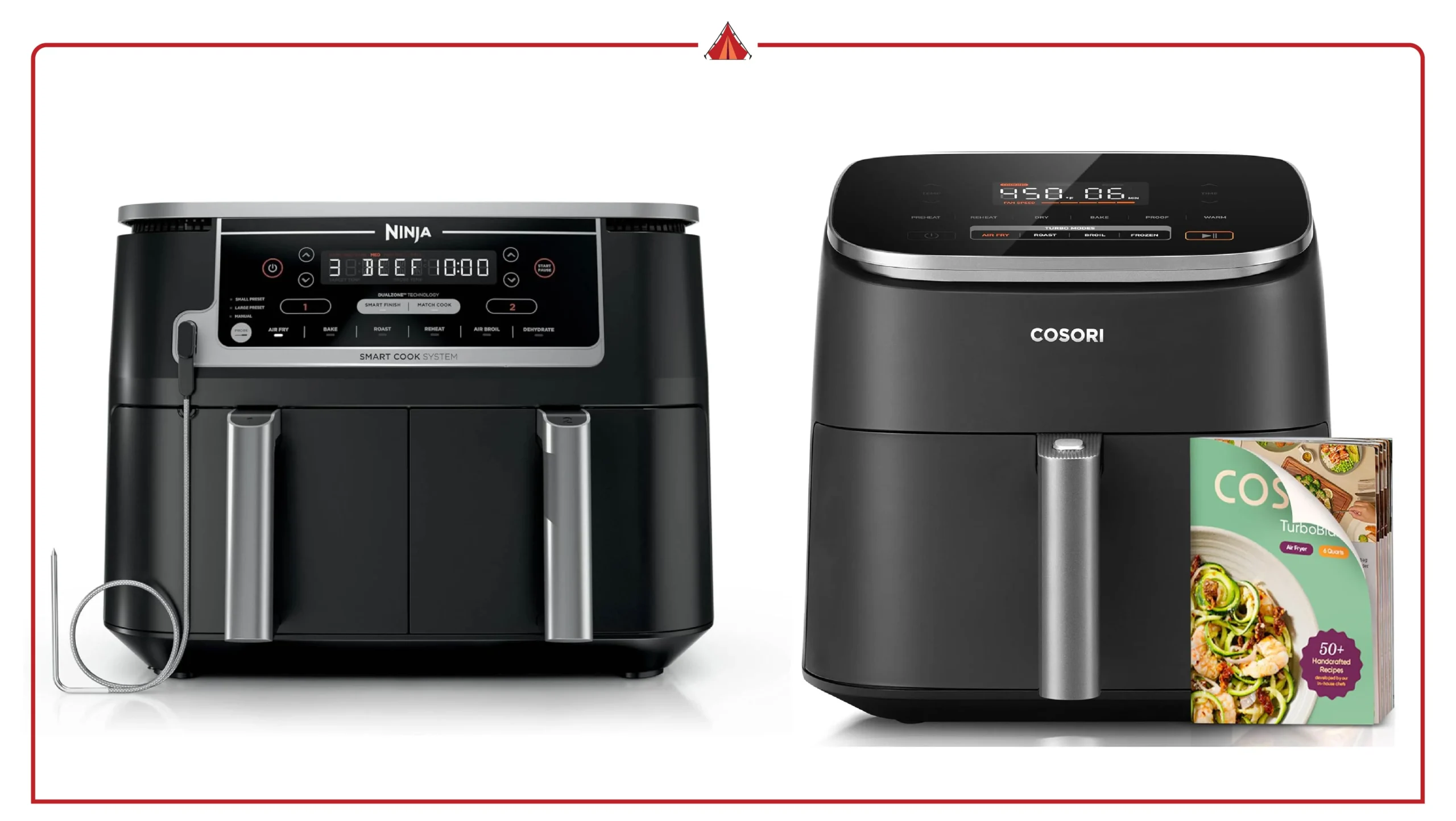
Best Overall: Ninja Foodi DZ550 10-Qt DualZone Air Fryer The DZ550 is the pick for households that cook real meals, not just frozen snacks. Two independent 5-quart baskets with Ninja’s Smart Finish technology means your chicken wings and roasted vegetables finish at exactly the same time, without any babysitting. The built-in thermometer takes the guesswork out of meat doneness entirely. It’s the most complete air fryer on this list for families who use it daily.
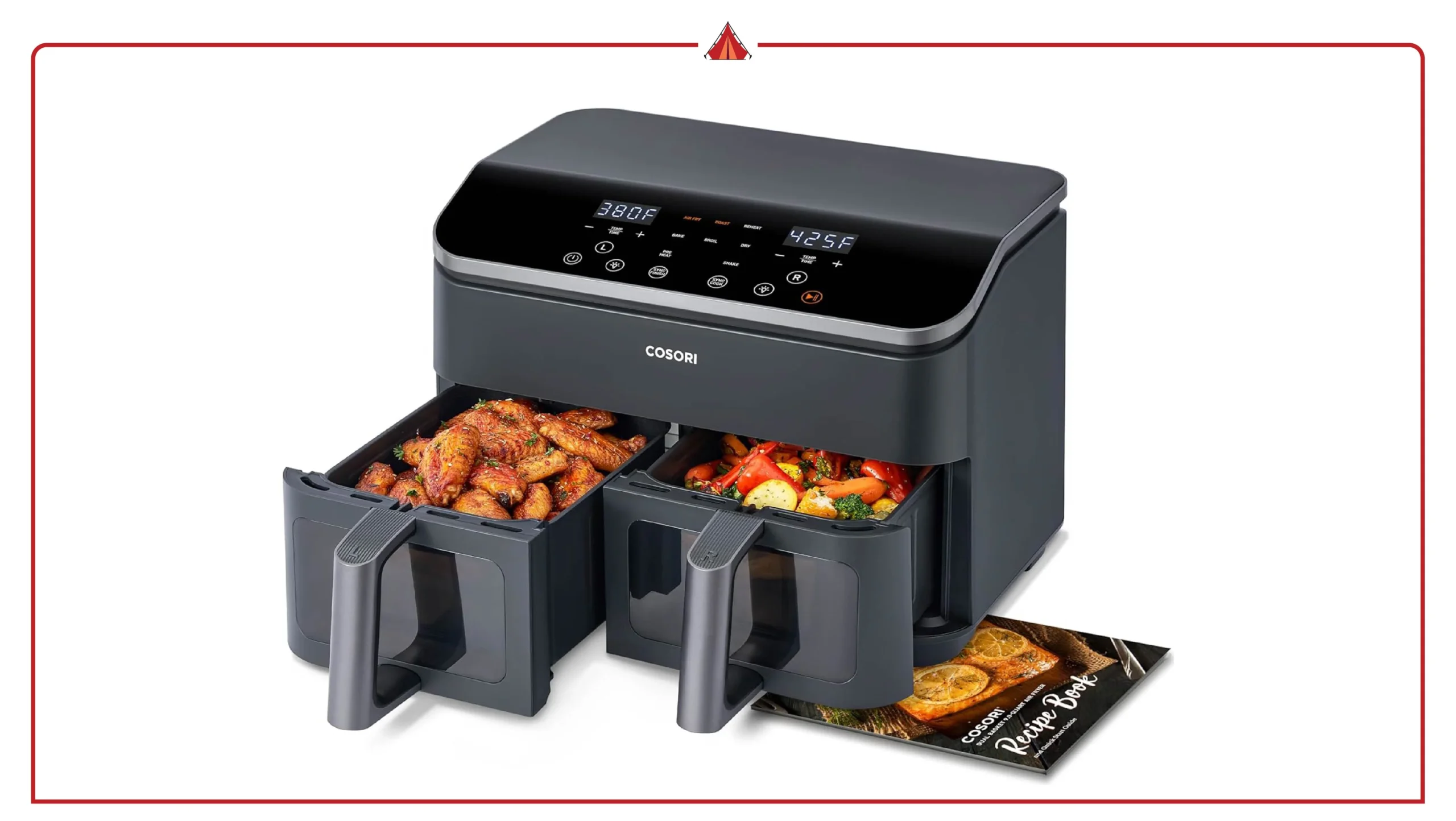
Best Value: COSORI TurboBlaze 6-Qt Air Fryer At around $100, the TurboBlaze punches well above its price. Its DC motor runs noticeably faster and quieter than the standard motors found in most competitors at this price point, and its ceramic nonstick basket is genuinely easy to clean. For a household of two to four people who want one reliable, no-drama air fryer, this is the one we’d buy.
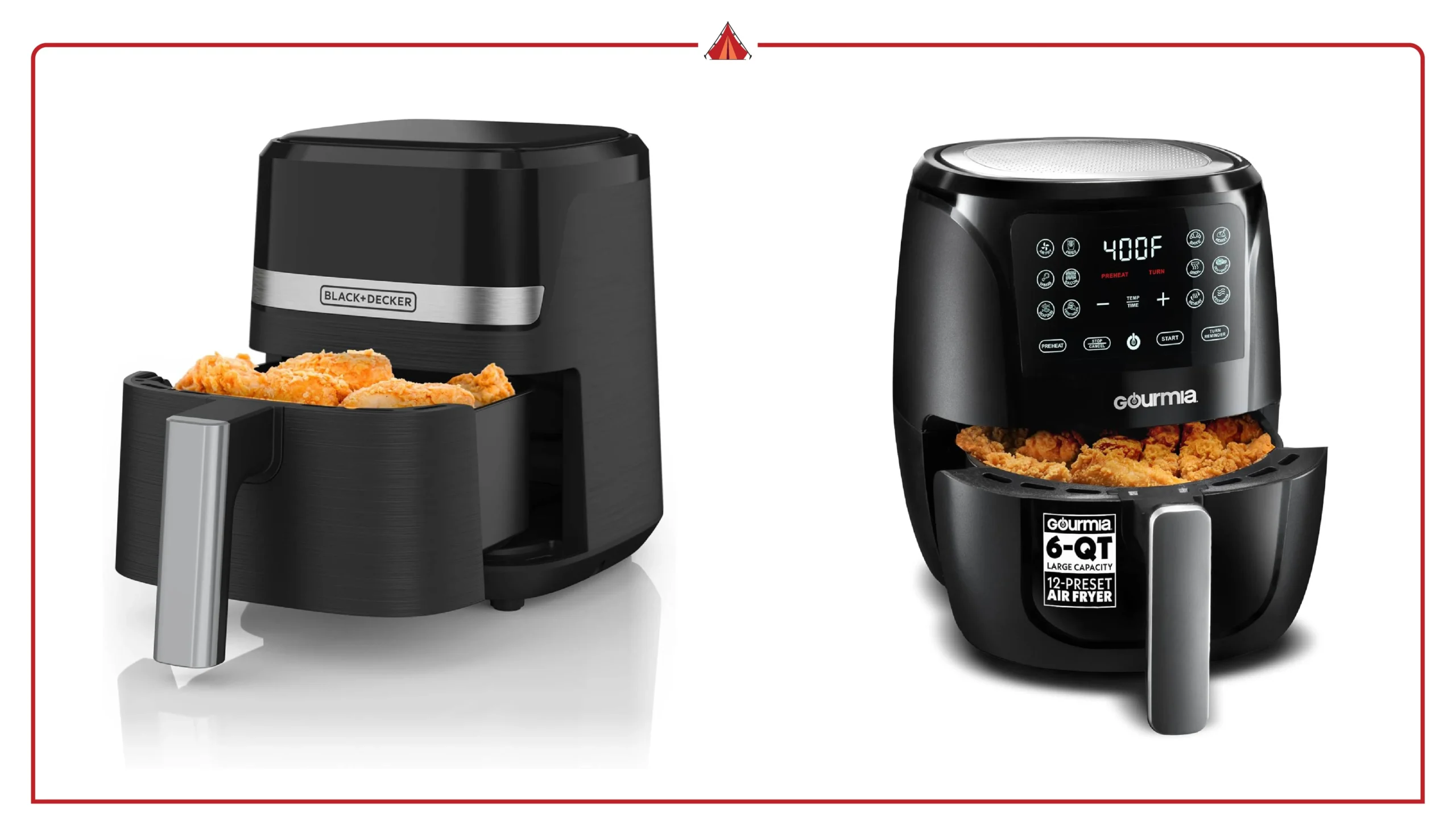
Best Budget: Gourmia 7-Qt Digital Air Fryer Most budget air fryers ask you to trade capacity for price. The Gourmia doesn’t. A 7-quart basket for under $70 is genuinely hard to beat, and with 12 one-touch presets and a PFAS-free nonstick interior, it handles everyday cooking without complaint. It won’t feel as premium as a Ninja or COSORI, but if your priority is getting the job done without overspending, this is your fryer.
How Our Top 8 Picks Compare
Not sure which model fits your situation? This table gives you a side-by-side snapshot. The full review for each is below, but this is a good place to start if you’re narrowing down your options.
| Product | Capacity | Best For |
|---|---|---|
| Ninja Foodi DZ550 | 10 qt (dual basket) | Families who cook two dishes at once |
| COSORI TurboBlaze | 6 qt | Everyday cooking for 2–4 people |
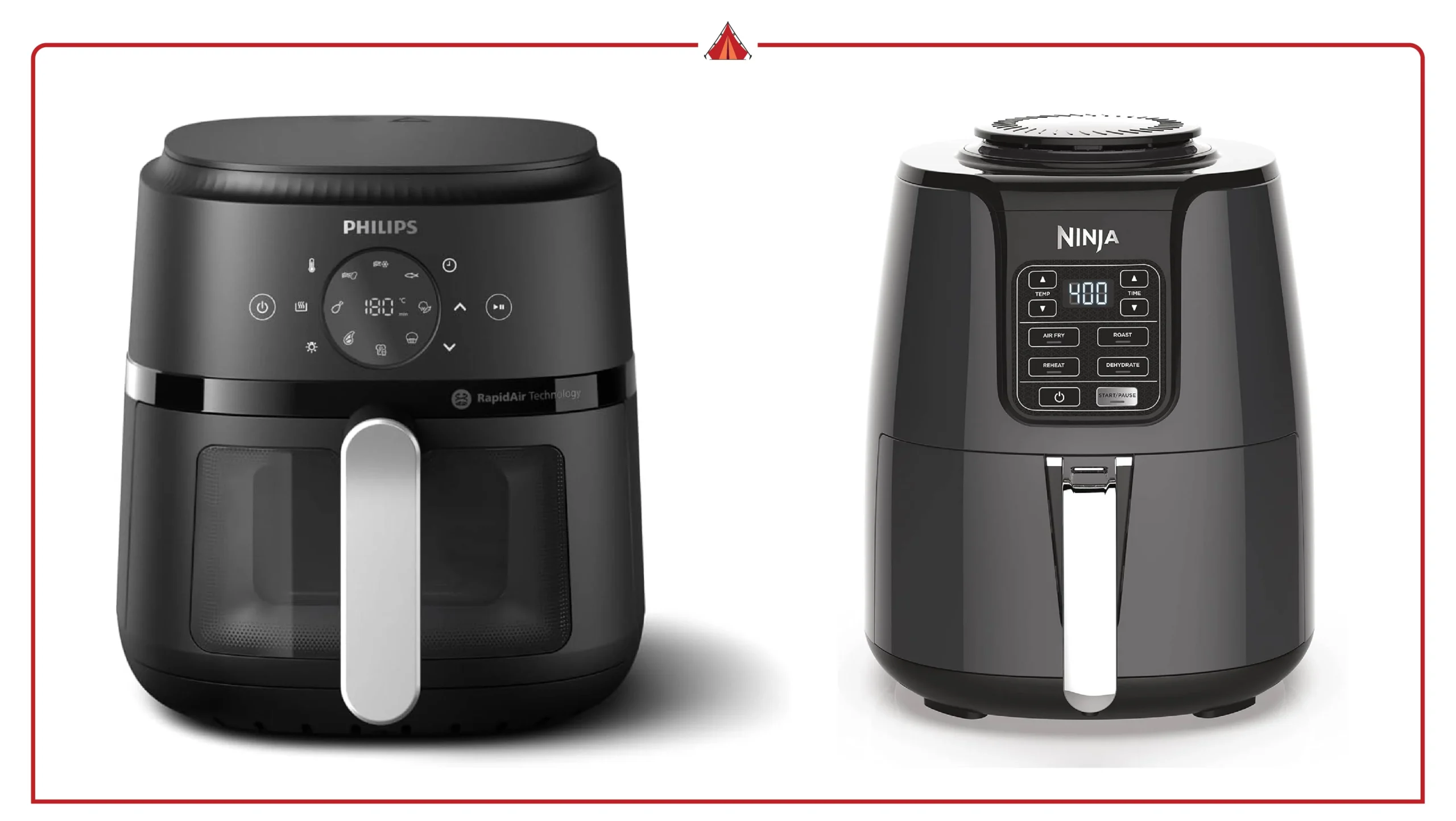
| Ninja AF101 | 4 qt | Beginners and small kitchens |
| Ninja Speedi SF301 | 6 qt | One-pot complete meals in 15 minutes |
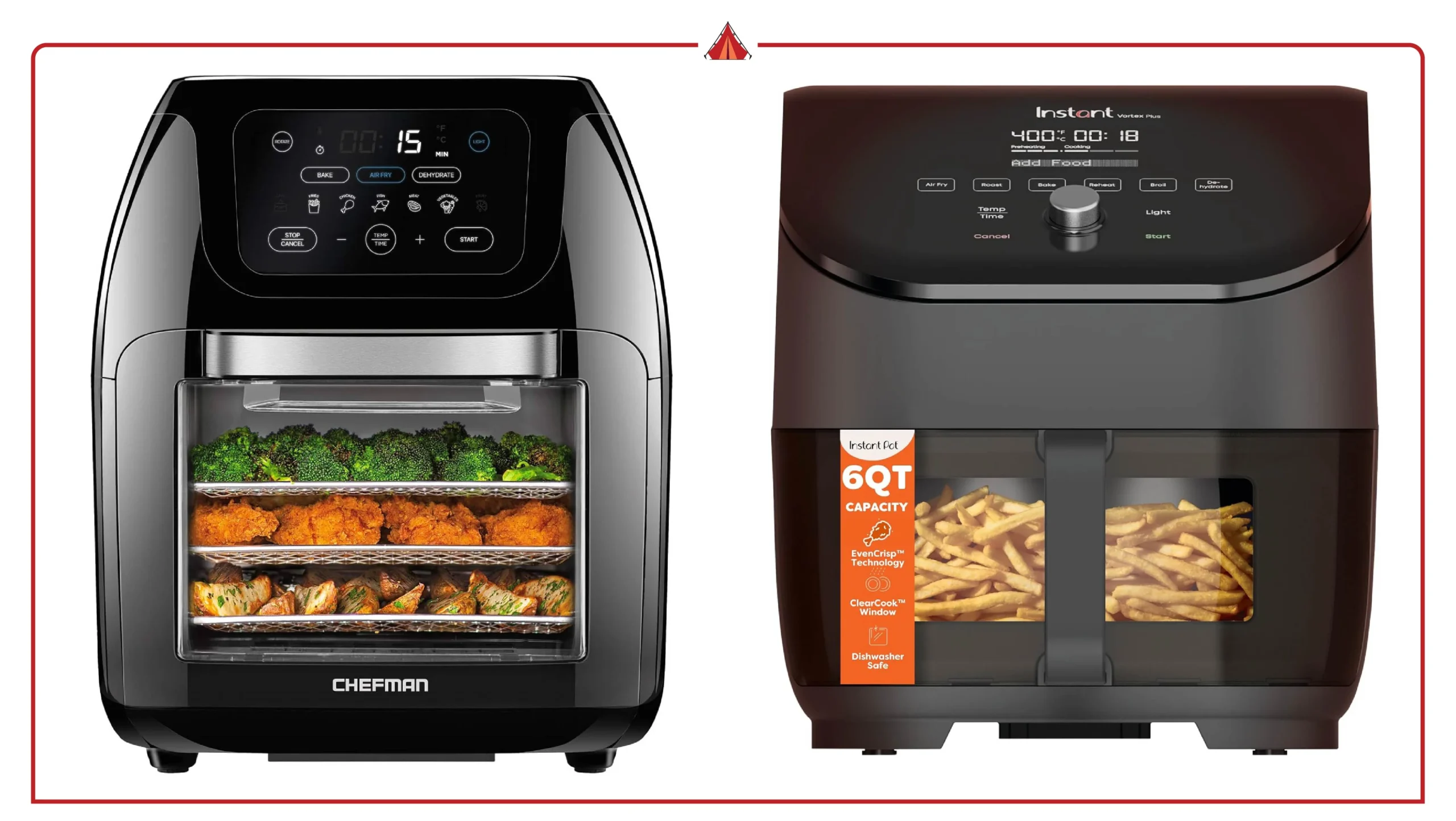
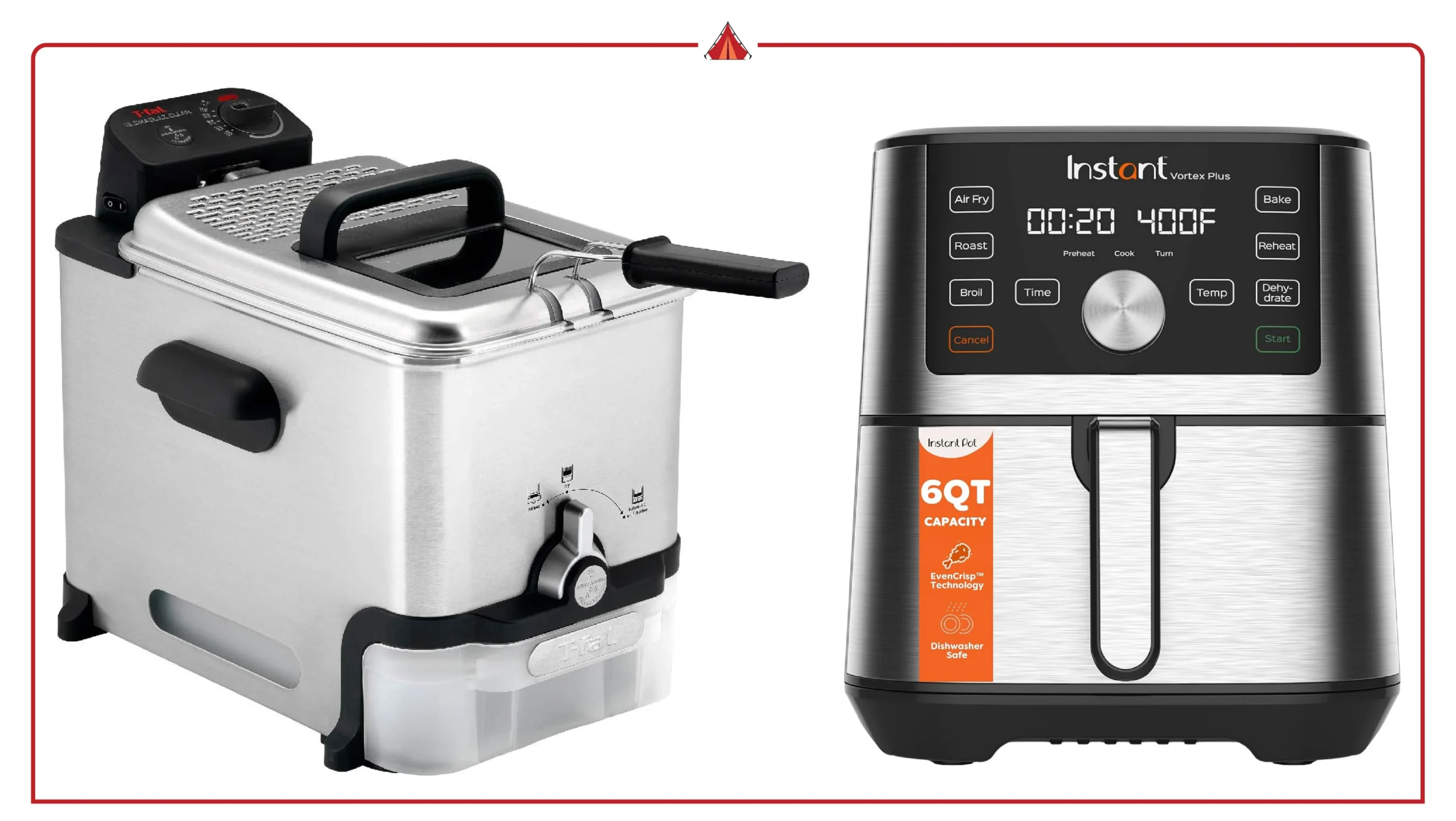
| Instant Vortex Plus ClearCook | 6 qt | Monitoring food without opening the basket |
| Gourmia 7-Qt GAF735 | 7 qt | Maximum capacity on a tight budget |
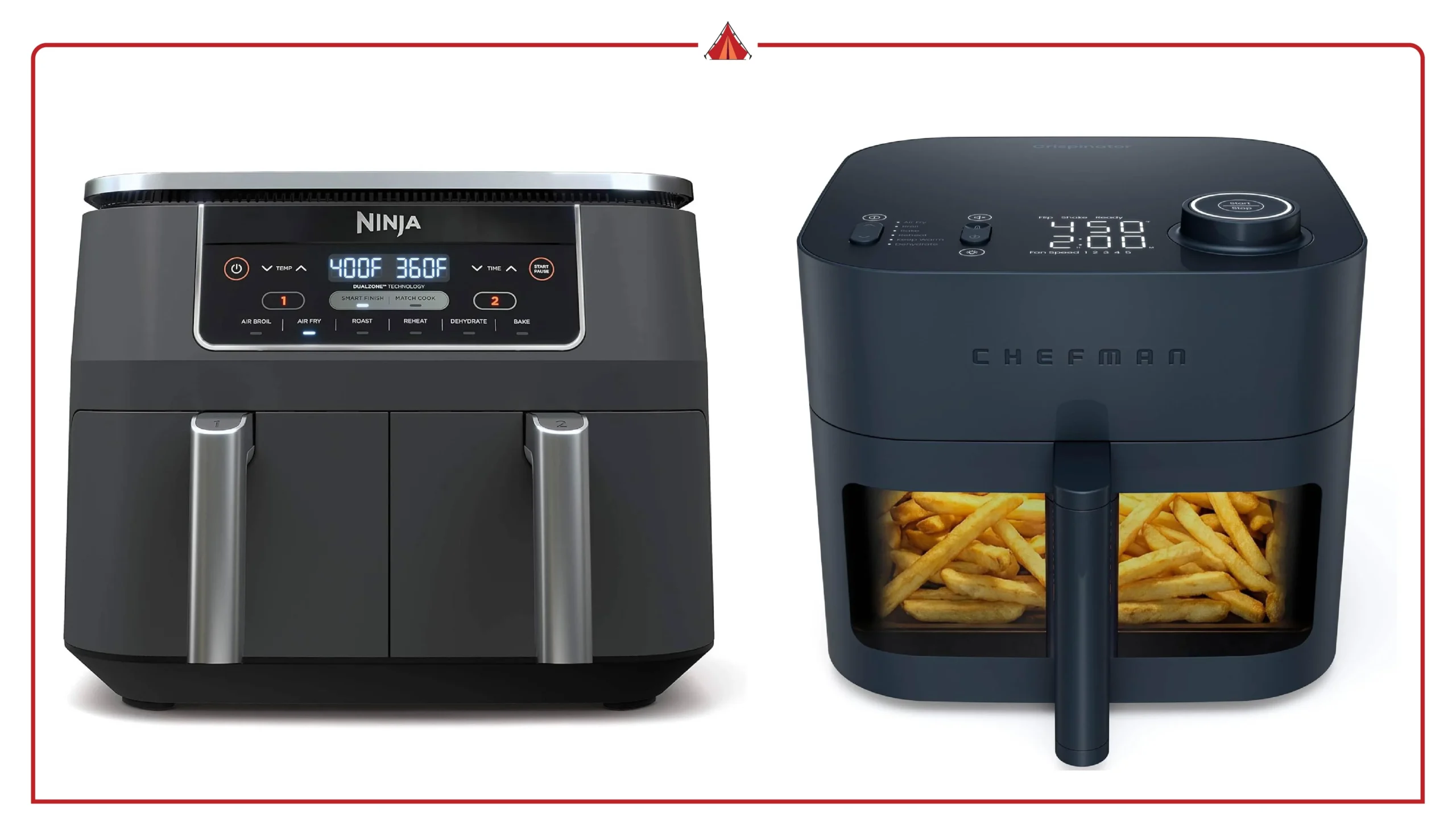
| Ninja DZ201 | 8 qt (dual basket) | Large families who want dual-basket at a lower entry cost |
| Breville Smart Oven Air Fryer Pro | 1 cu. ft. | Replacing multiple appliances with one premium unit |
A few things worth noting before you dive into the reviews. Capacity is quoted in quarts for basket models, but the number on the box doesn’t always reflect usable cooking space — a 7-qt basket with a large hole in the crisper tray (looking at you, COSORI) effectively cooks less food per batch than the number suggests. We flag this where it’s relevant in each review below.
Also worth knowing: dual-basket models like the Ninja DZ550 and DZ201 take up significantly more counter space than single-basket models. If your kitchen counter is already working hard, that’s a real consideration before committing to one.
Ninja Foodi DZ550 — Best Overall Air Fryer
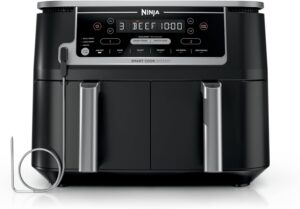
If you cook for a family and you’re tired of staggering meals — finishing the fries, then starting the chicken, then reheating the fries because everything took longer than expected — the DZ550 is built specifically to solve that problem.
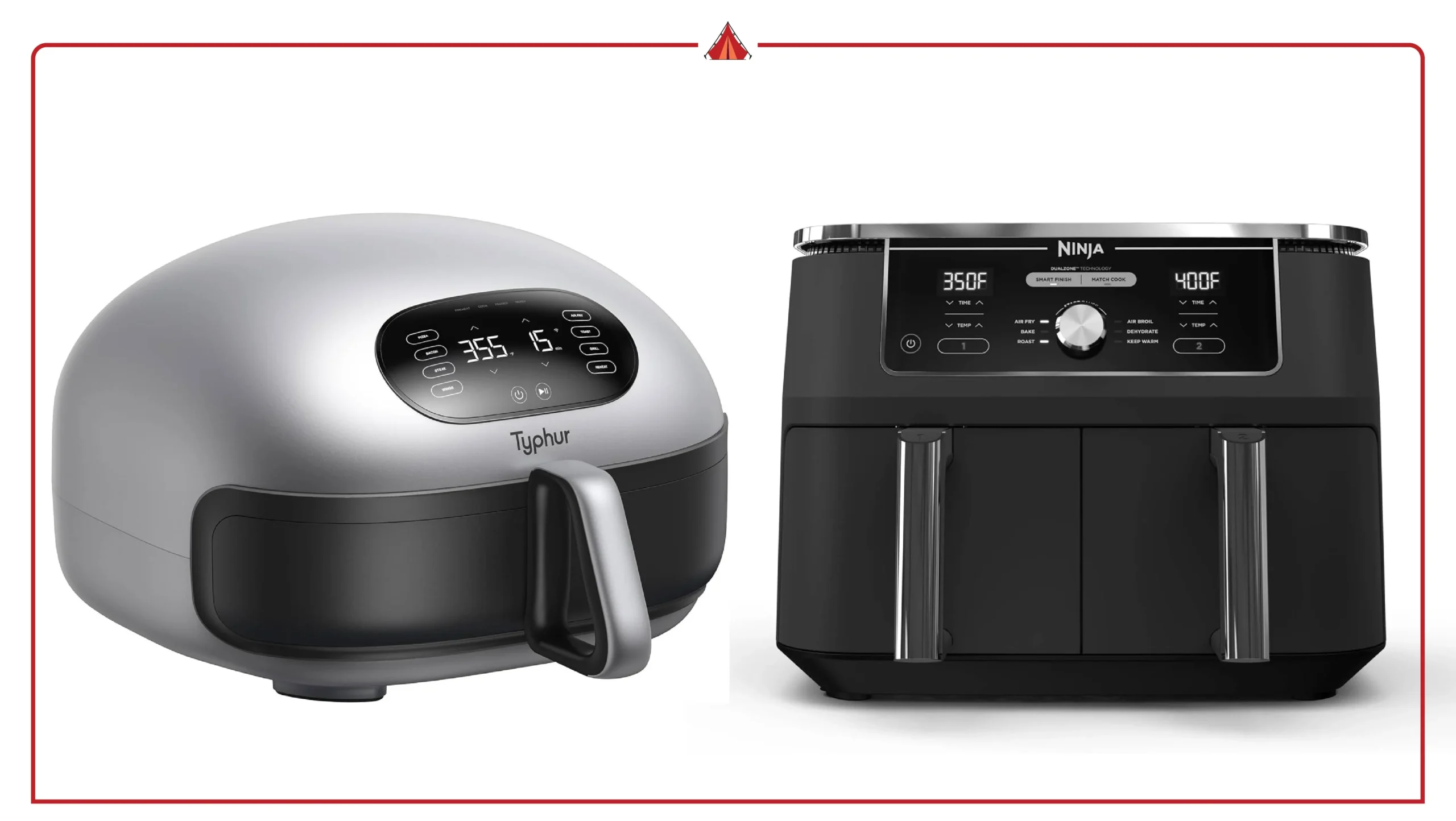
The headline feature is DualZone technology: two fully independent 5-quart baskets that can run at different temperatures and different cook times simultaneously. Smart Finish coordinates both zones to end at exactly the same moment, so your protein and your side hit the table together without any manual timing on your part. It sounds like a small thing until you’ve used it for a week and realized how much mental load it removes from weeknight cooking.
The built-in Foodi Smart Thermometer is the other feature that separates this model from most of the competition. Insert it into your meat, set your target doneness, and the fryer adjusts automatically. No cutting into chicken to check, no overcooked steak because you lost track of time. For buyers who cook meat regularly, this alone justifies a significant portion of the price.
Who it’s best for: Families of four or more who cook full meals daily and want the most capable dual-basket air fryer available without stepping into commercial territory.
One thing to know: The DZ550 is large. It earns its counter space, but it does require it. If your kitchen is tight, the smaller Ninja DZ201 covers similar dual-basket ground at a more compact footprint.
COSORI TurboBlaze 6-Qt — Best Mid-Range Single Basket
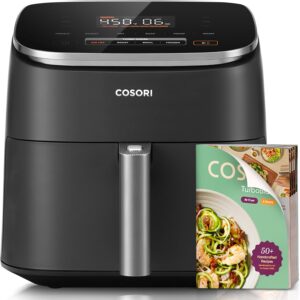
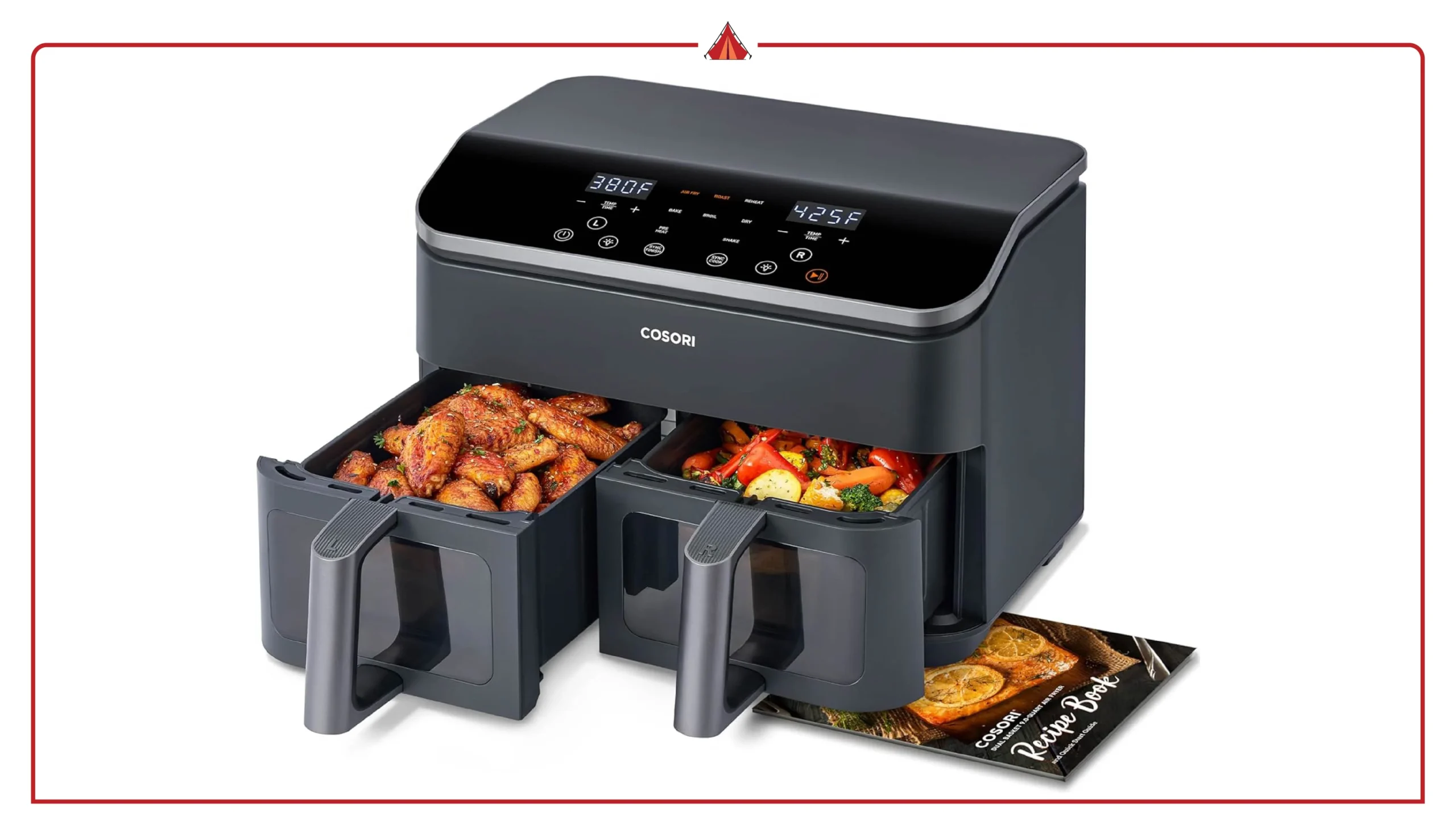
Most air fryers at this price use the same basic AC motor technology that’s been standard in the category for years. The TurboBlaze doesn’t. Its DC motor spins the fan at 3,600 RPM, which translates to faster cook times, more even heat distribution, and noticeably quieter operation than the competition. In independent testing by multiple review outlets, it cooked up to 46% faster than conventional AC-motor air fryers at the same price point.
For a household of two to four people cooking everyday meals — chicken thighs, roasted vegetables, reheated leftovers, the occasional batch of fries — this is the most capable single-basket fryer you can buy without crossing into dual-basket territory. The ceramic nonstick coating is PTFE- and PFOA-free, dishwasher-safe, and holds up well with daily use as long as you keep metal utensils away from it.
Who it’s best for: Home cooks who want fast, quiet, consistent results in a single basket and don’t need the complexity or counter footprint of a dual-basket model.
One thing to know: The crisper tray has a notably large center hole, which means smaller food items can fall through mid-cook. Halved Brussels sprouts, small potato cubes, and similar-sized pieces are better cooked in a lined basket or a different model.
Ninja AF101 — Best for Beginners and Small Kitchens
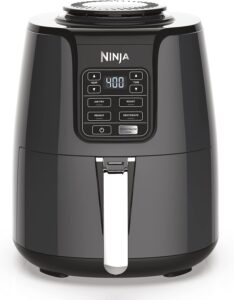
With over 83,000 Amazon reviews and a 4.7-star rating, the AF101 is the most validated air fryer on this list by raw buyer consensus. That kind of review volume doesn’t happen by accident — it reflects a product that consistently does what it promises for a very wide range of people.
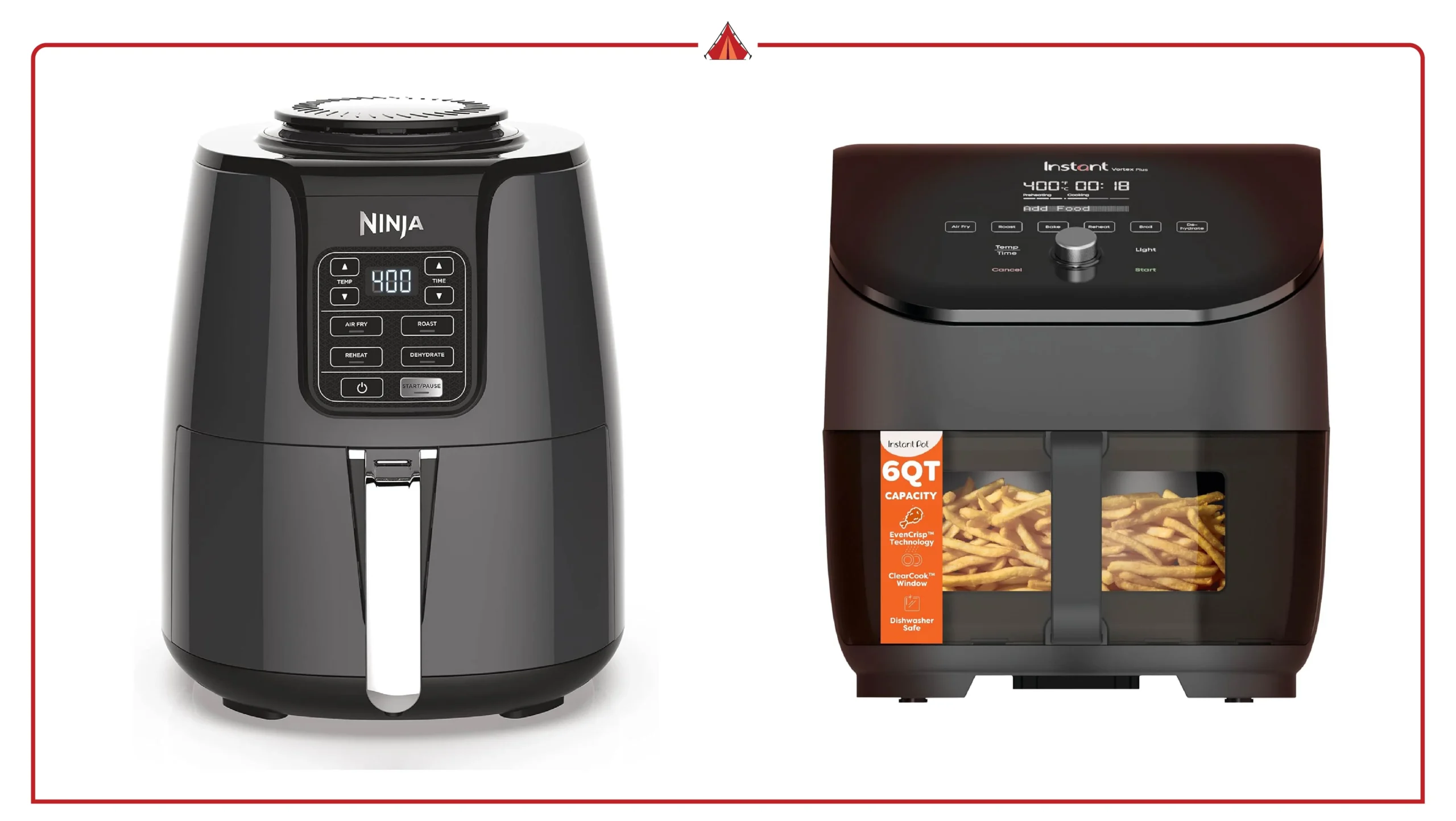
The AF101 keeps things simple in a way that more feature-heavy models don’t. Four functions (Air Fry, Roast, Reheat, Dehydrate), a straightforward dial interface, and a wide temperature range from 105°F to 400°F cover the vast majority of what most people actually use an air fryer for. The 4-quart ceramic-coated basket handles up to around 2 lbs of fries comfortably, and the whole unit is compact enough to live permanently on a counter without dominating it.
Who it’s best for: First-time air fryer buyers, singles, and couples who want something reliable and easy to use without navigating a touchscreen full of presets they’ll never touch.
One thing to know: Four quarts is genuinely limiting if you’re cooking for three or more people regularly. You’ll find yourself doing two batches more often than you’d like, which defeats part of the convenience appeal. If your household has grown past two, the COSORI TurboBlaze or Instant Vortex Plus at 6 quarts is a smarter long-term buy.
Ninja Speedi SF301 — Best for One-Pot Meals
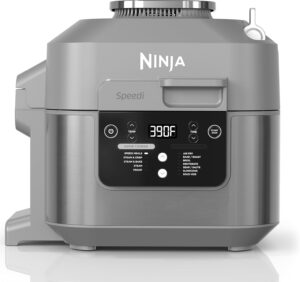
The Speedi occupies a different category than everything else on this list. It’s not just an air fryer — it’s a rapid cooker that combines steam and air frying in a single pot to produce complete meals in around 15 minutes. Protein, starch, and vegetables, all cooked together, all done at the same time. Reviewed.com rated it the number one air fryer for producing results closest to actual deep-frying texture, which is a meaningful distinction given how many air fryers fall short on that specific promise.
The Speedi Meals function works by steaming the base ingredients (rice, grains, pasta) while simultaneously air frying whatever sits on the layered rack above — chicken breast, salmon, vegetables. The two cooking methods happen concurrently, which is where the 15-minute claim comes from. In practice, timing varies by ingredient, but the concept is sound and the results are genuinely impressive for a single appliance.
Who it’s best for: Busy households and working parents who want complete, home-cooked meals on weeknights without managing multiple pots and pans. Also a strong pick for meal preppers who batch cook proteins and grains together.
One thing to know: The Speedi is not a pressure cooker. If you want an air fryer that also pressure cooks, the Ninja Foodi line covers that — the Speedi’s rapid cooking comes from steam and convection, not pressurized heat.
Instant Vortex Plus ClearCook — Best with a Viewing Window
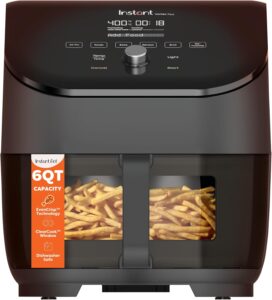
The viewing window sounds like a minor feature until you’ve burned a batch of chicken wings because you didn’t want to open the basket and lose heat. On the Instant Vortex Plus ClearCook, the window is genuinely useful — not just a marketing checkbox. You can check browning progress, catch something cooking faster than expected, and adjust without interrupting the cook cycle.
Beyond the window, this is a solid and approachable 6-quart air fryer with a clean touchscreen interface and Instant’s EvenCrisp technology, which manages airflow to keep results consistent across the basket. It’s particularly well-suited to buyers who are new to air frying and appreciate being able to see what’s happening inside without committing to opening the drawer.
Who it’s best for: Beginners and home cooks who want a 6-quart single-basket fryer with an intuitive interface and the practical reassurance of being able to monitor their food mid-cook.
One thing to know: A small number of users reported a faint plastic smell during the first few uses. This is common with new air fryers and typically resolves after two or three seasoning runs at high heat with nothing inside. It’s worth doing before you cook food in it for the first time.
Gourmia 7-Qt GAF735 — Best Budget Air Fryer
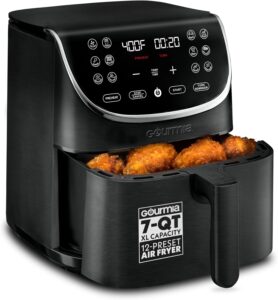
The Gourmia’s main argument is simple: 7 quarts of cooking capacity for under $70. At that price, most air fryers give you 3–4 quarts and a basic preset or two. The Gourmia gives you a genuinely large basket, 12 one-touch digital presets, and a PFAS-, PTFE-, and PFOA-free nonstick interior that’s dishwasher-safe. For families or individuals on a tight budget who still want enough room to cook a proper batch, nothing on this list competes at this price.
The performance is honest rather than exceptional. It crisps well, heats reliably, and handles the everyday workload of fries, wings, vegetables, and reheated leftovers without complaint. It’s not as fast as the COSORI TurboBlaze and it doesn’t have the build quality of a Ninja, but it does the job and it does it at a price point that makes it easy to recommend without hesitation.
Who it’s best for: Budget-conscious buyers who want the most cooking capacity possible without spending more than $70, and households where the air fryer will see moderate rather than daily heavy use.
One thing to know: The plastic construction shows wear faster than the metal-trimmed Ninja or COSORI models. If you’re cooking with it every single day, the finish and feel will degrade noticeably over a year or two. For occasional to moderate use, it holds up fine.
Ninja DZ201 — Best Dual Basket for Large Families
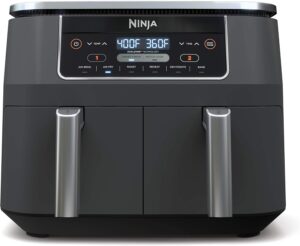
Think of the DZ201 as the DZ550’s more accessible sibling. It carries the same core DualZone technology — two independent baskets, Smart Finish, Match Cook — at a lower price and slightly smaller footprint. For families who want the dual-basket experience without committing to the DZ550’s size and price, this is the natural landing spot.
The two 4-quart baskets give you 8 quarts of total cooking capacity, which is enough to handle a full family meal in a single cook cycle. Six cooking functions cover the everyday range: Air Fry, Air Broil, Roast, Bake, Reheat, and Dehydrate. The Smart Finish coordination works just as well here as it does on the DZ550 — both baskets finishing simultaneously is the feature that makes dual-basket cooking genuinely practical rather than just theoretically appealing.
Who it’s best for: Families of four or five who want dual-basket cooking at a more approachable price, and buyers who find the DZ550’s size or cost hard to justify for their household.
One thing to know: The DZ201 doesn’t include the built-in thermometer that makes the DZ550 particularly useful for cooking meat. If precise doneness matters to you, either invest in a separate instant-read thermometer or step up to the DZ550.
Breville Smart Oven Air Fryer Pro — Best Premium Pick
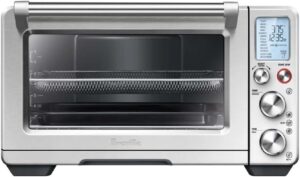
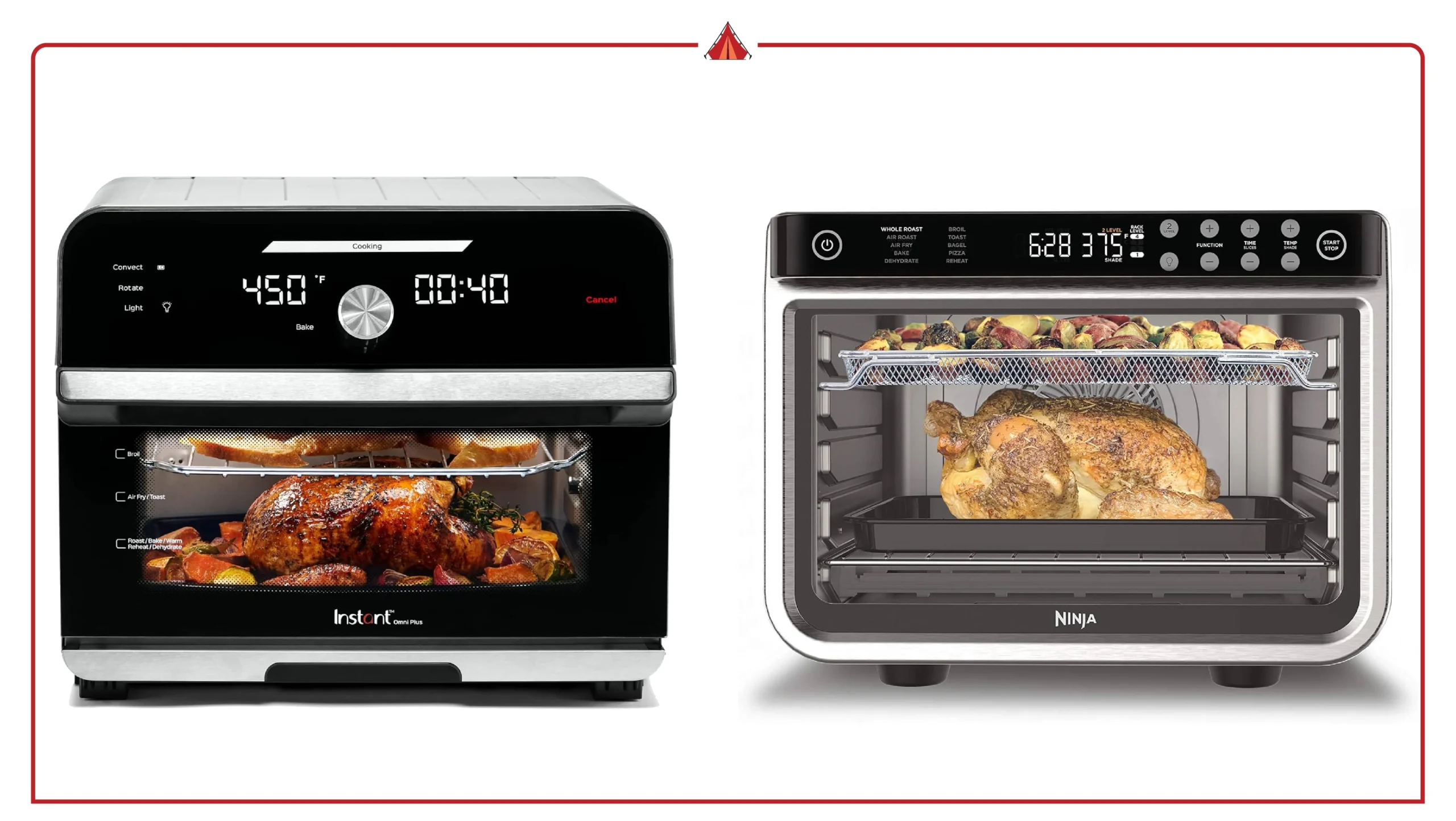
Every other model on this list is a basket-style air fryer. The Breville BOV900BSS is a different animal entirely. It’s a full countertop oven with Super Convection air frying built in, and it’s designed for buyers who want to consolidate their toaster oven, air fryer, dehydrator, and slow cooker into a single high-performance appliance.
The interior holds a 13-inch pizza or a full 9×13 baking dish, which puts it in a different league from any basket fryer on capacity alone. Breville’s Element IQ system manages heat across five quartz elements, adjusting distribution automatically based on what you’re cooking. The result is a level of cooking precision that dedicated basket air fryers simply can’t replicate — particularly for baking, roasting large cuts of meat, or anything that benefits from more controlled, even heat rather than aggressive convection blasting.
It preheats more slowly than a basket air fryer, and at $300 to $400 it requires a genuine commitment. But for serious home cooks who are tired of managing multiple appliances and want one thing that does everything well, the Breville earns its counter space in a way few products do.
Who it’s best for: Enthusiastic home cooks and kitchen minimalists who want to consolidate appliances without sacrificing performance, and buyers for whom cooking quality matters more than convenience shortcuts.
One thing to know: This is not the right buy if your primary use case is quick weeknight fries or reheating leftovers. A $100 basket fryer will do that faster and more efficiently. The Breville is worth its price for buyers who will genuinely use the full range of what it offers.
How to Choose the Right Air Fryer for Your Kitchen
Buying an air fryer in 2026 is harder than it should be. The category has exploded, the marketing language is almost universally overblown, and the difference between a genuinely good air fryer and a mediocre one isn’t always obvious from a product listing. This section covers what actually matters, what’s worth paying for, and what you can safely ignore.
Capacity: Get This Wrong and You’ll Regret It
Capacity is the most common source of buyer’s remorse in this category. People underestimate how much space they need, buy a 4-quart fryer for a family of four, and spend the next year cooking in batches.
As a general rule: singles and couples are well served by 4 to 5 quarts. Families of three to four should be looking at 6 quarts minimum. If you’re cooking for five or more, or you meal prep regularly, a dual-basket model in the 8 to 10-quart range makes a meaningful difference to your daily routine.
One important caveat: the quart number on the box measures total basket volume, not usable cooking space. Overcrowding a basket kills airflow and produces soggy, unevenly cooked food. A good rule of thumb is to fill the basket no more than two-thirds full for most recipes. Factor that into your capacity math before you buy.
Single Basket vs. Dual Basket: When the Upgrade Is Actually Worth It
Dual-basket air fryers have become genuinely popular, and for good reason — but they’re not the right call for everyone.
If you regularly cook a protein and a side dish simultaneously, a dual-basket model like the Ninja DZ201 or DZ550 removes a real pain point from weeknight cooking. Both baskets run independently, so chicken at 400°F and roasted broccoli at 375°F can finish at exactly the same time without any creative timing on your part.
If you mostly cook one thing at a time — a batch of fries, a couple of chicken thighs, reheated leftovers — a single-basket fryer is faster to preheat, easier to clean, and takes up significantly less counter space. The dual-basket premium isn’t worth paying for a use case that doesn’t need it.
Basket vs. Oven-Style: Two Different Products With Different Strengths
Most air fryers are basket-style: compact, fast-preheating, and purpose-built for frying, roasting, and reheating in relatively small batches. They’re the right choice for the majority of buyers.
Oven-style air fryers, like the Breville Smart Oven Air Fryer Pro, sit closer to a full countertop oven. They handle larger volumes, offer more cooking modes, and produce more precise results for baking and slow roasting. The trade-off is that they’re slower to preheat, take up more space, and cost significantly more.
The question to ask yourself is straightforward: do you want a dedicated air fryer that also handles some light baking, or do you want a countertop oven that also air fries? The answer points clearly to one category or the other.
Features Worth Paying For
Not every feature on an air fryer spec sheet earns its place. These ones do.
A DC motor. Standard air fryers use AC motors. The COSORI TurboBlaze uses a DC motor, which runs faster, quieter, and more efficiently. If noise is a consideration in your kitchen or you want faster cook times, this is a meaningful upgrade over the standard.
A built-in meat thermometer. The Ninja DZ550 is the only model on this list with one built in. If you cook chicken, steak, or pork regularly, a thermometer that connects directly to the fryer and halts cooking at the exact target temperature removes the guesswork entirely. It’s a small feature with an outsized practical impact.
A viewing window. The Instant Vortex Plus ClearCook’s window lets you check browning progress without opening the basket and losing heat. It matters more than it sounds, particularly for buyers who are still developing a feel for air fryer cook times.
Dishwasher-safe components. Every model on this list has a dishwasher-safe basket. If you’re considering a model that doesn’t, cross it off your list. Hand-washing a greasy air fryer basket every day is the fastest way to stop using one.
What You Can Safely Ignore
Preset counts. A fryer with 12 presets is not better than one with 4. Most experienced air fryer users set their own time and temperature rather than relying on presets, which are often conservative and produce mediocre results anyway. Don’t pay more for a longer preset menu.
Wattage as a quality signal. Higher wattage doesn’t automatically mean better cooking. What matters is how efficiently that power is used — fan speed, airflow design, and basket geometry all affect results more than raw wattage numbers.
“12-in-1” or “14-in-1” labeling. Multi-function claims are frequently padded with overlapping modes that amount to minor temperature variations of the same cooking method. Focus on whether the core air frying performance is strong, then treat any additional functions as a bonus rather than a selling point.
Budget Tiers: What to Expect at Each Price Point
Under $70. The Gourmia 7-Qt sits here and it’s an honest performer. At this price you’re trading premium build quality and advanced features for raw capacity and basic functionality. It works, but it won’t feel like a premium product.
$70 to $120. This is the strongest tier for most buyers. The Ninja AF101, Instant Vortex Plus ClearCook, and COSORI TurboBlaze all live here. You get solid build quality, better nonstick coatings, more thoughtful design, and in the case of the TurboBlaze, genuinely superior motor technology.
$130 to $200. Dual-basket territory. The Ninja DZ201 and Ninja Speedi SF301 occupy this range and both justify the step up — the DZ201 for families who want to cook two dishes at once, the Speedi for households that want complete one-pot meals in 15 minutes.
$200 and above. The Ninja DZ550 and Breville Smart Oven Pro are the two picks here. The DZ550 is the most complete basket-style air fryer available for family cooking. The Breville is a different product entirely — a premium countertop oven for serious cooks who want to consolidate appliances without cutting corners on performance.
Frequently Asked Questions
What size air fryer do I need for a family of 4?
A 6-quart single-basket fryer is the practical minimum for a family of four, and it works well if you’re cooking one thing at a time. If you want to cook a main and a side simultaneously without timing gymnastics, a dual-basket model in the 8-quart range like the Ninja DZ201 is worth the step up. The key thing to remember is that you shouldn’t fill any basket more than two-thirds full — airflow needs room to circulate, and an overcrowded basket produces steamed, soggy food rather than the crispy results you’re after.
Are more expensive air fryers actually worth the money?
Sometimes, but not always — and the honest answer depends entirely on how you cook. The COSORI TurboBlaze at around $100 outperforms several models that cost twice as much for everyday single-basket cooking. Where spending more genuinely pays off is when you need dual-basket functionality, a built-in thermometer, or oven-style versatility that a standard basket fryer can’t replicate. If your use case is straightforward — fries, chicken, reheated leftovers — there’s a ceiling to how much extra performance you can actually extract from a more expensive model.
What’s the difference between an air fryer and a convection oven?
An air fryer is essentially a compact convection oven with a more powerful, faster-spinning fan. That combination means it preheats in a fraction of the time, circulates heat more aggressively around smaller food volumes, and produces crispier results on everyday portions. A full-size convection oven handles larger volumes and is better suited to proper baking, but it’s slower to preheat and far less efficient when you’re cooking a single chicken breast or a side of vegetables. For most weeknight cooking tasks, the air fryer wins on speed and convenience. For larger meals or precise baking, a full oven or an oven-style fryer like the Breville is the better tool.
Can I cook a whole chicken in an air fryer?
Yes, provided you have enough capacity. A standard 5 to 6 lb chicken fits in a 6-quart basket fryer like the COSORI TurboBlaze, though it’s a snug fit and you’ll want to check that your specific bird clears the heating element with the basket closed. The Ninja DZ550’s 10-quart dual-basket configuration handles it more comfortably, and the Breville Smart Oven Pro manages it with the most room to spare given its full cubic-foot interior. If roasting whole birds is something you do regularly, capacity and interior clearance are worth checking before you buy rather than after.
Do air fryers use a lot of electricity?
Less than you might expect, particularly compared to a conventional oven. Most air fryers draw between 1,500 and 2,200 watts, but because cook times are significantly shorter — most meals are done in 15 to 25 minutes versus 45 to 60 minutes in a conventional oven — the total energy consumption per meal is lower. For everyday cooking tasks like reheating leftovers, cooking frozen foods, or making a quick side dish, an air fryer is one of the more energy-efficient appliances you can run in a modern kitchen.
Is ceramic coating actually better than standard nonstick?
It depends on what matters most to you. Ceramic coatings are PTFE- and PFOA-free, which makes them the preferred choice for buyers who are conscious about what their cookware is made from. They’re also easy to clean and perform well with daily use. The practical limitation is that ceramic coatings are more vulnerable to scratching than standard nonstick if you use metal utensils, and they can degrade faster under heavy daily use over time. Standard nonstick coatings are generally more durable but contain PTFE. Neither is dramatically better for cooking performance — the difference is primarily about material preferences and how carefully you treat your equipment.
How do I clean an air fryer properly?
The basket and crisper tray should be cleaned after every use. Most are dishwasher-safe — a light cycle is enough to clear grease and food residue without putting unnecessary wear on the coating. For the interior of the unit itself, a damp cloth or soft sponge after it’s cooled down is all you need in most cases. The one thing to avoid across all models is abrasive scrubbers or metal scouring pads, which will damage nonstick and ceramic coatings quickly. If you have stubborn baked-on residue, soaking the basket in warm soapy water for 10 to 15 minutes before washing almost always loosens it without any scrubbing required.
Final Verdict: Which Air Fryer Should You Actually Buy?
After working through eight models across every price point, a few things become clear. The air fryer market is genuinely competitive right now — there’s no bad pick on this list — but the right choice varies more by household than most buying guides acknowledge. Here’s where we land.
Best Overall: Ninja Foodi DZ550 For families who cook real meals on a daily basis, nothing on this list competes with the DZ550. The dual-basket system with Smart Finish genuinely changes how weeknight cooking feels, and the built-in thermometer is the kind of feature you don’t know you needed until you’ve used it. It’s large, it’s not cheap, and it earns both of those things.
Best Value: COSORI TurboBlaze 6-Qt If we were buying one air fryer for a household of two to four people and had no other constraints, this would be it. Faster than it has any right to be at this price, quieter than most competitors, and easy to clean. The mid-range sweet spot, without question.
Best Budget: Gourmia 7-Qt GAF735 It won’t feel like a premium product, and it isn’t one. But 7 quarts of cooking capacity for under $70 is a genuinely hard offer to argue with. If budget is the primary constraint and capacity matters, this is the pick.
Best for Beginners: Ninja AF101 Over 83,000 Amazon reviews don’t lie. The AF101 is simple, reliable, compact, and priced fairly. If you’ve never owned an air fryer and want to start somewhere sensible before committing to a larger or more expensive model, this is the natural entry point.
Best Premium: Breville Smart Oven Air Fryer Pro Not for everyone, and it doesn’t try to be. If you cook seriously, want to consolidate appliances, and are willing to pay for a product that will still be performing at a high level in five years, the Breville is in a different class from everything else on this list. The price reflects that, and so does the output.
Still deciding? Go back to the buyer’s guide and match your household size and cooking habits to the capacity and feature tier that fits. The best air fryer isn’t the one with the most features or the highest price — it’s the one that fits how your kitchen actually works.